Artwork
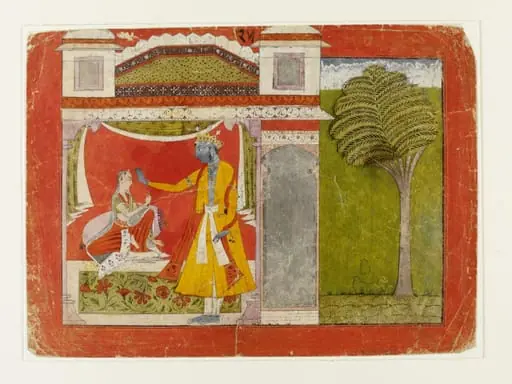
Krishna and Balarama
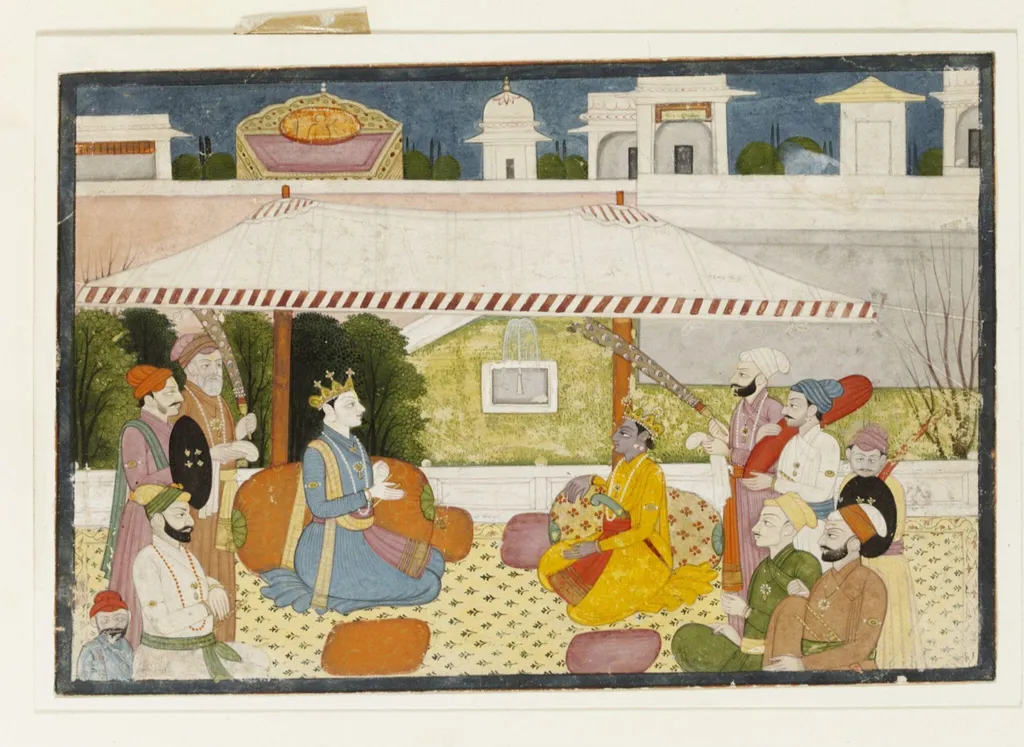
Krishna and Balarama is a paint painting by the Rococo painting artist Unknown. It dates from 1785 and is held in the collection of the Victoria and Albert Museum.
About this work
Overview
Rendered in opaque watercolour on paper, the composition dates to 1785 and belongs to a series depicting episodes from the Krishna–Rukmini narrative.
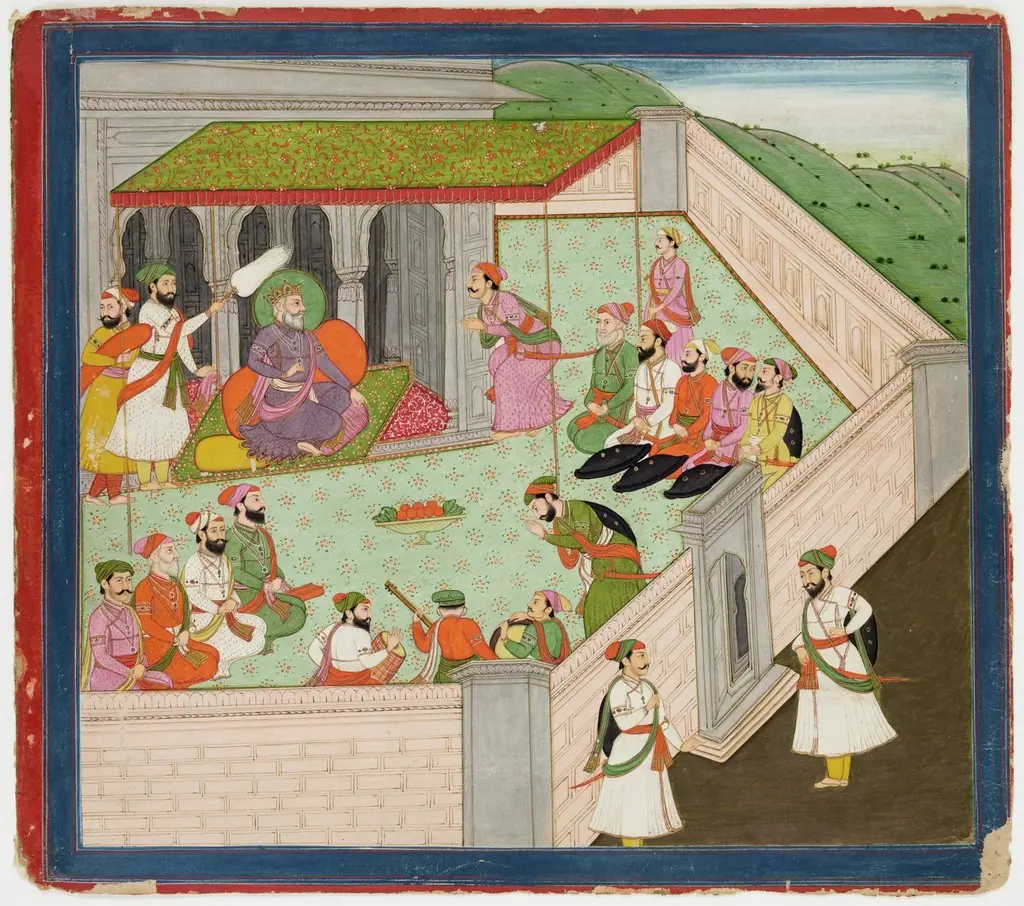
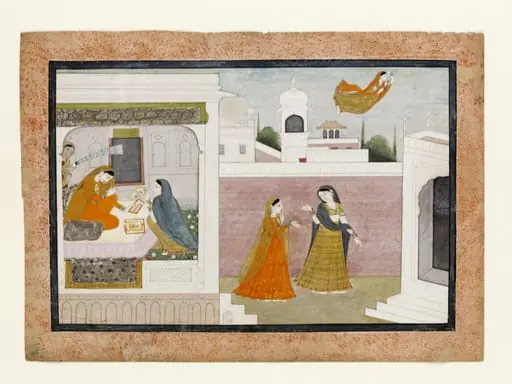
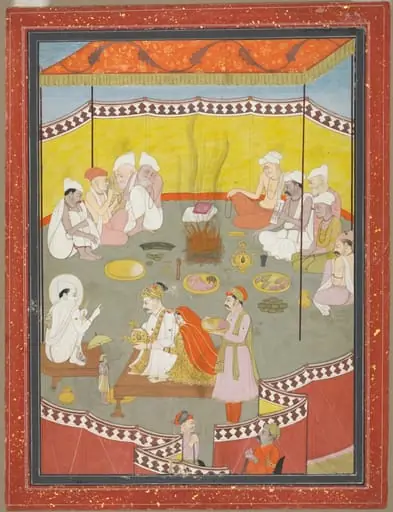
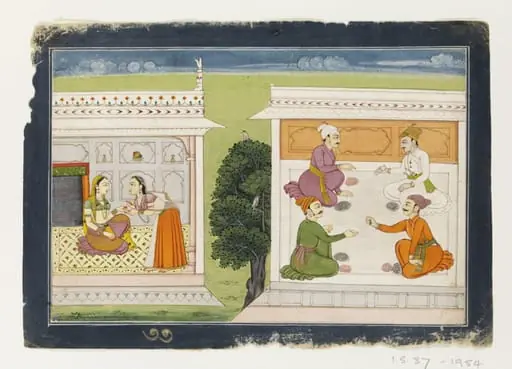
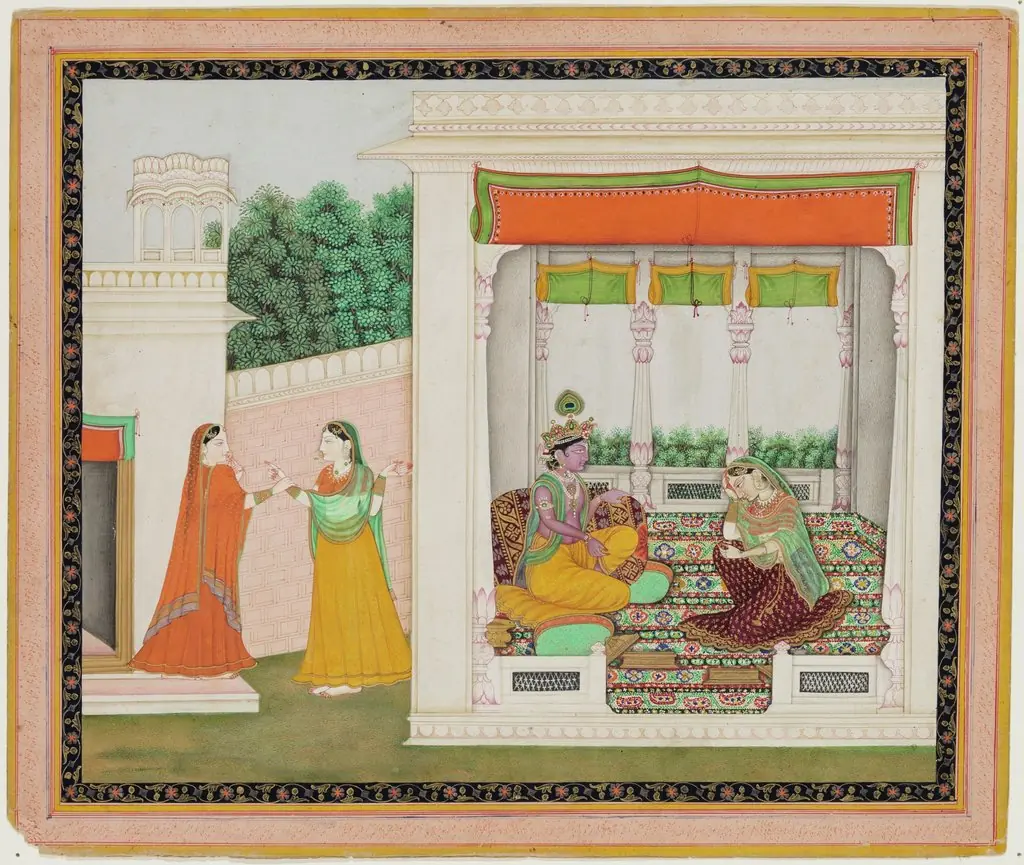
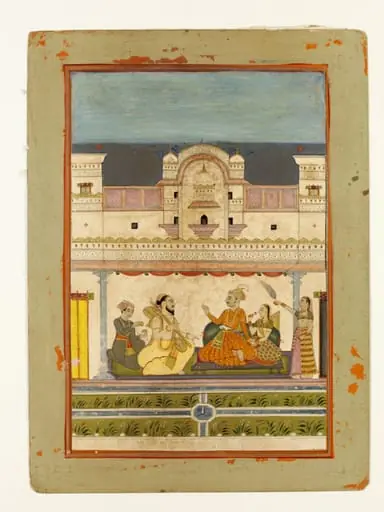
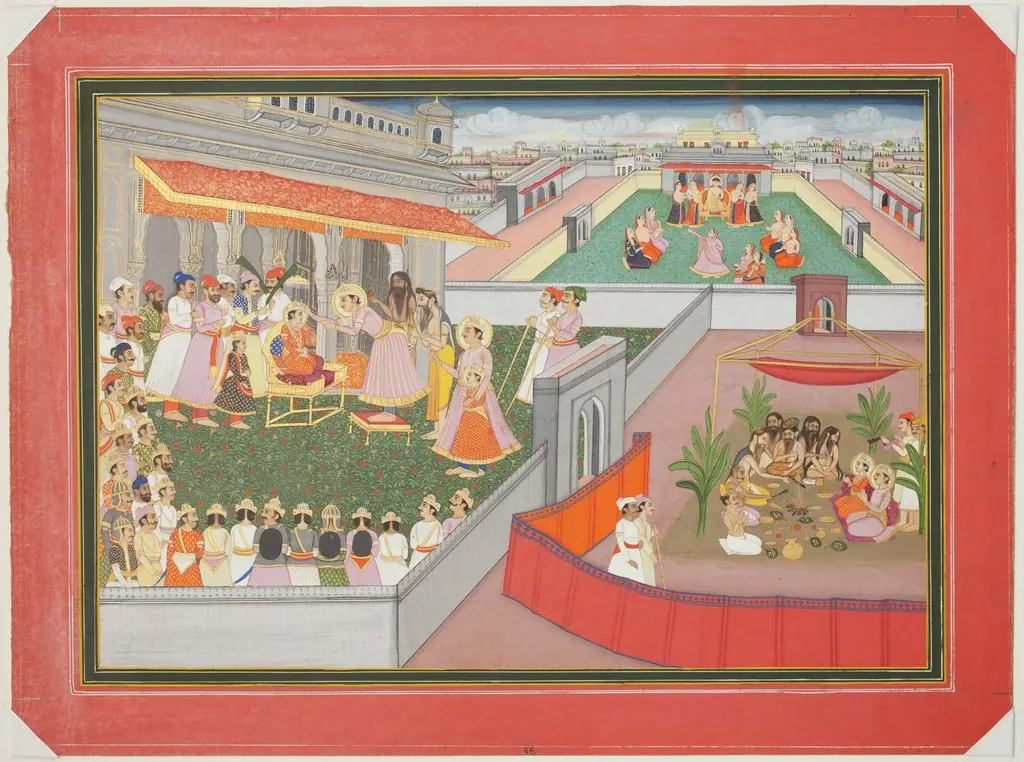
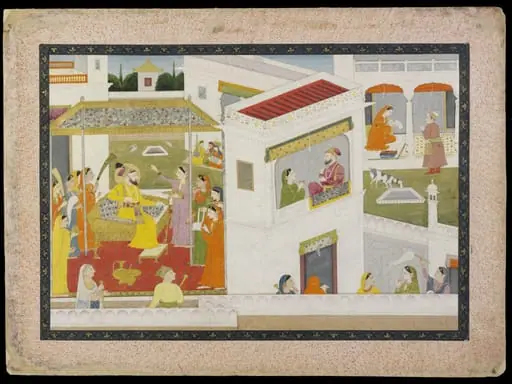
The work portrays two divine brothers, Krishna and Balarama, seated beneath a white pavilion trimmed with red stripes and supported by red poles. A landscaped garden with a fountain, trees, and distant white structures forms the backdrop, while a walled enclosure with turrets frames the scene. Rendered in opaque watercolour on paper, the composition dates to 1785 and belongs to a series depicting episodes from the Krishna–Rukmini narrative.
Subject & Meaning
Krishna and Balarama are shown in a relaxed pose, each engaged with a musical instrument—one on a drum, the other on a stringed lute—signifying their role as patrons of the arts and divine musicians. Surrounding figures in vivid robes and turbans observe or attend to the performance, reinforcing themes of devotion, celebration, and the harmonious courtly life associated with the deities.
Technique & Style
The painting employs opaque watercolour applied to paper, allowing for saturated blues, yellows, and reds that define clothing, cushions, and architectural details. Precise patterning on fabrics and the careful rendering of light on the canopy create depth, while the arrangement of figures guides the viewer’s eye toward the central musicians, exemplifying a balanced, narrative-driven aesthetic.
History & Provenance
Created in 1785, the piece originates from a larger series illustrating the Krishna–Rukmini saga, a popular subject in Indian devotional art. Though specific ownership records are limited, the work reflects the artistic conventions of late eighteenth‑century Indian court painting, likely produced for a patron familiar with the religious narrative.
Context
During the late 1700s, Indian painters often blended indigenous iconography with influences from Persian and European artistic traditions, especially in courtly commissions. This painting’s vivid palette and detailed architectural elements echo that syncretic environment, while its focus on divine musicians aligns with contemporary devotional practices that celebrated Krishna’s mythic exploits.
Artist & collection

 Domestic Scene
 Giacomo and Cardinal Marco, investing Andrea, Abbot of San Zeno, with his Benefice
 The Nymph of Fontainebleau
 Portrait of a Woman
 Madonna and Child with Saints in the Enclosed Garden
 Venus and Minerva
 Family Group of Four on Sofa
 Wall painting from Room H of the Villa of P. Fannius Synistor at Boscoreale