Artwork
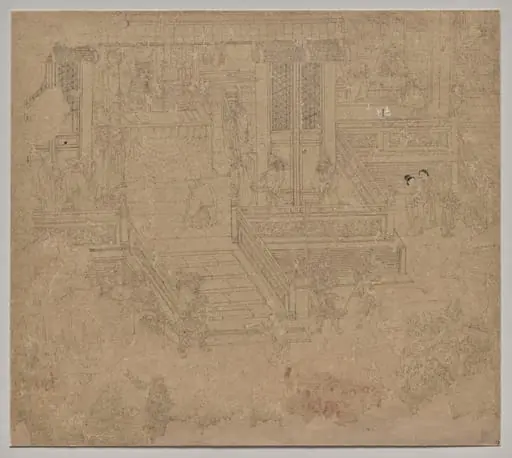
Album of Daoist and Buddhist Themes: Kings of Hells: Leaf 31
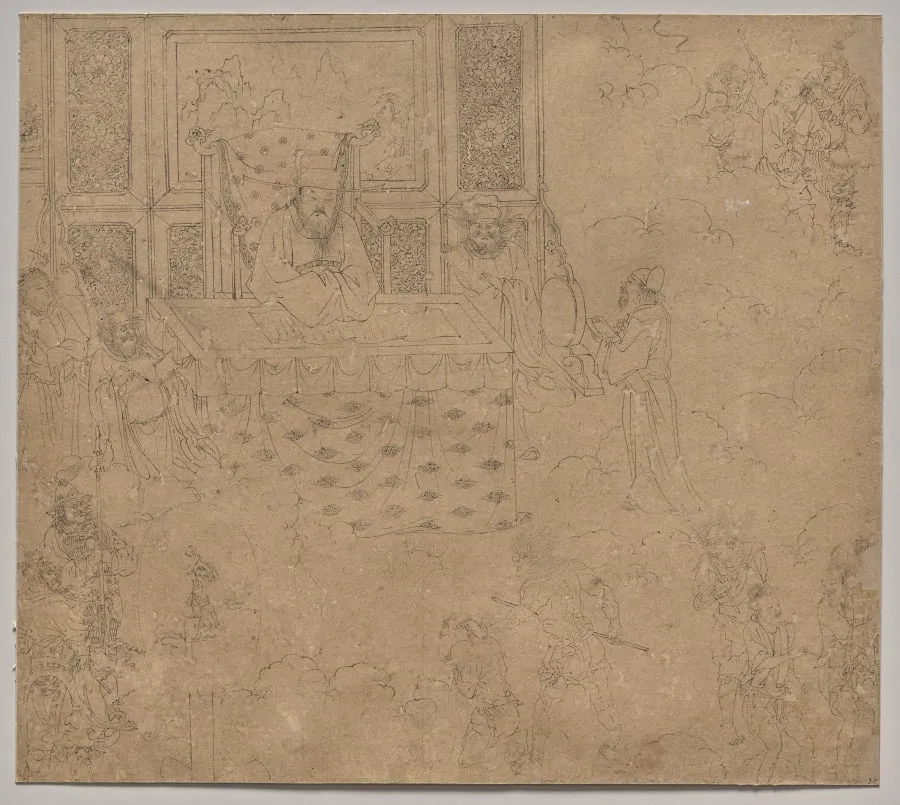
Album of Daoist and Buddhist Themes: Kings of Hells: Leaf 31 is an unspecified painting by the Ming dynasty painting artist Unknown. It dates from 1204 and is held in the collection of the Cleveland Museum of Art.
About this work
You see a crowded scene of judges in tall hats sitting at desks, while naked souls kneel before them in a fiery underworld.
You see a crowded scene of judges in tall hats sitting at desks, while naked souls kneel before them in a fiery underworld.
This painting is one leaf from an album used to teach young artists how to paint religious scenes. The judges are the Ten Kings of Hell, who decide punishments for the dead in Chinese Buddhist tradition. Each king has a different job—one checks records, another sends souls to torture.
Look up more works from china, southern song dynasty (1127-1279) to see how these ideas spread.
Overview
This leaf is one of fifty in a painted album dedicated to Daoist and Buddhist cosmology, likely produced in a studio setting during the Southern Song dynasty. Designed as instructional material, the album guided apprentices in rendering complex religious narratives with precision. Each page focuses on a distinct figure or scene, with this one depicting the Ten Kings of Hell presiding over judgment in the afterlife.
Subject & Meaning
The scene illustrates the Buddhist belief in posthumous judgment, where ten kings each oversee a specific aspect of soul evaluation. Figures in tall ceremonial hats sit at desks, reviewing records of the deceased’s deeds. Naked souls kneel in submission, awaiting their fate—some to be punished, others to be reborn. The composition reflects a moral order: actions in life determine consequences beyond death.
Technique & Style
The painting employs fine ink lines and restrained color to define crowded, hierarchical figures. Drapery and facial expressions are rendered with controlled brushwork, emphasizing solemnity over drama. Background elements like flames and architectural details are suggested rather than fully modeled, focusing attention on the central figures and their ritual roles.
History & Provenance
The album was likely compiled in a professional painting studio, possibly in southern China, where religious imagery was in demand for temples and private devotion. Its use as a model book suggests it circulated among artisans, preserving stylistic conventions across generations. No definitive provenance is recorded, but its format aligns with known workshop practices of the Southern Song period.
Context
During the Southern Song dynasty, syncretic religious imagery flourished as Daoist and Buddhist traditions merged in popular belief. Depictions of hell and divine judgment served both devotional and didactic purposes, reinforcing ethical conduct. Similar themes appear in temple murals and printed texts, indicating widespread cultural resonance beyond elite circles.
Legacy
The album’s format influenced later artistic training in religious painting, particularly in East Asia. Its structured presentation of divine hierarchies became a template for iconographic consistency. Though individual artists remain anonymous, the work preserves a visual language that endured in folk and monastic art for centuries.
Artist & collection

 Domestic Scene
 Giacomo and Cardinal Marco, investing Andrea, Abbot of San Zeno, with his Benefice
 The Nymph of Fontainebleau
 Portrait of a Woman
 Madonna and Child with Saints in the Enclosed Garden
 Venus and Minerva
 Family Group of Four on Sofa
 Wall painting from Room H of the Villa of P. Fannius Synistor at Boscoreale
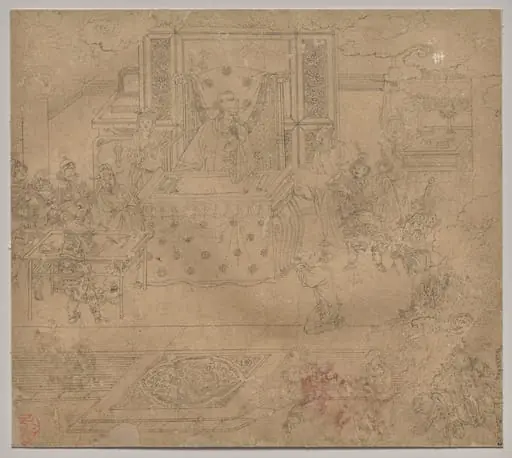 Album of Daoist and Buddhist Themes: Kings of Hells: Leaf 30
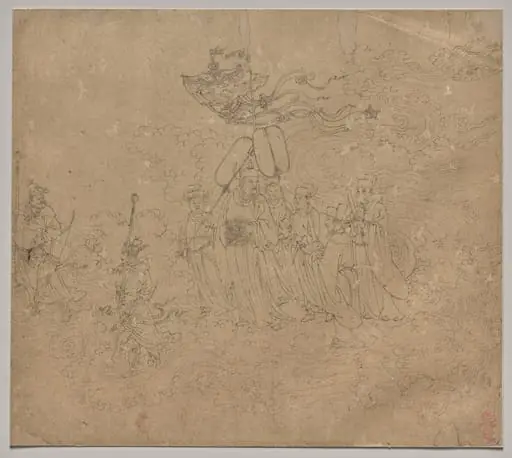 Album of Daoist and Buddhist Themes: Procession of Daoist Deities: Leaf 6
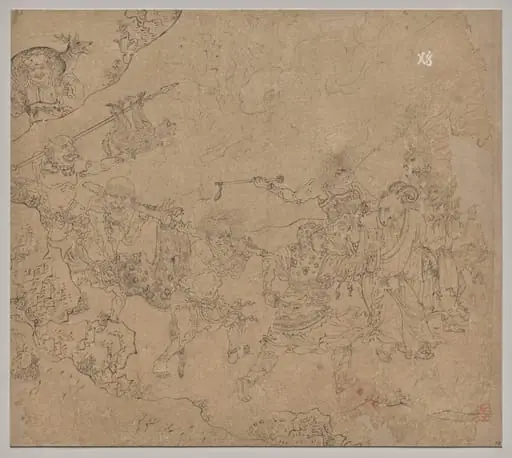 Album of Daoist and Buddhist Themes: Search the Mountain: Leaf 45
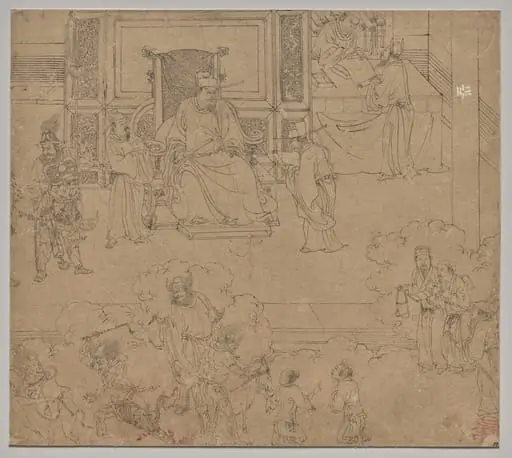 Album of Daoist and Buddhist Themes: Kings of Hells: Leaf 33
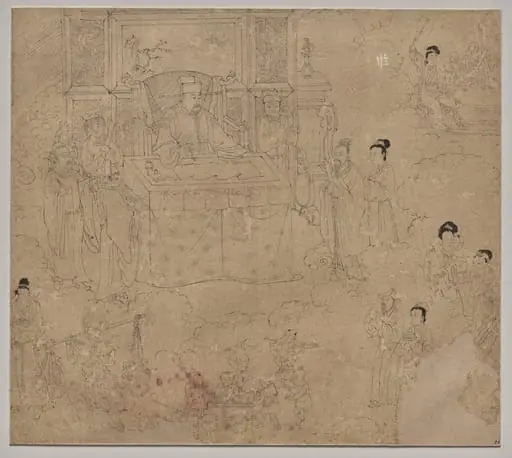 Album of Daoist and Buddhist Themes: Kings of Hells: Leaf 28
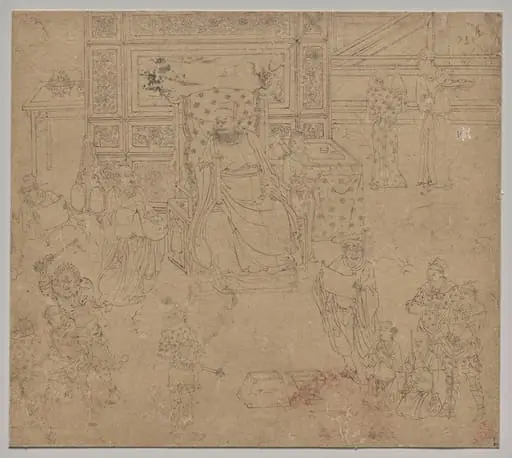 Album of Daoist and Buddhist Themes: Kings of Hells: Leaf 34
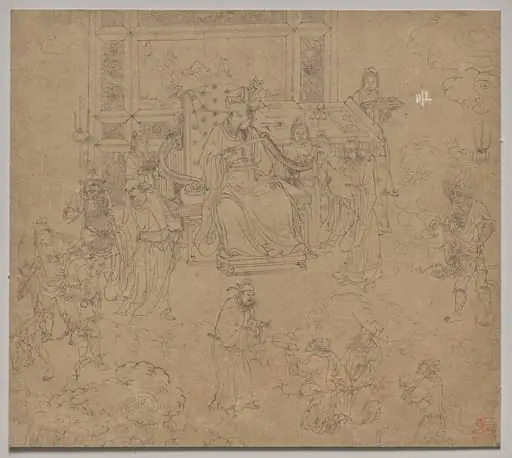 Album of Daoist and Buddhist Themes: Kings of Hells: Leaf 36
 Album of Daoist and Buddhist Themes: Kings of Hells: Leaf 37