Artwork
Album of Daoist and Buddhist Themes: Kings of Hells: Leaf 28
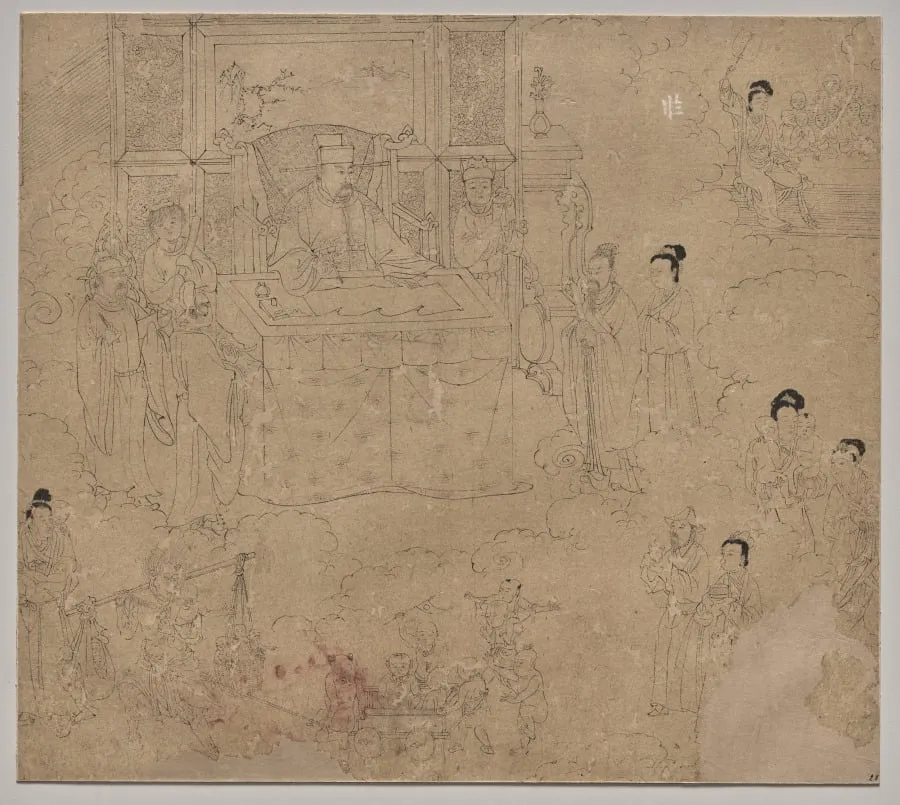
Album of Daoist and Buddhist Themes: Kings of Hells: Leaf 28 is an unspecified painting by the Byzantine icon painting artist Unknown. It dates from 1204 and is held in the collection of the Cleveland Museum of Art. The leaf is one of fifty miniature paintings that compose an album illustrating a range of religious narratives.
About this work
You see a small, detailed painting of a hell king seated on a throne, surrounded by demons torturing the dead.
You see a small, detailed painting of a hell king seated on a throne, surrounded by demons torturing the dead.
This is one leaf from an album used to train artists—like a medieval how-to guide. The kings judge souls, deciding their punishments based on past lives. The scenes are packed with tiny, gruesome details, meant to teach both skill and morality.
To see more of these eerie, instructional works, look up subject: china, southern song dynasty (1127-1279).
Overview
The leaf is one of fifty miniature paintings that compose an album illustrating a range of religious narratives. Arranged in three parts, the first segment depicts Daoist deities, the second shows the Buddhist Ten Kings of Hell, and the third portrays divine soldiers confronting malevolent beings. This particular sheet belongs to the middle section, focusing on the Buddhist judges of the after‑life.
Subject & Meaning
The image presents a Hell King seated upon an elaborate throne, surrounded by a host of demons who are actively torturing the newly deceased. The composition conveys the doctrinal belief that souls are judged and assigned punishments according to the deeds of their previous lives, serving both as a moral lesson and a visual representation of Buddhist eschatology.
Technique & Style
Executed with fine brushwork on a small scale, the painting is densely populated with intricate, often graphic details. The artist employs precise line and subtle colour washes to delineate figures, architectural elements, and the surrounding infernal landscape, reflecting the high level of skill expected of studio apprentices learning to render complex narrative scenes.
History & Provenance
Created during the Southern Song period (1127–1279) in China, the album was likely produced by a group of master craftsmen for instructional use within a workshop. The leaves functioned as model studies for apprentices, providing visual templates for future commissions involving religious iconography.
Context
The album integrates Daoist and Buddhist cosmologies, illustrating the syncretic religious environment of medieval China. By juxtaposing the Jade Emperor’s pantheon with the Buddhist Ten Kings, the work reflects the coexistence and mutual influence of these traditions in Southern Song artistic production.
Legacy
As a pedagogical tool, the album offers modern scholars insight into workshop practices, didactic art, and the transmission of religious narratives in pre‑modern China. Its detailed depictions of infernal punishment continue to inform studies of visual morality and the visual culture of the Southern Song dynasty.
Artist & collection

 Domestic Scene
 Giacomo and Cardinal Marco, investing Andrea, Abbot of San Zeno, with his Benefice
 The Nymph of Fontainebleau
 Portrait of a Woman
 Madonna and Child with Saints in the Enclosed Garden
 Venus and Minerva
 Family Group of Four on Sofa
 Wall painting from Room H of the Villa of P. Fannius Synistor at Boscoreale
 Album of Daoist and Buddhist Themes: Kings of Hells: Leaf 34
 Album of Daoist and Buddhist Themes: Kings of Hells: Leaf 30
 Album of Daoist and Buddhist Themes: Kings of Hells: Leaf 33
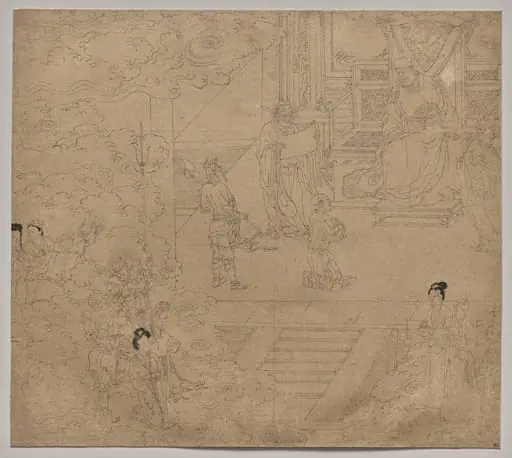 Album of Daoist and Buddhist Themes: Kings of Hells: Leaf 32
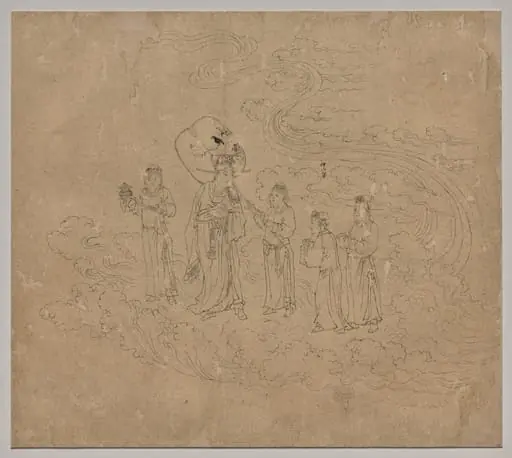 Album of Daoist and Buddhist Themes: Procession of Daoist Deities: Leaf 10
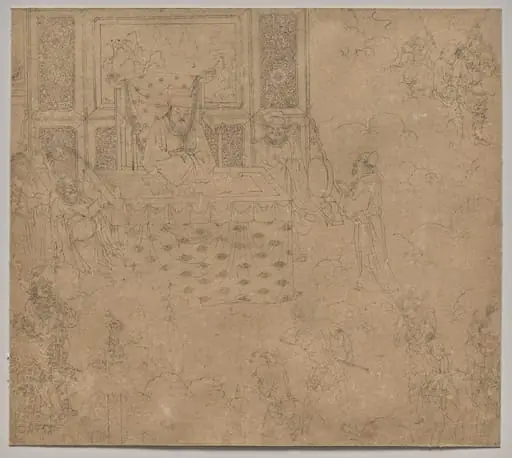 Album of Daoist and Buddhist Themes: Kings of Hells: Leaf 31
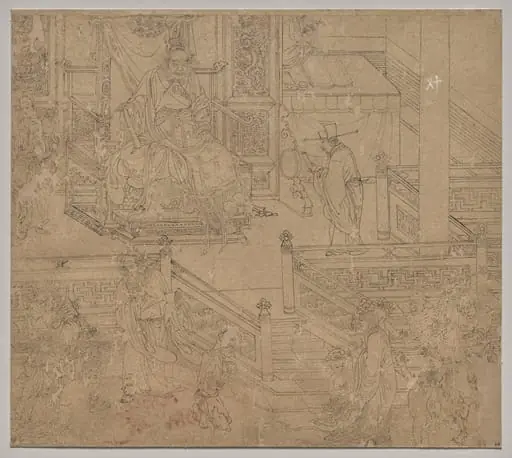 Album of Daoist and Buddhist Themes: Kings of Hells: Leaf 40
 Album of Daoist and Buddhist Themes: Procession of Daoist Deities: Leaf 21
 Album of Daoist and Buddhist Themes: Kings of Hells: Leaf 37
 Album of Daoist and Buddhist Themes: Procession of Daoist Deities: Leaf 7
 Album of Daoist and Buddhist Themes: Kings of Hells: Leaf 36