Artwork
Album of Daoist and Buddhist Themes: Procession of Daoist Deities: Leaf 8
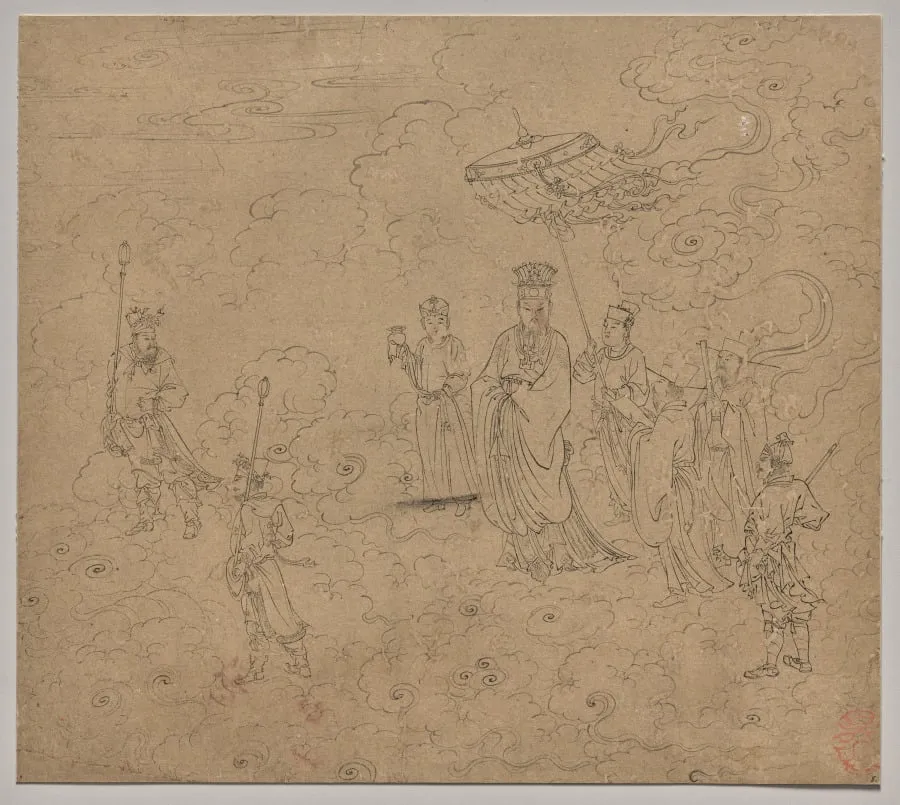
Album of Daoist and Buddhist Themes: Procession of Daoist Deities: Leaf 8 is an unspecified painting by the Ming dynasty painting artist Unknown. It dates from 1204 and is held in the collection of the Cleveland Museum of Art. This album contains fifty painted leaves, each depicting religious figures from Daoist and Buddhist traditions.
About this work
You see a long line of gods in colorful robes floating on clouds, each holding a different object—a sword, a fan, a scroll.
You see a long line of gods in colorful robes floating on clouds, each holding a different object—a sword, a fan, a scroll.
This painting is one page from a 50-page album used to teach young artists how to draw religious scenes. The gods here are Daoist, part of an ancient Chinese belief system. The album mixes Daoist and Buddhist themes, showing how the two traditions overlapped.
To see more paintings like this, look up china, southern song dynasty (1127-1279).
Overview
This album contains fifty painted leaves, each depicting religious figures from Daoist and Buddhist traditions. Likely produced in a studio setting, the works served as instructional models for apprentices learning to render sacred imagery for commissioned altarpieces and temple decorations. The series is organized thematically, with Daoist deities, Buddhist hell judges, and mythic battles appearing in sequence.
Subject & Meaning
Leaf eight portrays a procession of Daoist deities, including the Jade Emperor and other celestial figures, drifting across clouds. Each deity holds symbolic objects—swords, fans, scrolls—that denote their roles in cosmic order and moral governance. The imagery reinforces Daoist cosmology, where divine beings maintain harmony between heaven and earth, guiding souls through the afterlife.
Technique & Style
The figures are rendered with precise brushwork and layered mineral pigments, emphasizing flowing robes and ethereal movement. Backgrounds are left partially empty to suggest celestial space, a convention rooted in Song dynasty aesthetics. Figures are arranged in rhythmic lines, balancing detail with spatial openness, reflecting both technical discipline and spiritual serenity.
History & Provenance
The album likely originated in southern China during the Song dynasty, a period when Daoist and Buddhist iconography frequently intersected in artistic practice. Produced in a professional studio, it was not intended for public worship but as a pedagogical tool. Its survival suggests it was carefully preserved, possibly within monastic or imperial artistic circles.
Context
During the Southern Song, religious painting flourished as state and private patrons commissioned works for temples and ancestral rites. Daoist and Buddhist imagery often coexisted, reflecting syncretic beliefs among elites and commoners alike. This album exemplifies how artistic training incorporated multiple traditions, blending doctrinal accuracy with visual storytelling.
Legacy
The album stands as a rare surviving example of a studio model book from medieval China. It illuminates how religious iconography was standardized and transmitted across generations of artists. Its structure and content influenced later traditions of sacred painting, preserving visual formulas that endured well beyond the Song dynasty.
Artist & collection

 Domestic Scene
 Giacomo and Cardinal Marco, investing Andrea, Abbot of San Zeno, with his Benefice
 The Nymph of Fontainebleau
 Portrait of a Woman
 Madonna and Child with Saints in the Enclosed Garden
 Venus and Minerva
 Family Group of Four on Sofa
 Wall painting from Room H of the Villa of P. Fannius Synistor at Boscoreale
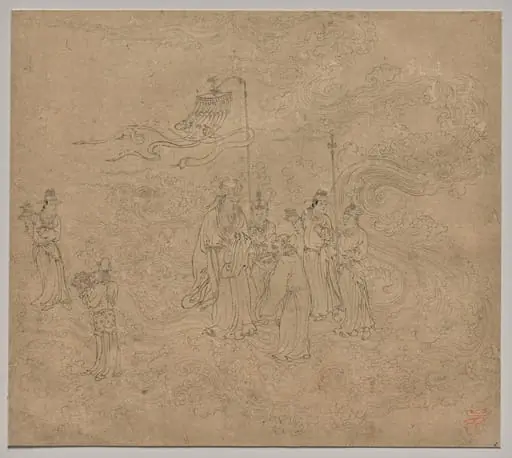 Album of Daoist and Buddhist Themes: Procession of Daoist Deities: Leaf 7
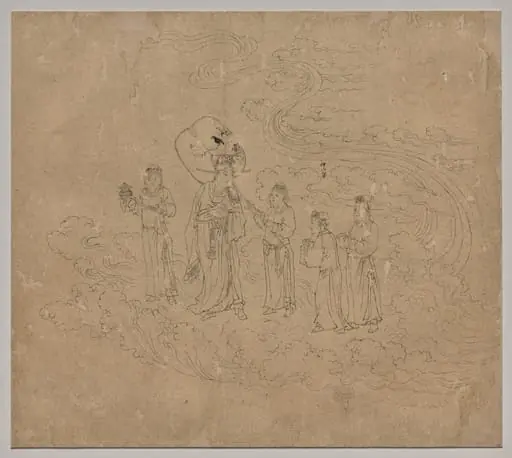 Album of Daoist and Buddhist Themes: Procession of Daoist Deities: Leaf 10
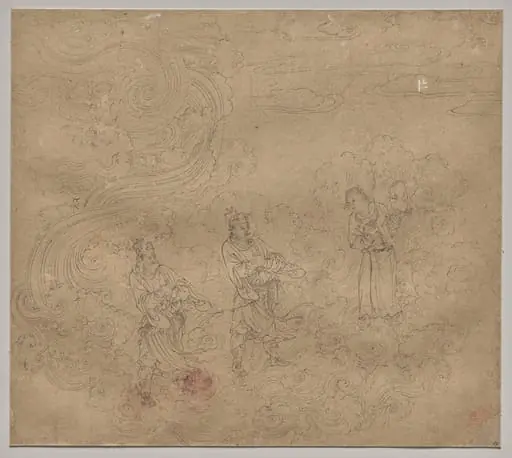 Album of Daoist and Buddhist Themes: Procession of Daoist Deities: Leaf 17
 Album of Daoist and Buddhist Themes: Procession of Daoist Deities: Leaf 6
 Album of Daoist and Buddhist Themes: Procession of Daoist Deities: Leaf 9
 Album of Daoist and Buddhist Themes: Kings of Hells: Leaf 39
 Album of Daoist and Buddhist Themes: Procession of Daoist Deities: Leaf 5