Artwork
Album of Daoist and Buddhist Themes: Procession of Daoist Deities: Leaf 17
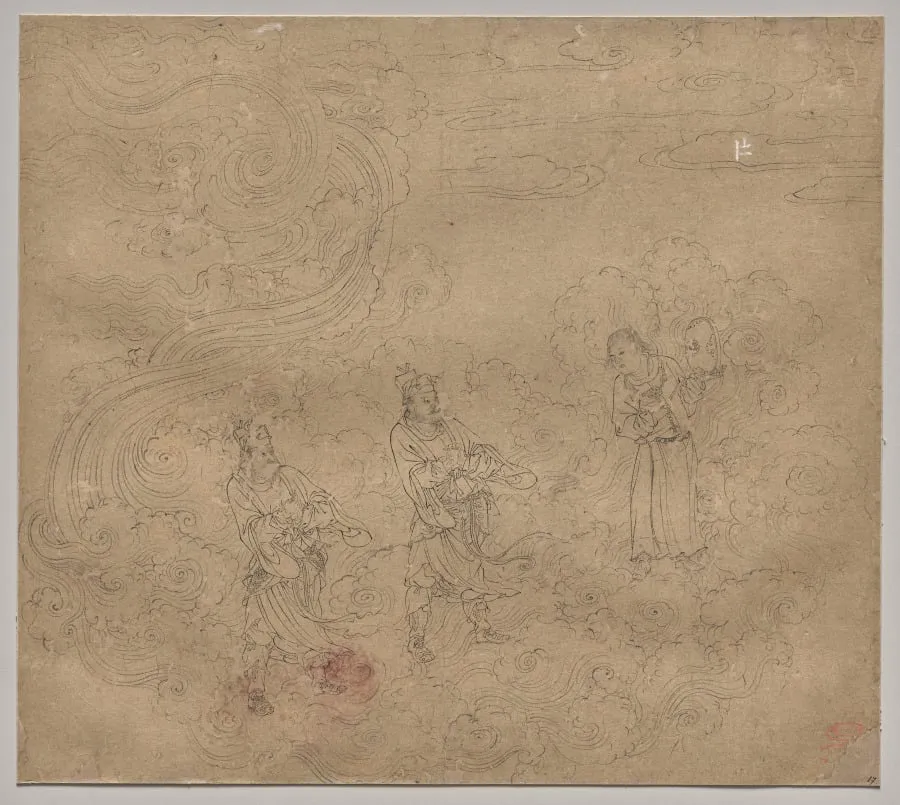
Album of Daoist and Buddhist Themes: Procession of Daoist Deities: Leaf 17 is an unspecified painting by the Ming dynasty painting artist Unknown. It dates from 1204 and is held in the collection of the Cleveland Museum of Art. This album comprises fifty painted leaves, each depicting religious figures from Daoist and Buddhist traditions.
About this work
You see a line of gods in colorful robes floating on clouds, each holding a different object—a sword, a fan, a scroll.
You see a line of gods in colorful robes floating on clouds, each holding a different object—a sword, a fan, a scroll.
This painting is one leaf from a 50-page album used to teach young artists. The gods are Daoist, but the album also shows Buddhist scenes and battles. Someone in the 1200s probably traced or copied these figures to pass on the style.
To see more paintings like this, look up china, southern song dynasty (1127-1279).
Overview
This album comprises fifty painted leaves, each depicting religious figures from Daoist and Buddhist traditions. Likely produced in a studio setting during the Southern Song dynasty, the pages served as instructional models for apprentices learning to render divine imagery for commissioned works. The composition of each leaf follows a standardized format, emphasizing clarity and symbolic detail over individual expression.
Subject & Meaning
The first section features the Jade Emperor and other Daoist deities, arranged in a celestial procession. Each figure holds a distinct attribute—sword, fan, or scroll—signifying their role within the heavenly hierarchy. These images reflect Daoist cosmology, where divine beings maintain cosmic order. Later sections transition to Buddhist themes, including the Ten Kings of Hell, illustrating moral accountability after death.
Technique & Style
The paintings employ fine ink lines and restrained color, characteristic of Southern Song courtly aesthetics. Figures are rendered with precise contours and float above stylized clouds, suggesting divine movement. The style is deliberate and repetitive, indicating its function as a teaching tool rather than a unique artistic statement. Tracing or copying from earlier models was likely part of the training process.
History & Provenance
The album was probably compiled in the 13th century within a professional painting studio, possibly in the Jiangnan region. Its survival suggests it was valued as a reference archive rather than a display object. While the exact origin and patron are unknown, its structure aligns with known practices of artisan workshops that trained successors through standardized visual templates.
Context
During the Southern Song dynasty, religious imagery flourished in both state-sponsored and commercial contexts. Daoist and Buddhist iconography often coexisted in visual culture, reflecting syncretic beliefs among the elite and commoners alike. This album mirrors the era’s demand for standardized religious art used in temples, rituals, and private devotion.
Legacy
The album represents a rare surviving example of a pedagogical art object from medieval China. It preserves stylistic conventions that influenced later generations of religious painters. Though not attributed to a single artist, its systematic approach offers insight into how artistic traditions were transmitted through apprenticeship, shaping the visual language of East Asian sacred art for centuries.
Artist & collection

 Domestic Scene
 Giacomo and Cardinal Marco, investing Andrea, Abbot of San Zeno, with his Benefice
 The Nymph of Fontainebleau
 Portrait of a Woman
 Madonna and Child with Saints in the Enclosed Garden
 Venus and Minerva
 Family Group of Four on Sofa
 Wall painting from Room H of the Villa of P. Fannius Synistor at Boscoreale
 Album of Daoist and Buddhist Themes: Procession of Daoist Deities: Leaf 9
 Album of Daoist and Buddhist Themes: Procession of Daoist Deities: Leaf 8
 Album of Daoist and Buddhist Themes: Procession of Daoist Deities: Leaf 10
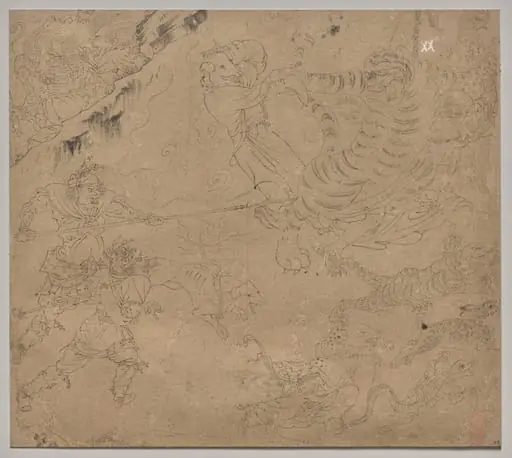 Album of Daoist and Buddhist Themes: Search the Mountain: Leaf 44
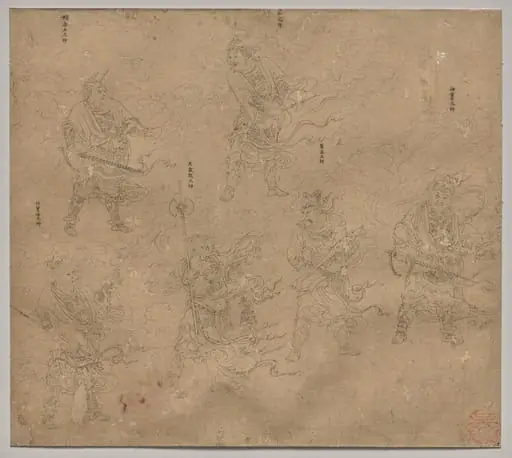 Album of Daoist and Buddhist Themes: Procession of Daoist Deities: Leaf 13
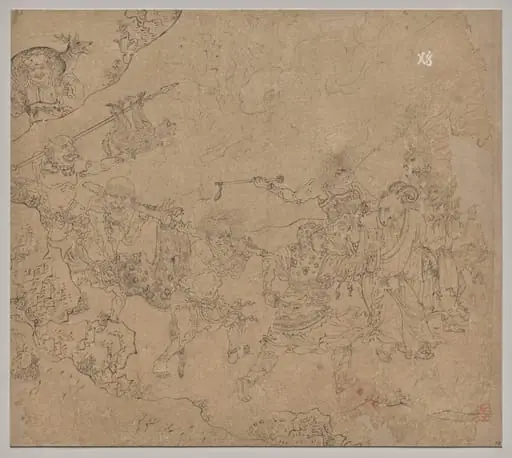 Album of Daoist and Buddhist Themes: Search the Mountain: Leaf 45
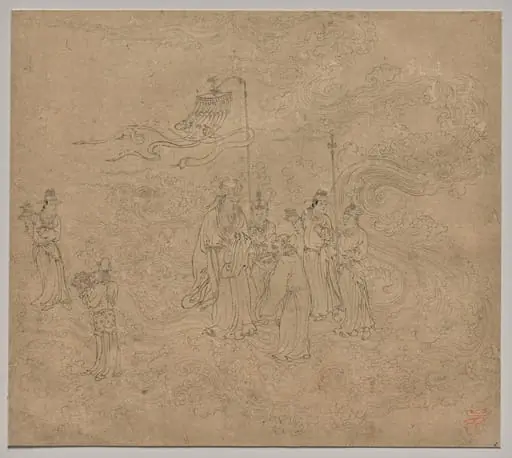 Album of Daoist and Buddhist Themes: Procession of Daoist Deities: Leaf 7