Artwork
Album of Daoist and Buddhist Themes: Procession of Daoist Deities: Leaf 15
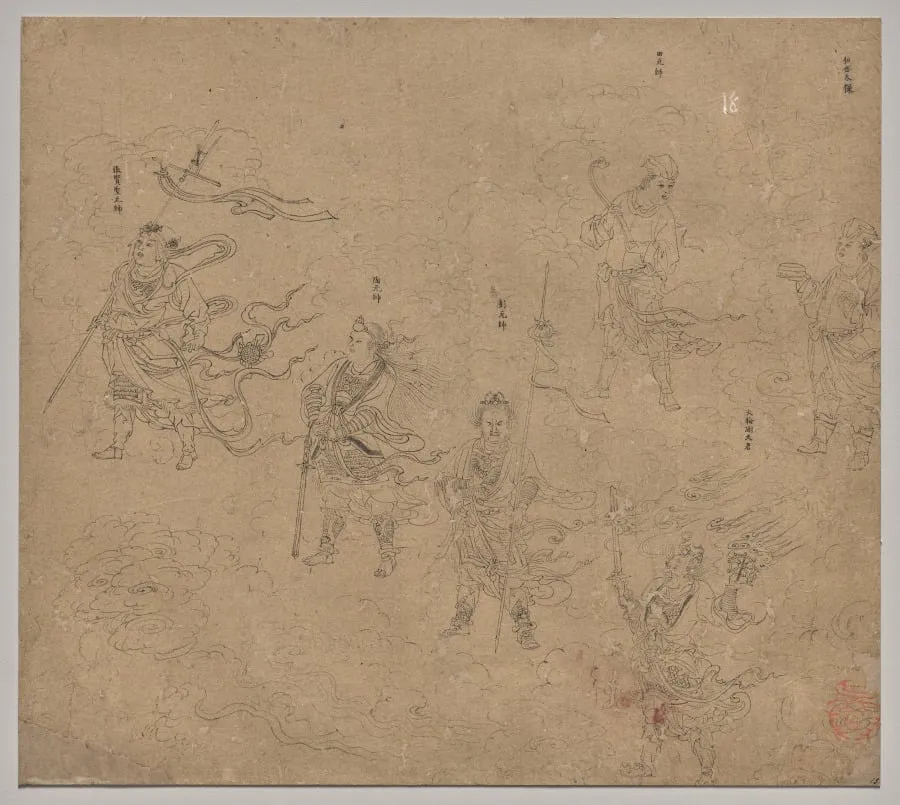
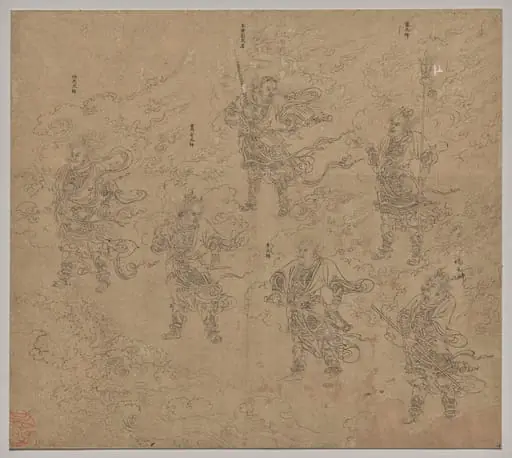
Album of Daoist and Buddhist Themes: Procession of Daoist Deities: Leaf 15 is an unspecified painting by the Ming dynasty painting artist Unknown. It dates from 1204 and is held in the collection of the Cleveland Museum of Art. This leaf comes from a 13th-century Chinese album depicting Daoist deities in the guise of imperial officials and military commanders.
About this work
The artist gave each deity a different face and pose, so you can tell them apart even though their names are written in tiny script.
You see six figures in bright robes and armor marching in two rows across a thin paper leaf. The four at the front hold swords and banners; the two at the back wear plain caps and carry scrolls.
This is a page from a 1200s Chinese album showing Daoist gods as if they were generals and officials. The artist gave each deity a different face and pose, so you can tell them apart even though their names are written in tiny script.
To see more paintings like this, look up subject: china, southern song dynasty (1127-1279).
Overview
This leaf comes from a 13th-century Chinese album depicting Daoist deities in the guise of imperial officials and military commanders. Rendered in ink and color on paper, it presents six figures in a single horizontal procession, arranged in two rows. The lower tier features four armored Field Marshals, while the upper tier shows two lesser attendants in simpler robes. Each figure is individually characterized through facial expression and posture, despite the small script labels identifying them.
Subject & Meaning
The figures represent Daoist celestial bureaucrats, their military attire symbolizing their authority over cosmic order and spiritual protection. The Field Marshals, armed with swords and banners, embody active divine enforcement, while the two figures behind, holding scrolls, suggest roles in record-keeping or ritual invocation. Their arrangement reflects a hierarchical celestial court, mirroring earthly administrative structures to convey divine legitimacy and structured cosmic governance.
Technique & Style
The painting employs fine brushwork and restrained color to distinguish each figure’s identity and rank. Armor and robes are rendered with precise linework, while facial features vary subtly to individualize the deities. The composition is tightly controlled, fitting all figures within a narrow vertical format typical of album leaves. Ink outlines define form, with minimal shading, emphasizing clarity over dramatic effect, consistent with Southern Song aesthetic priorities.
History & Provenance
Created during the Southern Song dynasty (1127–1279), this leaf was part of a larger illustrated album likely commissioned for ritual or scholarly use. Such albums circulated among Daoist communities and literati, blending religious iconography with artistic refinement. Its survival suggests careful preservation, possibly within temple or private collections, though its exact early provenance remains undocumented.
Context
This work reflects the Southern Song synthesis of Daoist theology and bureaucratic imagery, where celestial beings were visualized as state officials to reinforce cosmic order. Similar albums were produced in Buddhist and Daoist traditions, often for devotional or didactic purposes. The emphasis on individualized portraiture aligns with contemporary trends in Chinese figure painting, where identity and hierarchy were rendered with quiet precision rather than grandeur.
Legacy
The album’s approach influenced later Daoist iconography by standardizing the visual language of celestial officials. Its survival offers insight into how religious authority was visually encoded in Song-era China. Though few complete albums from this period remain, fragments like this leaf continue to inform studies of religious art, illustrating the quiet integration of spiritual belief into administrative aesthetics.
Artist & collection

 Domestic Scene
 Giacomo and Cardinal Marco, investing Andrea, Abbot of San Zeno, with his Benefice
 The Nymph of Fontainebleau
 Portrait of a Woman
 Madonna and Child with Saints in the Enclosed Garden
 Venus and Minerva
 Family Group of Four on Sofa
 Wall painting from Room H of the Villa of P. Fannius Synistor at Boscoreale
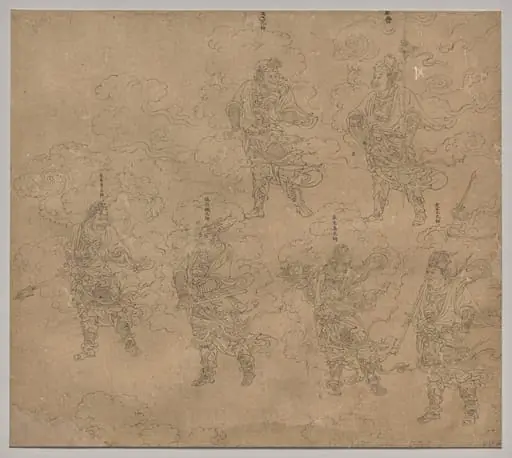 Album of Daoist and Buddhist Themes: Procession of Daoist Deities: Leaf 14
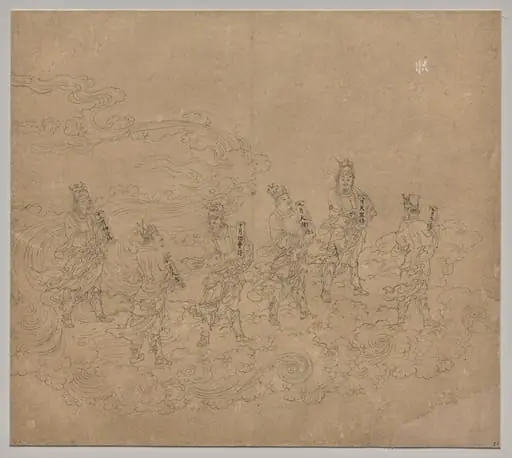 Album of Daoist and Buddhist Themes: Procession of Daoist Deities: Leaf 24
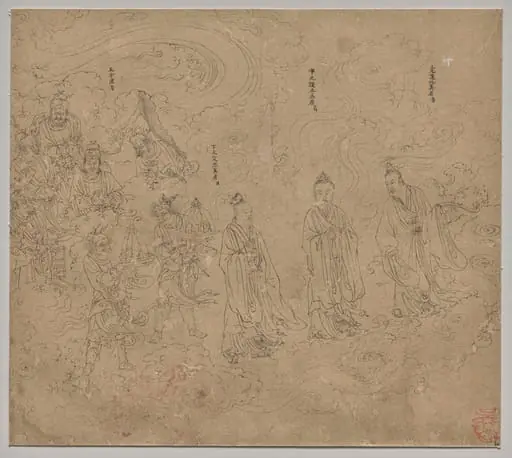 Album of Daoist and Buddhist Themes: Procession of Daoist Deities: Leaf 20
 Album of Daoist and Buddhist Themes: Procession of Daoist Deities: Leaf 13
 Album of Daoist and Buddhist Themes: Procession of Daoist Deities: Leaf 12
 Album of Daoist and Buddhist Themes: Procession of Daoist Deities: Leaf 19
 Album of Daoist and Buddhist Themes: Procession of Daoist Deities: Leaf 17
 Album of Daoist and Buddhist Themes: Procession of Daoist Deities: Leaf 16