Artwork
Album of Daoist and Buddhist Themes: Procession of Daoist Deities: Leaf 19
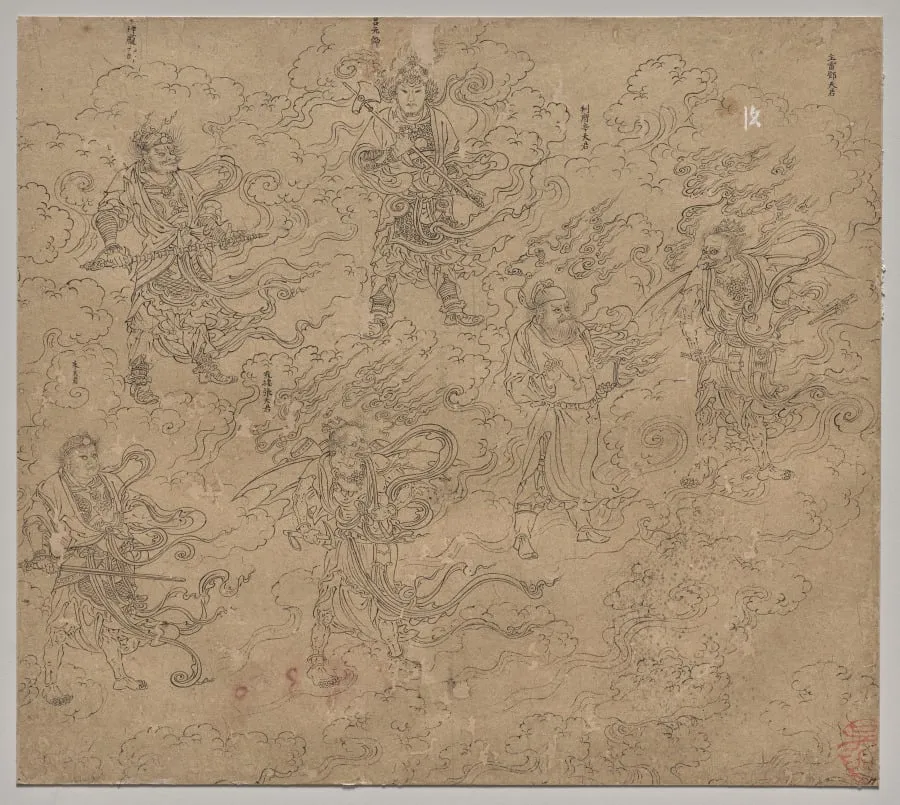
Album of Daoist and Buddhist Themes: Procession of Daoist Deities: Leaf 19 is an unspecified painting by the Ming dynasty painting artist Unknown. It dates from 1204 and is held in the collection of the Cleveland Museum of Art. This sheet belongs to a fifty‑image album that illustrates the complete Daoist cosmos.
About this work
You see a line of robed figures floating on clouds, each holding a different object—a sword, a fan, a scroll.
You see a line of robed figures floating on clouds, each holding a different object—a sword, a fan, a scroll.
This is one page from a 50-page album that maps the entire Daoist heaven. The artist drew every deity in the same calm, precise way, as if listing them in a phone book for the gods. No drama, just order.
To see how other cultures pictured their gods, look up *china, southern song dynasty (1127-1279)*.
Overview
This sheet belongs to a fifty‑image album that illustrates the complete Daoist cosmos. The collection is divided into three thematic groups: celestial processions of Daoist deities, the Ten Kings of the Underworld, and a narrative of Erlang’s campaign against monsters on Mount Guankou. Each page presents a roster of divine figures rendered in a uniform, orderly style.
Subject & Meaning
The lower tier of the composition displays four heavenly lords—Zhu Yanshi, Zhang An, Xin Jiang and Deng Cheng—standing side by side. Above them, two field marshals, Peng Qiao and Lu, occupy the upper tier. The arrangement suggests a hierarchical procession, emphasizing the structured order of the Daoist pantheon rather than dramatic interaction.
Technique & Style
The artist employs a restrained brushwork that treats each deity with equal calmness, akin to a catalog entry. Figures are robed, levitating on stylized clouds, and each holds a distinct attribute such as a sword, a fan or a scroll. The consistent line quality and lack of narrative tension convey a sense of bureaucratic precision.
History & Provenance
Created during the Southern Song period (1127–1279), the album reflects the era’s interest in codifying religious cosmology. The work has survived as a single leaf, preserving the original calligraphic labels that identify each deity, which aids scholars in tracing the development of Daoist iconography.
Context
In the broader landscape of Chinese religious art, such systematic depictions contrast with more narrative or mythic scenes found in Buddhist or folk traditions. The album serves as a visual reference for ritual practitioners, mapping the celestial hierarchy for ceremonial purposes.
Artist & collection

 Domestic Scene
 Giacomo and Cardinal Marco, investing Andrea, Abbot of San Zeno, with his Benefice
 The Nymph of Fontainebleau
 Portrait of a Woman
 Madonna and Child with Saints in the Enclosed Garden
 Venus and Minerva
 Family Group of Four on Sofa
 Wall painting from Room H of the Villa of P. Fannius Synistor at Boscoreale
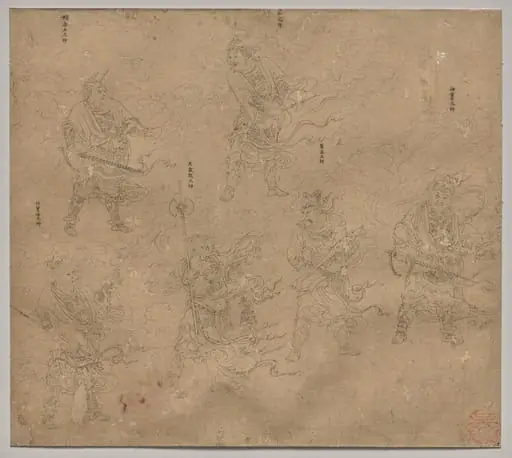 Album of Daoist and Buddhist Themes: Procession of Daoist Deities: Leaf 13
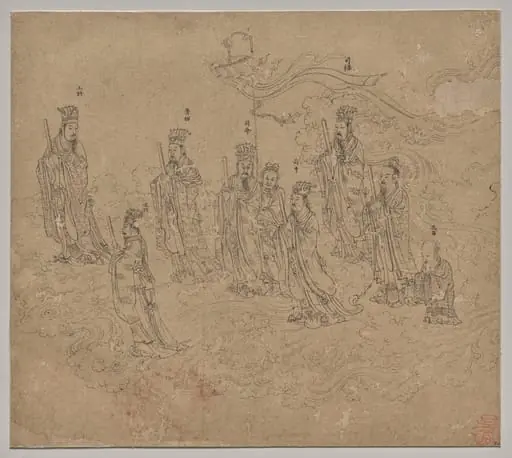 Album of Daoist and Buddhist Themes: Procession of Daoist Deities: Leaf 26
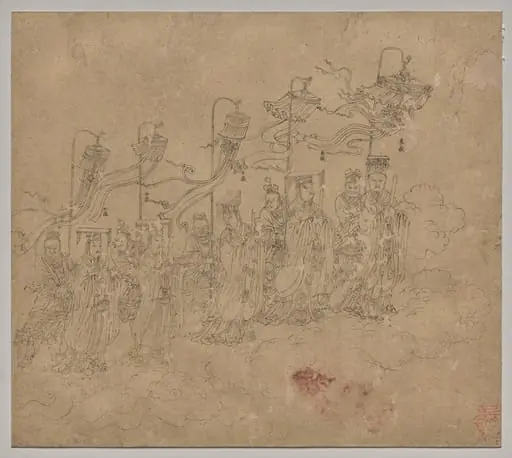 Album of Daoist and Buddhist Themes: Procession of Daoist Deities: Leaf 5
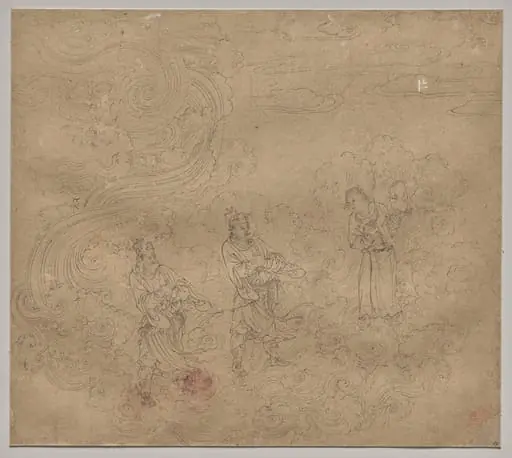 Album of Daoist and Buddhist Themes: Procession of Daoist Deities: Leaf 17
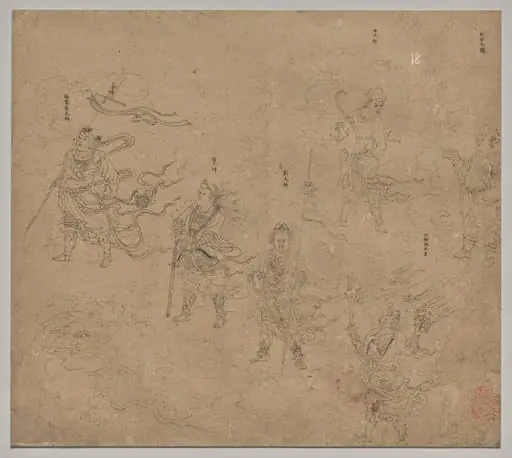 Album of Daoist and Buddhist Themes: Procession of Daoist Deities: Leaf 15
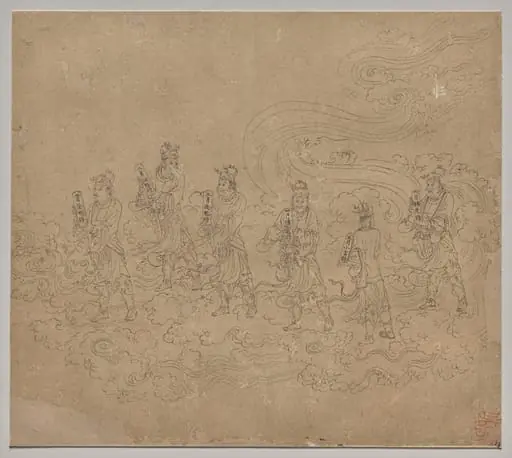 Album of Daoist and Buddhist Themes: Procession of Daoist Deities: Leaf 23
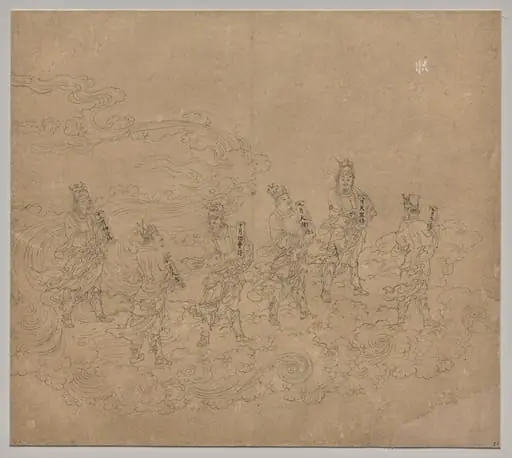 Album of Daoist and Buddhist Themes: Procession of Daoist Deities: Leaf 24
 Album of Daoist and Buddhist Themes: Procession of Daoist Deities: Leaf 10
 Album of Daoist and Buddhist Themes: Kings of Hells: Leaf 39
 Album of Daoist and Buddhist Themes: Procession of Daoist Deities: Leaf 6