Artwork
All the Year Round
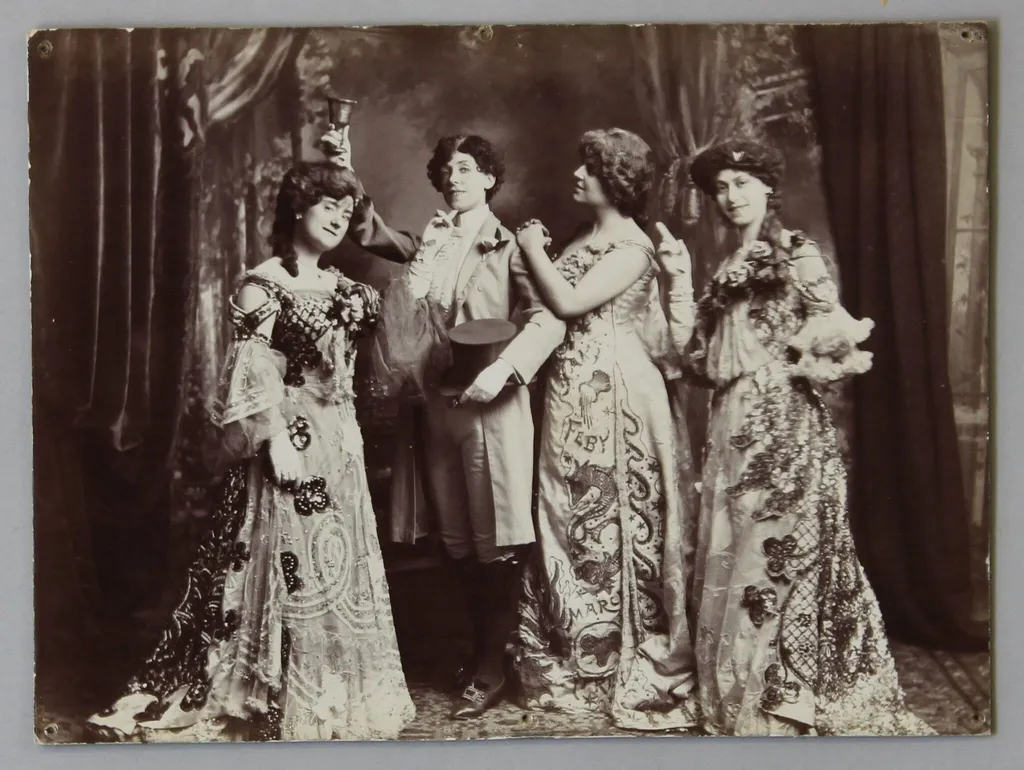
All the Year Round is a photographic photography by Unknown. It dates from 1904 and is held in the collection of the Victoria and Albert Museum.
About this work
Overview
A stage photograph captures a moment from the ballet All the Year Round, performed at London’s Alhambra Theatre on 21 January 1904.
A stage photograph captures a moment from the ballet All the Year Round, performed at London’s Alhambra Theatre on 21 January 1904. The image preserves the choreography, costumes, and set design of a production intended for popular entertainment. Though the photograph is not an artistic study in sfumato—a technique associated with painting—it serves as a documentary record of early 20th-century theatrical practice.
Subject & Meaning
The dancers, arranged in a group formation, embody the lighthearted, episodic nature of the ballet’s title. Their poses suggest movement frozen in time, reflecting the choreographic collaboration between Lucia Cormani, Fred Farren, and Giovanni Rosi. The work was designed for mass appeal, blending spectacle with narrative simplicity, typical of music hall-style ballets of the era.
Technique & Style
The photograph employs standard theatrical documentation methods of the period: frontal composition, even lighting, and a static camera to capture the full stage picture. Costumes and backdrops are rendered in detail, emphasizing the production’s visual richness. No artistic manipulation or tonal gradation like sfumato is evident; the image prioritizes clarity over aesthetic experimentation.
History & Provenance
Created for the Alhambra Theatre, a venue known for variety performances, the ballet was part of a seasonal program. The production credits list multiple choreographers, designers, and a costume workshop—Alias—indicating a collaborative, commercial approach. The photograph likely originated as a promotional or archival item, preserved as evidence of the theatre’s output during its peak years.
Context
In early 1900s London, ballet at venues like the Alhambra blended classical forms with popular entertainment. Productions were often short, visually ornate, and designed for broad audiences. Unlike the Royal Ballet’s repertoire, these works prioritized spectacle over narrative depth, reflecting the tastes of a diverse urban public seeking accessible cultural experiences.
Legacy
The photograph remains a fragment of a largely forgotten performance, offering insight into the mechanics of Edwardian theatre. While the ballet itself has no surviving choreographic record, such images help reconstruct the visual language of popular dance at the time, preserving the work of designers and performers otherwise lost to history.
Artist & collection

 Domestic Scene
 Giacomo and Cardinal Marco, investing Andrea, Abbot of San Zeno, with his Benefice
 The Nymph of Fontainebleau
 Portrait of a Woman
 Madonna and Child with Saints in the Enclosed Garden
 Venus and Minerva
 Family Group of Four on Sofa
 Wall painting from Room H of the Villa of P. Fannius Synistor at Boscoreale
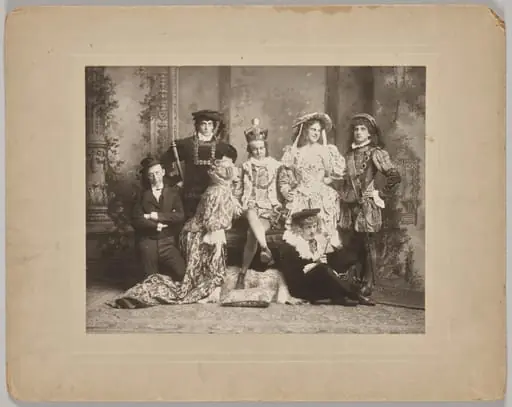 Untitled (theatrical scene with seven costumed figures)
 Guy Little Theatrical Photograph
 Guy Little Theatrical Photograph
 Guy Little Theatrical Photograph
 Untitled (theatrical scene with 3 figures: the palm reader)
 Guy Little Theatrical Photograph
 Guy Little Theatrical Photograph
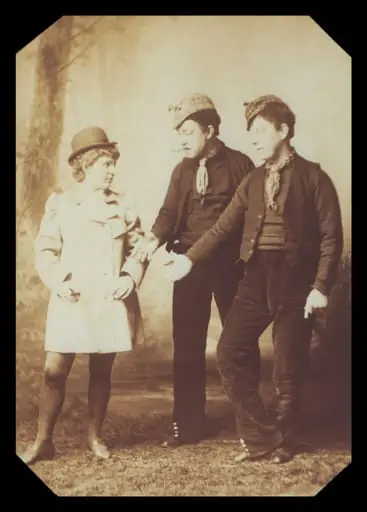 Guy Little Theatrical Photograph
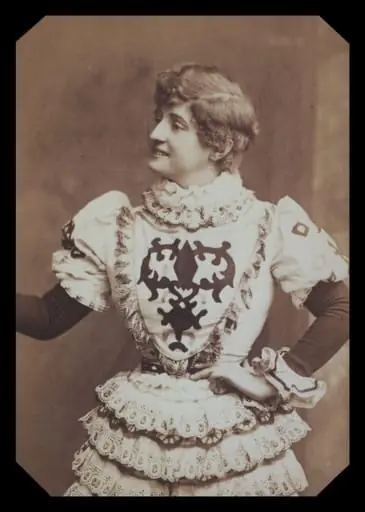 Guy Little Theatrical Photograph
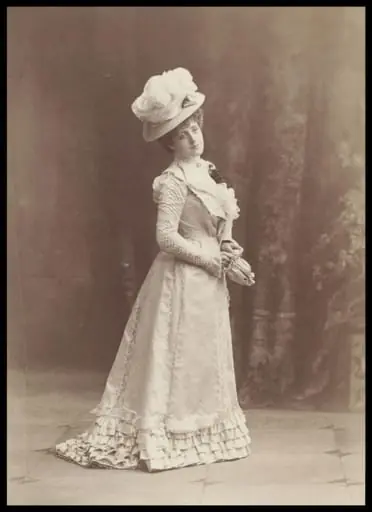 Guy Little Theatrical Photograph