Artwork
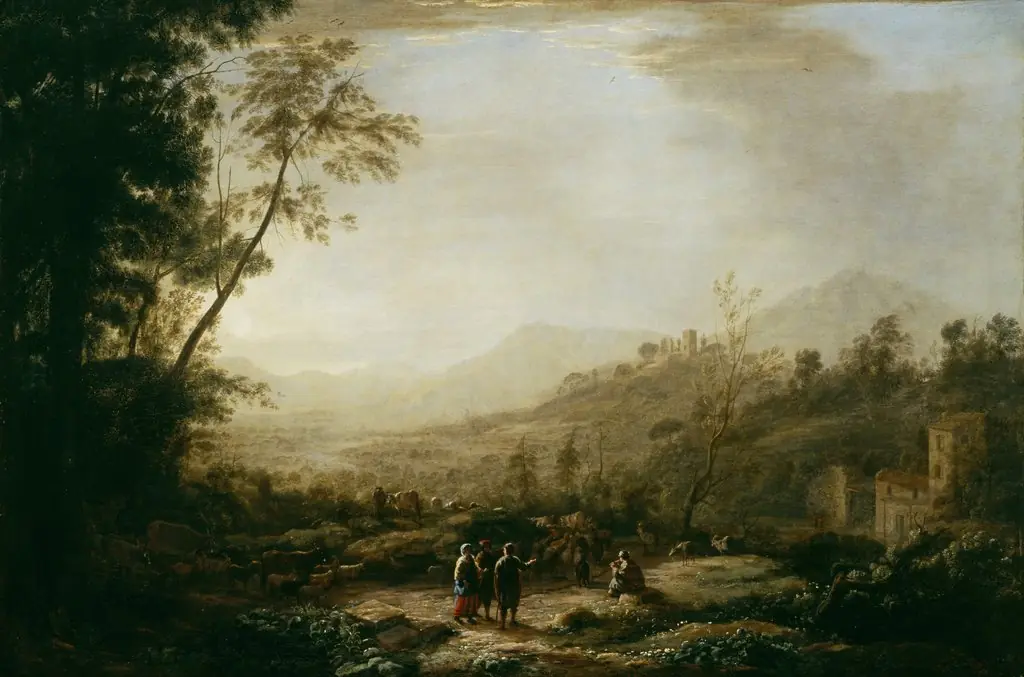
An Italianate Landscape with an Unidentified Subject from the Old Testament
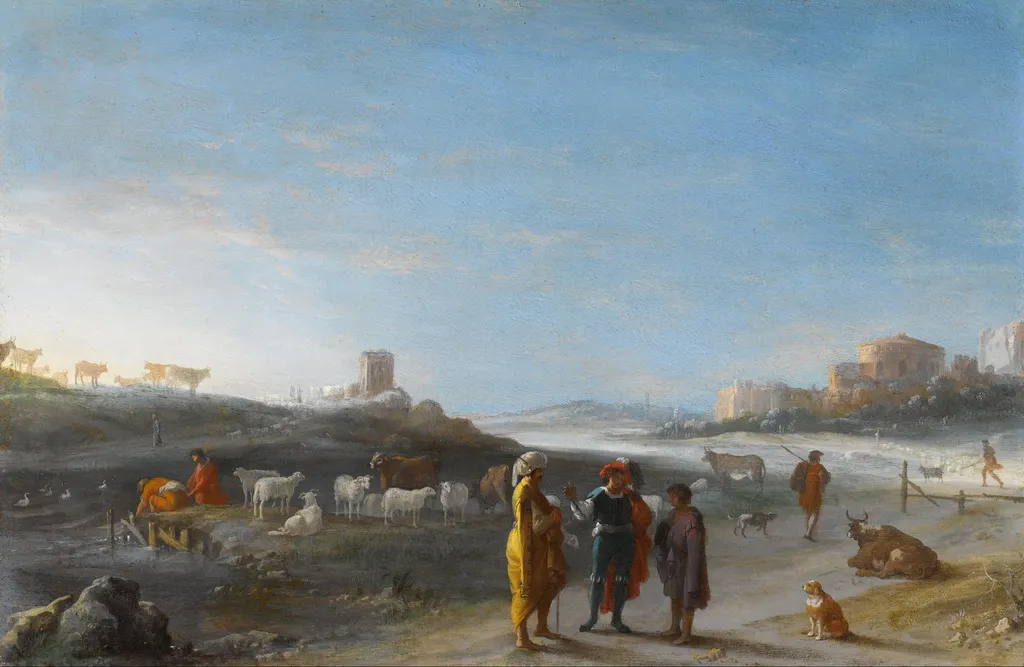
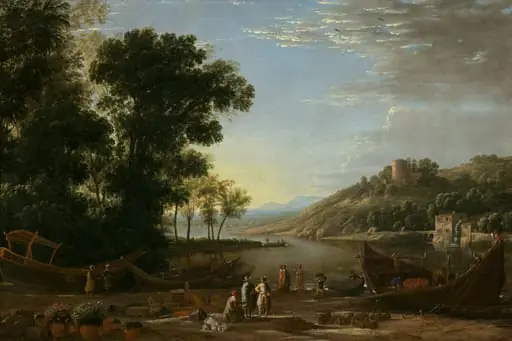
An Italianate Landscape with an Unidentified Subject from the Old Testament is an unspecified painting by the Dutch Golden Age artist Unknown. It dates from 1620 and is held in the collection of the Rijksmuseum. This landscape painting blends the topography of Italy with a biblical narrative, created by an artist active in the Netherlands.
About this work
Overview
This landscape painting blends the topography of Italy with a biblical narrative, created by an artist active in the Netherlands.
This landscape painting blends the topography of Italy with a biblical narrative, created by an artist active in the Netherlands. Though unsigned, the work reflects a deliberate emulation of Italian scenery—rolling hills, soft light, and classical architecture—within a Northern European context. The absence of a signature leaves the artist’s identity unknown, but their affinity for Italianate aesthetics is unmistakable.
Subject & Meaning
The central group of three figures, positioned before a flock of sheep, alludes to an unidentifiable episode from the Old Testament. Their quiet interaction suggests a moment of contemplation or instruction, typical of biblical scenes rendered with restraint. The pastoral setting reinforces themes of divine providence and humble labor, common in religious imagery of the period, though the specific story remains unresolved.
Technique & Style
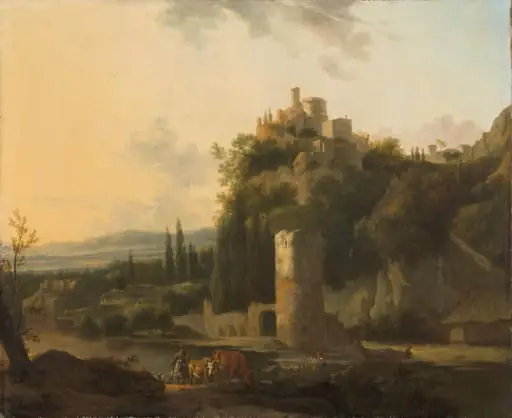
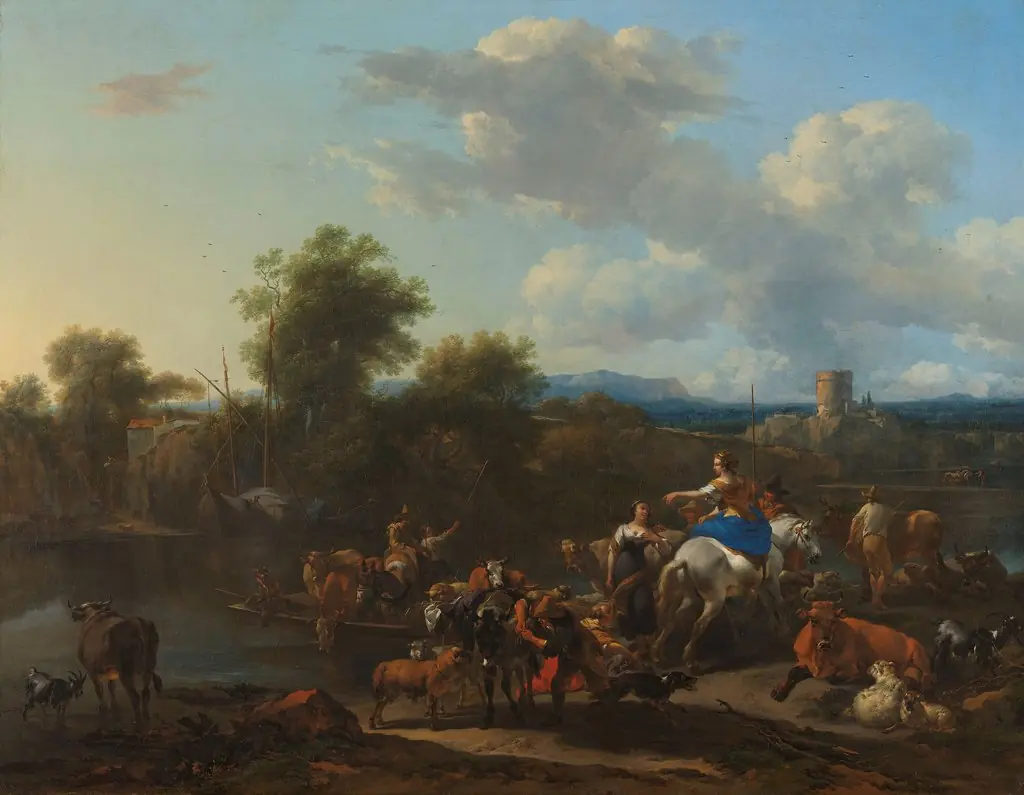
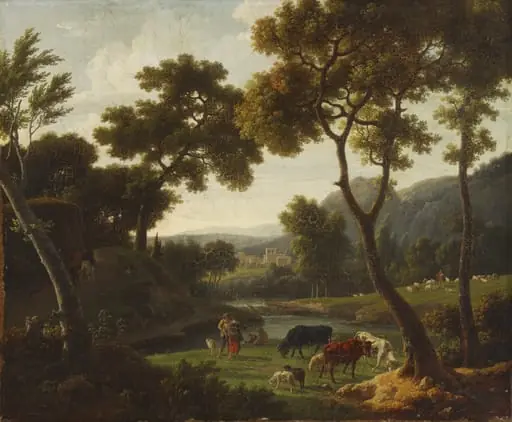
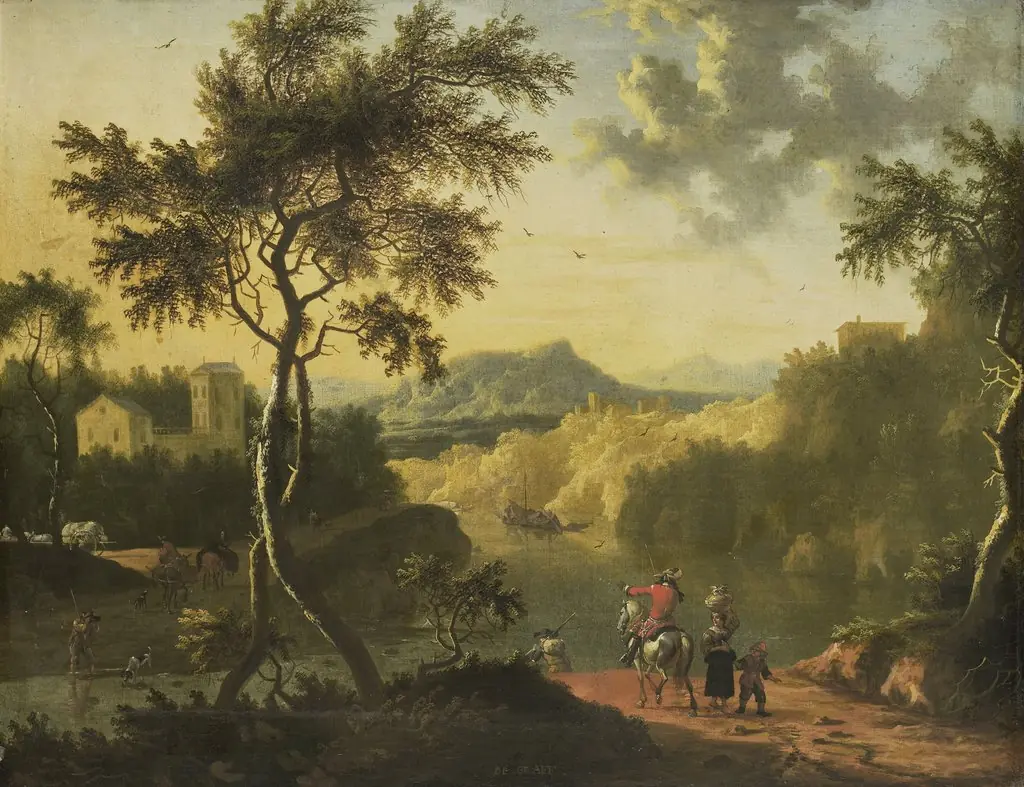
The composition employs a broad, open horizon and gently undulating terrain to evoke the Italian countryside. Light is diffused and warm, casting soft shadows that enhance the sense of depth and atmosphere. Buildings are rendered with subtle detail, not as focal points but as harmonious elements within the landscape. The handling of figures is modest, integrated into the environment rather than dramatized.
History & Provenance
The painting’s origin lies in the Dutch Republic, where artists frequently adapted Italian models to suit local tastes. Its early ownership is undocumented, and it entered public collections without a clear provenance trail. The lack of a signature and absence of contemporary records have hindered attribution, though stylistic analysis places it within the circle of Dutch painters influenced by Italianate traditions.
Context
In 17th-century Netherlands, Italian landscapes were highly admired, even among artists who never traveled south. Painters synthesized Italianate elements—sunlit hills, classical ruins, pastoral life—into scenes that resonated with domestic sensibilities. This work exemplifies that trend: a biblical subject framed not as drama but as serene, timeless nature, aligning with broader Northern European preferences for quiet contemplation.
Legacy
The painting contributes to a broader understanding of how Dutch artists reinterpreted foreign visual languages without direct experience of Italy. Its quiet dignity and restrained composition reflect a deliberate departure from overt narrative intensity, favoring mood and atmosphere. Today, it remains a quiet example of cross-cultural artistic exchange within the Rijksmuseum’s collection, valued for its subtle synthesis rather than its fame.
Artist & collection

 Domestic Scene
 Giacomo and Cardinal Marco, investing Andrea, Abbot of San Zeno, with his Benefice
 The Nymph of Fontainebleau
 Portrait of a Woman
 Madonna and Child with Saints in the Enclosed Garden
 Venus and Minerva
 Family Group of Four on Sofa
 Wall painting from Room H of the Villa of P. Fannius Synistor at Boscoreale