Artwork
'Andromeda' by Lawrence Macdonald
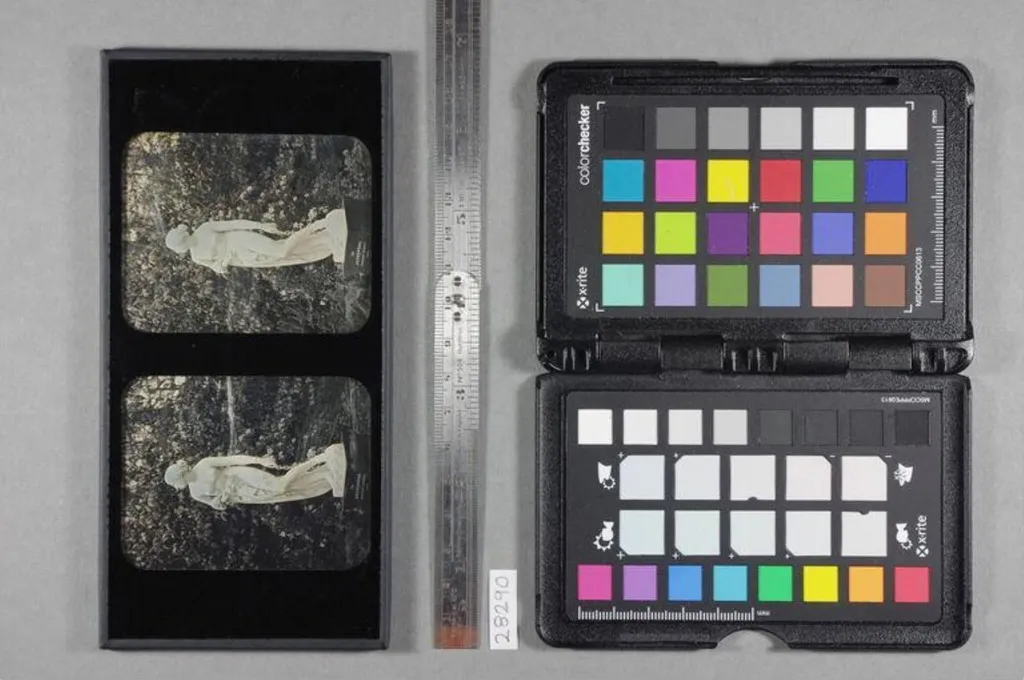
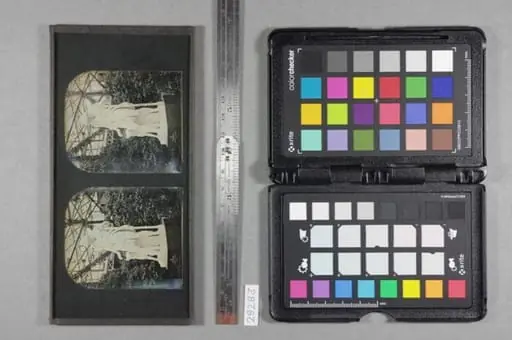
'Andromeda' by Lawrence Macdonald is a photographic photography by the Impressionist artist Unknown. It dates from 1854 and is held in the collection of the Victoria and Albert Museum. A stereoscopic daguerreotype from 1854 captures Lawrence Macdonald’s 1842 marble sculpture of Andromeda.
About this work
Overview
The image was produced not as an independent artwork but as a documentary record, likely for study or reproduction purposes.
A stereoscopic daguerreotype from 1854 captures Lawrence Macdonald’s 1842 marble sculpture of Andromeda. The image was produced not as an independent artwork but as a documentary record, likely for study or reproduction purposes. It is mounted in a black frame with dual apertures for stereoscopic viewing, now enclosed in a later passe-partout. The original casing is lost, and no evidence remains of its initial presentation.
Subject & Meaning
The sculpture portrays Andromeda, the mythological princess chained to a rock as punishment, moments before her rescue by Perseus. Macdonald rendered her in a pose of resigned vulnerability, draped in flowing fabric that clings to her form. The photograph preserves the sculpture’s emotional stillness and classical idealism, emphasizing the tension between physical constraint and ethereal grace.
Technique & Style
The daguerreotype employs the stereoscopic format, producing two slightly offset images that create a 3D effect when viewed through a device. The lighting is even and controlled, highlighting the sculpture’s contours without dramatic shadow. Tools such as a color checker and ruler appear in the frame, indicating the photograph’s utilitarian purpose—accurate documentation rather than aesthetic expression.
History & Provenance
The original marble sculpture was commissioned by the Marquess of Abercorn and exhibited at the Great Exhibition of 1851. The daguerreotype followed shortly after, possibly commissioned by the artist or a patron to circulate the work’s image. The photograph’s survival contrasts with the loss of the original mounting, leaving only the image and its later frame as physical traces of its context.
Context
In the mid-19th century, photography emerged as a tool for archiving sculpture, especially for institutions and collectors unable to view originals. Stereoscopic images offered depth and detail, aiding in academic study and replication. Macdonald’s Andromeda, already celebrated for its classical fidelity, benefited from this new medium’s precision, extending its reach beyond the exhibition hall.
Legacy
The daguerreotype serves as a key record of a sculpture now held by the Victoria and Albert Museum. While the photograph itself was never intended as fine art, it preserves the sculpture’s form with technical clarity, offering insight into how 19th-century audiences engaged with classical revival works. Its existence underscores photography’s role in shaping art historical memory.
Artist & collection

 Domestic Scene
 Giacomo and Cardinal Marco, investing Andrea, Abbot of San Zeno, with his Benefice
 The Nymph of Fontainebleau
 Portrait of a Woman
 Madonna and Child with Saints in the Enclosed Garden
 Venus and Minerva
 Family Group of Four on Sofa
 Wall painting from Room H of the Villa of P. Fannius Synistor at Boscoreale
 Greco-Roman Sculptures at Crystal Palace
 Statue of a Stag at Crystal Palace
 Sculptures on display at Crystal Palace
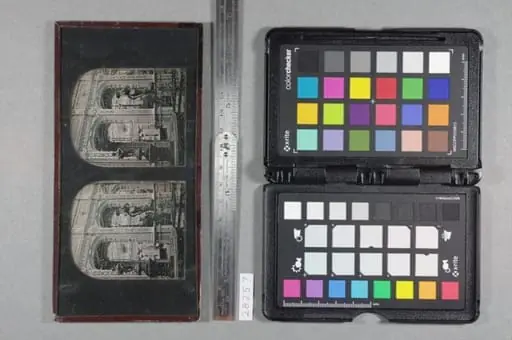 Sculpture Court at Crystal Palace, including Donatello's 'David'
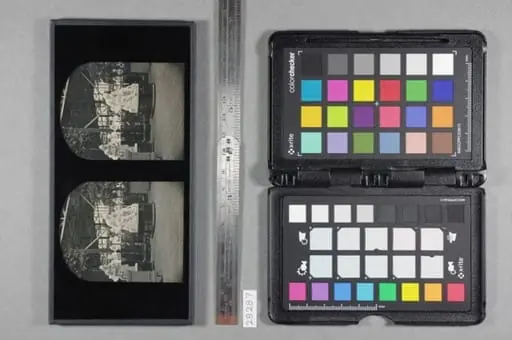 'Cain et sa race maudits de Dieu' by Antoine Etex and other statuary exhibited at Crystal Palace
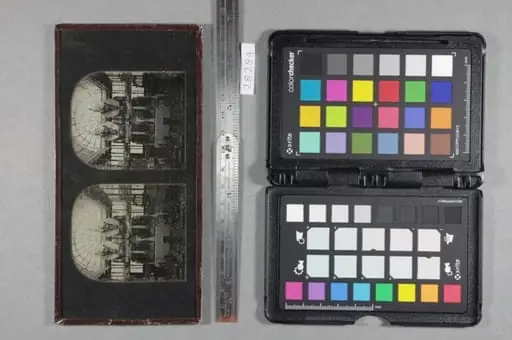 Monumental Egyptian Sculpture at Crystal Palace
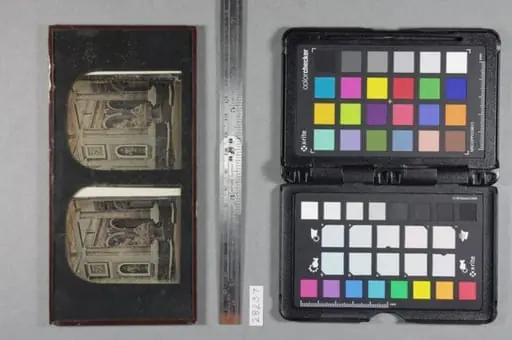 Italian Court at the Crystal Palace
 Sculpture of Ulysses at Crystal Palace
 Medieval Architecture and Sculpture at Crystal Palace