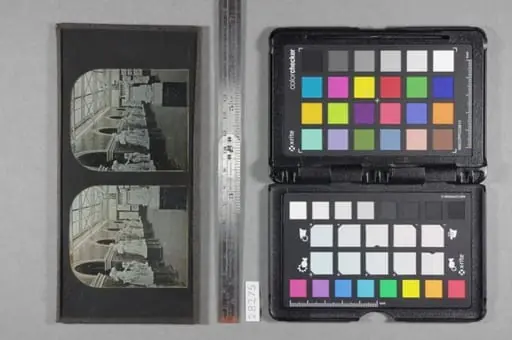
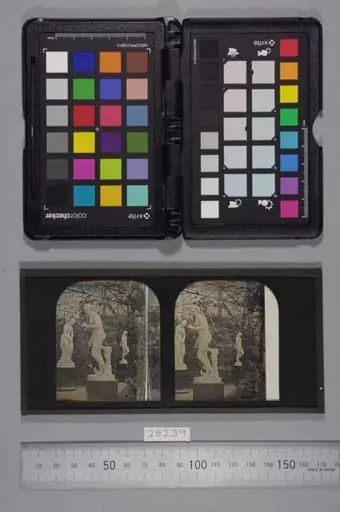
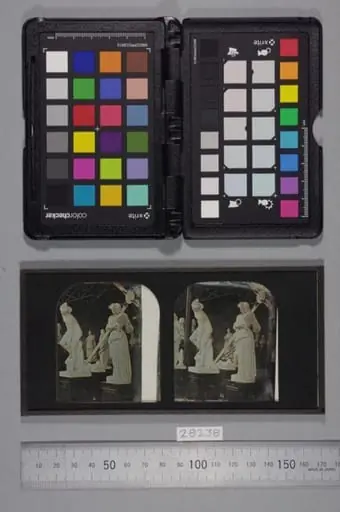
Artwork
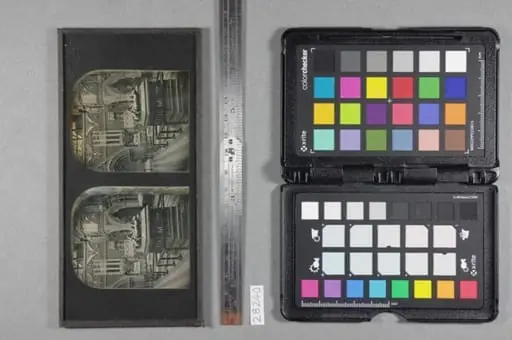
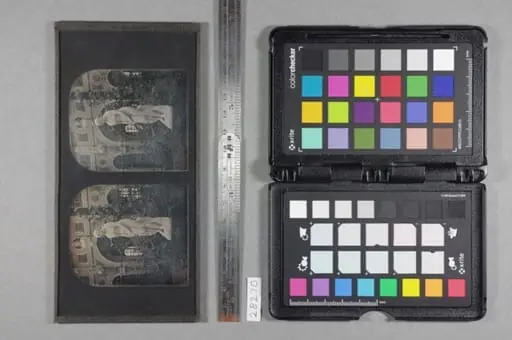
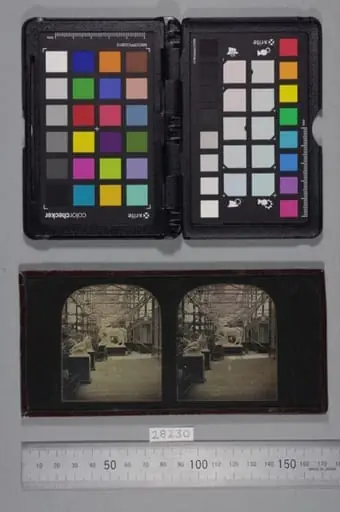
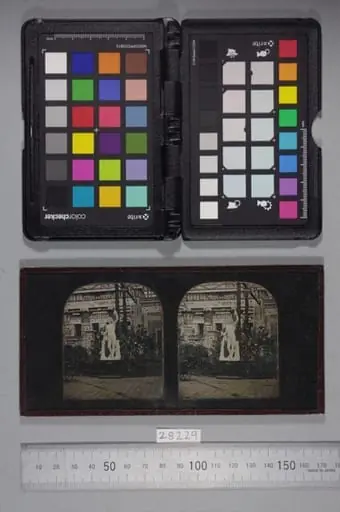
'Cain et sa race maudits de Dieu' by Antoine Etex and other statuary exhibited at Crystal Palace
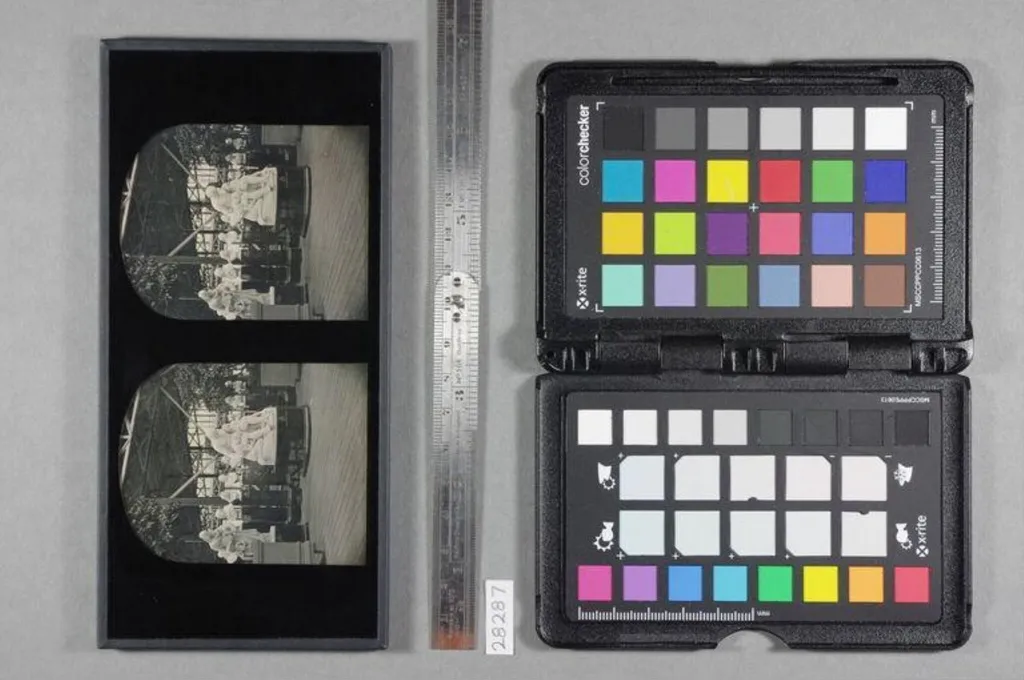
'Cain et sa race maudits de Dieu' by Antoine Etex and other statuary exhibited at Crystal Palace is a photographic photography by the Impressionist artist Unknown. It dates from 1854 and is held in the collection of the Victoria and Albert Museum.
About this work
Overview
Its dual-image format suggests it was intended for three-dimensional viewing, likely serving as a record of the exhibition rather than a decorative piece.
A stereoscopic daguerreotype from 1854 documents a group of sculptures displayed at the Crystal Palace, including Antoine Etex’s marble group *Cain et sa race maudits de Dieu*. The photograph, mounted in black and later framed in a glazed passe-partout, was rebound in 1981. Its dual-image format suggests it was intended for three-dimensional viewing, likely serving as a record of the exhibition rather than a decorative piece.
Subject & Meaning
The sculpture depicts Cain and his cursed descendants, drawn from the biblical narrative of divine punishment. Figures are arranged in a group, their postures conveying despair and isolation. Etex’s interpretation emphasizes physical suffering and spiritual exile, reflecting 19th-century Romantic sensibilities toward moral and divine retribution, though the scene is rendered with restrained emotional intensity.
Technique & Style
Carved from marble between 1832 and 1839, the work originated from an earlier plaster model. The figures exhibit a naturalistic treatment of anatomy, with drapery and musculature rendered in a classical tradition. The composition is tightly grouped, suggesting movement constrained by fate. The photograph captures visible damage—cracks and breaks—indicating physical deterioration over time.
History & Provenance
The sculpture was exhibited at the Crystal Palace in 1854, following its initial display in Paris. It was later transferred to the Musée des Beaux-Arts in Lyon, where it remains. The photograph likely served as archival documentation, possibly commissioned by the museum or exhibition organizers. Its preservation in a color checker box implies later use in conservation or cataloging efforts.
Context
The Crystal Palace exhibition showcased international art and industry, with sculpture displayed as both cultural artifact and technical achievement. Etex’s work, though rooted in biblical themes, aligned with contemporary French academic sculpture’s emphasis on moral narratives. The photograph’s existence reflects growing institutional interest in documenting artworks for study and preservation during the mid-19th century.
Legacy
The photograph preserves a moment in the sculpture’s material history, capturing its condition before modern restoration. While the original marble remains in Lyon, this image contributes to the scholarly record of 19th-century exhibition practices and the reception of religious sculpture in public spaces. It stands as evidence of early photographic documentation in art conservation.
Artist & collection

 Domestic Scene
 Giacomo and Cardinal Marco, investing Andrea, Abbot of San Zeno, with his Benefice
 The Nymph of Fontainebleau
 Portrait of a Woman
 Madonna and Child with Saints in the Enclosed Garden
 Venus and Minerva
 Family Group of Four on Sofa
 Wall painting from Room H of the Villa of P. Fannius Synistor at Boscoreale