Artwork
Statue of a Stag at Crystal Palace
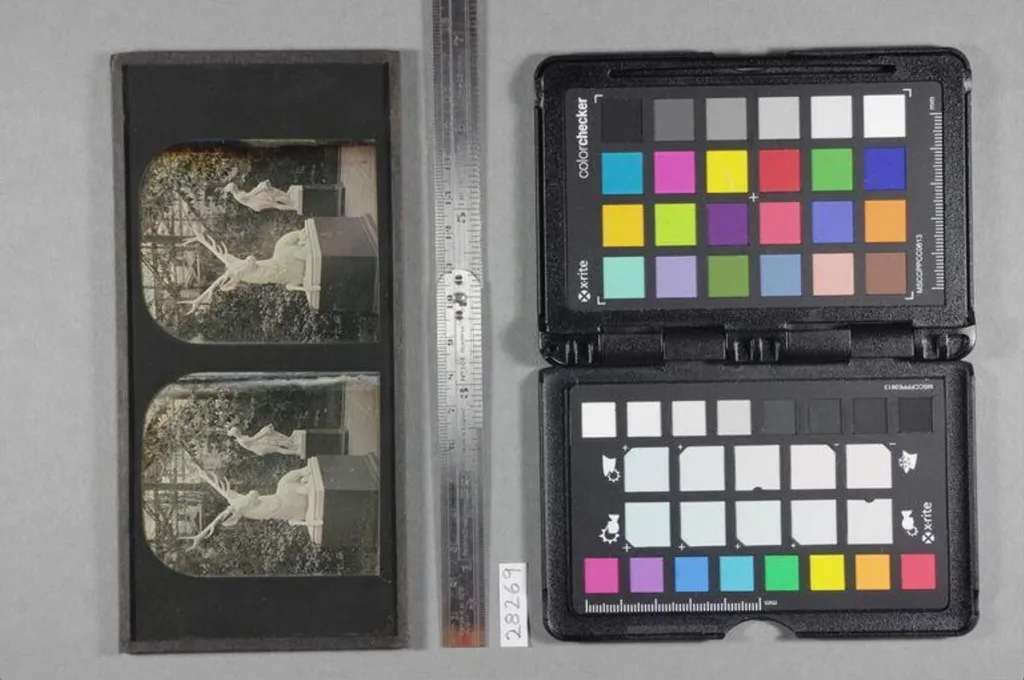
Statue of a Stag at Crystal Palace is a photographic photography by the Impressionist artist Negretti and Zambra. It dates from 1855 and is held in the collection of the Victoria and Albert Museum.
About this work
Overview
The image is a stereoscopic daguerreotype that records a white stag sculpture displayed at the Crystal Palace after its 1854 move to Sydenham. The picture is composed of two separate daguerreotype plates, each set in a black mount with a rectangular arched aperture, and the pair are housed within a glazed passe-partout frame.
Subject & Meaning
The photographed sculpture shows a stag poised on a rocky plinth, its antlers fully extended and its body turned slightly to the side. Behind the animal a classical building with columns rises, while a tree‑covered hill recedes in the distance, suggesting a landscaped setting that blends natural and architectural elements.
Technique & Style
Created as a stereoscopic daguertype, the work uses two silver‑plated copper plates to capture slightly offset views, enabling a three‑dimensional perception when viewed together. The plates are presented in a black mounting with arched windows, and the overall image bears the characteristic muted tones and surface sheen of early photographic processes.
History & Provenance
The daguerotype records the stag after the Crystal Palace’s relocation from Hyde Park to Sydenham in 1854, documenting the exhibition’s new arrangement. The photograph now resides in a collection that includes a color chart and a ruler alongside the plates, tools historically employed to verify tonal accuracy and to aid in print reproduction.
Context
The stag sculpture formed part of the decorative program of the Crystal Palace, an emblem of Victorian ambition and public exhibition. Its placement amid classical architecture reflects the era’s fascination with combining natural motifs and neoclassical design within grand public spaces.
Artist & collection
Artist

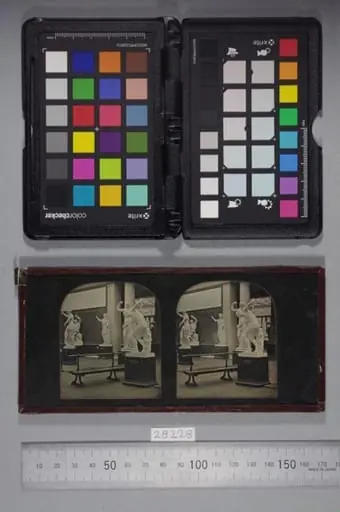 Sculpture Court at Crystal Palace, including the Discobolus
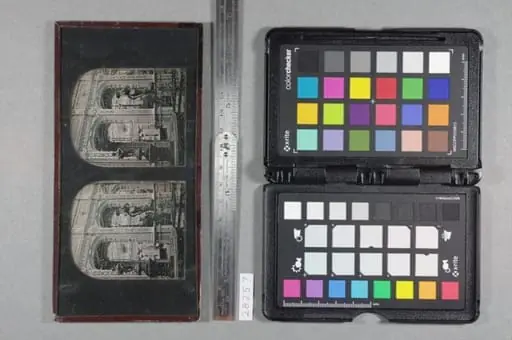 Sculpture Court at Crystal Palace, including Donatello's 'David'
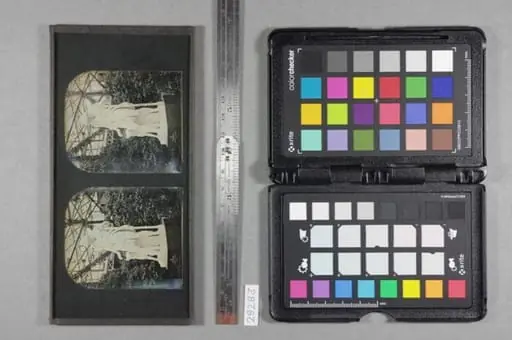 Sculpture of Ulysses at Crystal Palace
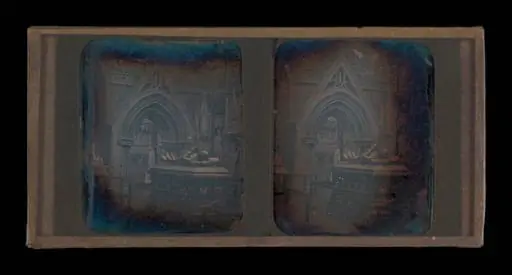 Gothic or Medieval Funerary Statuary
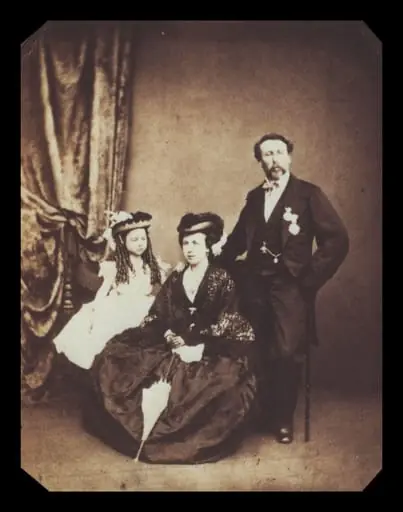 Guy Little Theatrical Photograph
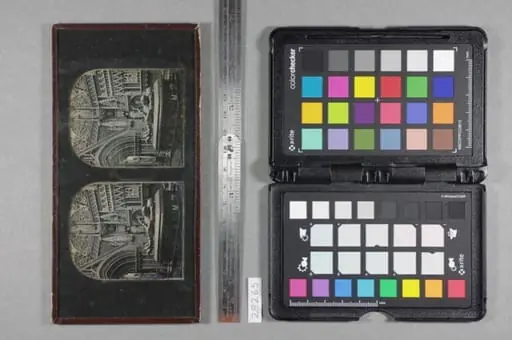 View of Gothic Architecture, Sculpture and Tomb Displayed at Crystal Palace
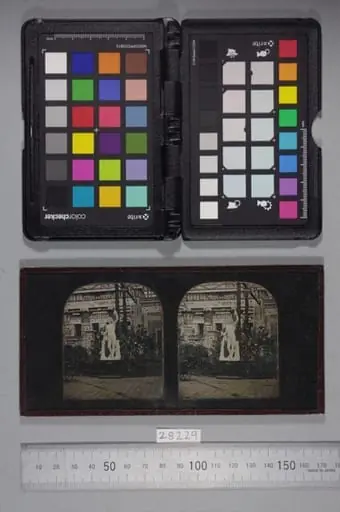 Sculpture of Bacchus at Crystal Palace
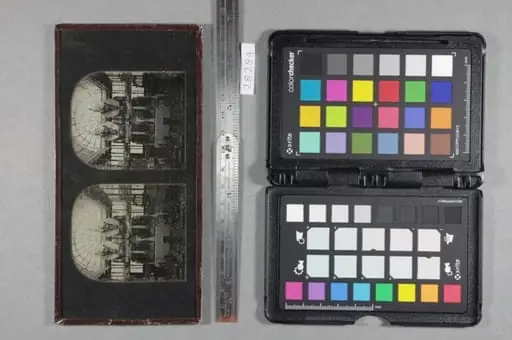 Monumental Egyptian Sculpture at Crystal Palace
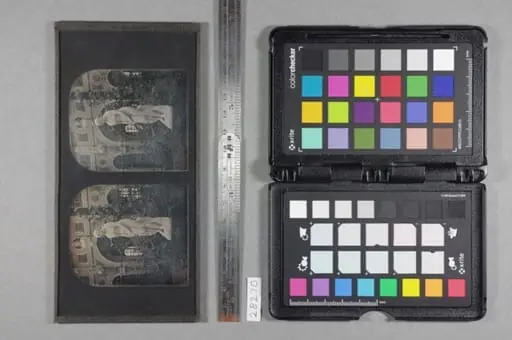 Statue of Venus at Crystal Palace
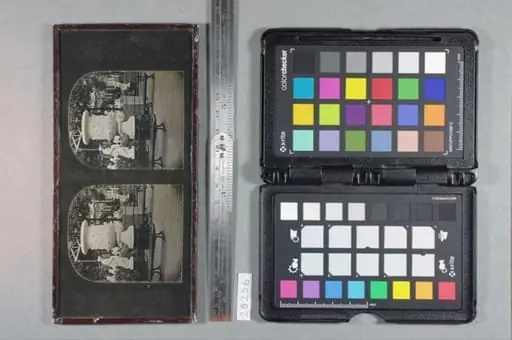 Sculptures at Crystal Palace
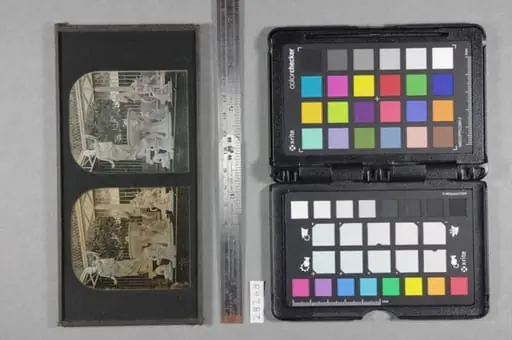 Greco-Roman Sculptures at Crystal Palace
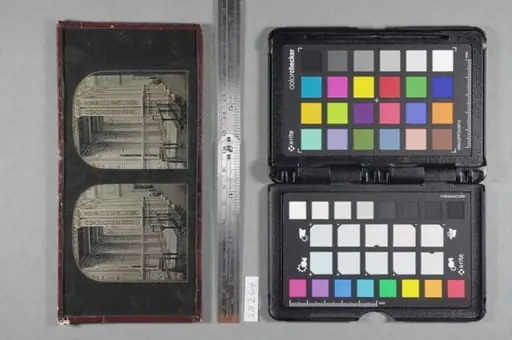 View of Architectural Sculpture Displayed at Crystal Palace
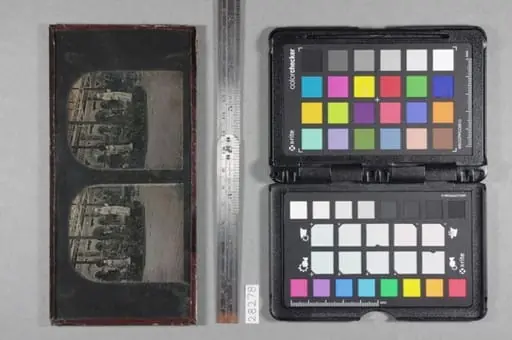 Interior View of the Crystal Palace with Sculptures
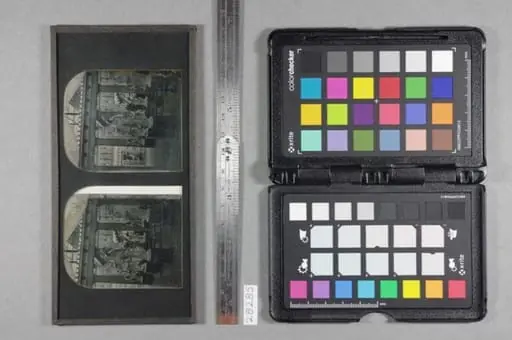 Greek and Egyptian Sculpture at Crystal Palace
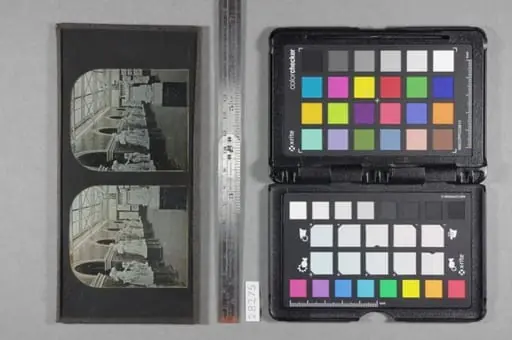 Sculptures on display at Crystal Palace
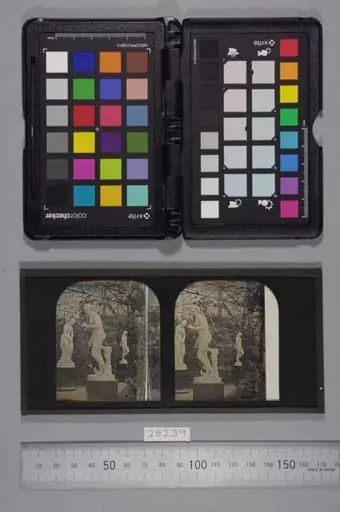 Sculptures at the Crystal Palace
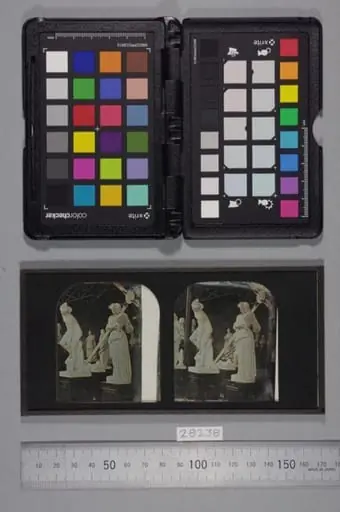 Sculptures at the Crystal Palace