Artwork
Andromeda liberated by Perseus
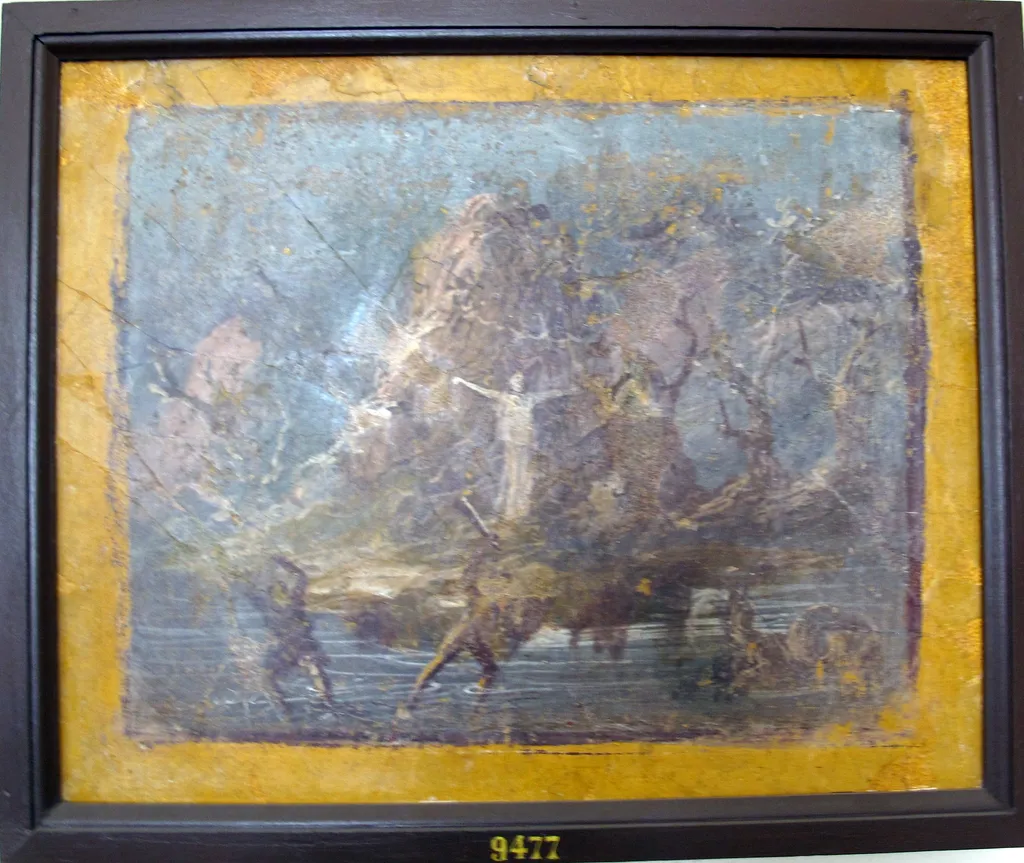
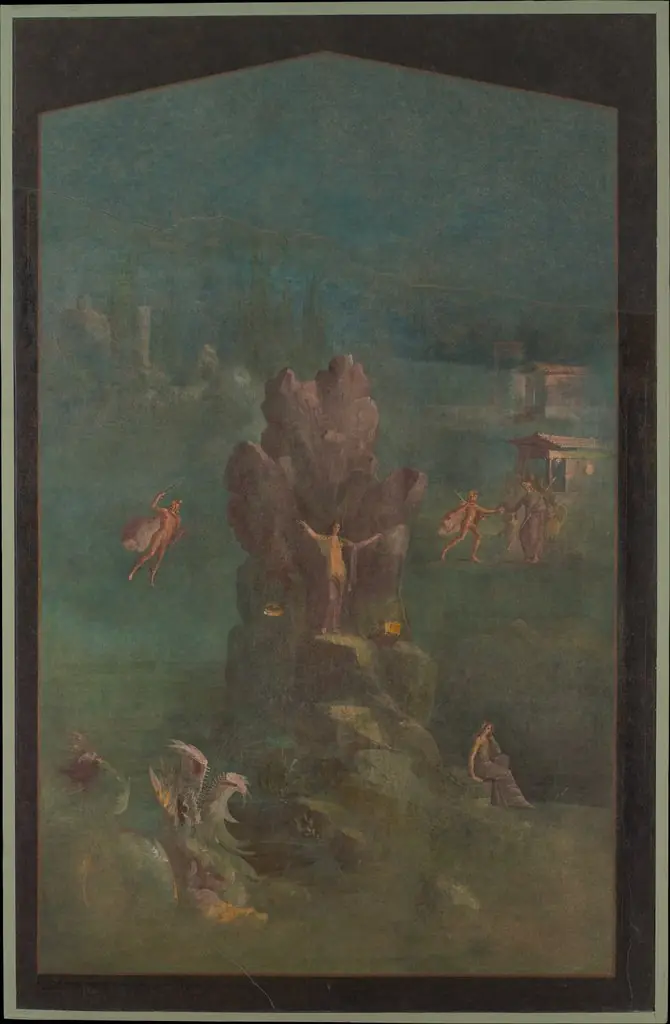
Andromeda liberated by Perseus is a fresco painting by Unknown. It dates from 1850 and is held in the collection of the Naples National Archaeological Museum. The work is a fresco depicting the mythological episode in which Perseus frees Andromeda.
About this work
Overview
The work is a fresco depicting the mythological episode in which Perseus frees Andromeda. Central to the composition is a female figure standing upon a rocky outcrop, arms extended, surrounded by a watery landscape and foliage. The palette is restrained, dominated by subdued blues and earth tones, lending the scene a calm, atmospheric quality.
Subject & Meaning
The narrative illustrates the moment of Andromeda’s liberation from her sea‑bound captivity, a theme recurrent in ancient Greek art that emphasizes rescue and heroic intervention. By portraying her poised on the rock, the fresco underscores her vulnerability and the imminent transition from peril to safety, reflecting the cultural valorization of heroic deeds.
Technique & Style
Executed as a true fresco, pigments were applied to wet plaster, allowing the colors to become integral to the wall surface. The artist employed a limited chromatic range, favoring muted blues and browns, and rendered the figures with a restrained naturalism characteristic of later Hellenistic wall painting, where landscape elements frame the central action.
History & Provenance
The precise date of the fresco remains undetermined, though its material and stylistic traits place it within the broader corpus of ancient Greek wall painting. Currently, the piece is housed in the Naples National Archaeological Museum, where it forms part of the museum’s collection of classical antiquities.
Context
The scene aligns with a widespread visual tradition that celebrated mythic rescues, often displayed in public and private spaces to convey moral and civic ideals. Its presence in a Roman‑era collection suggests continued appreciation for Greek mythological themes well into the imperial period, reflecting the enduring cultural exchange across the Mediterranean.
Artist & collection

Museum
Naples National Archaeological Museum
Continue through works from the same source collection.
 Domestic Scene
 Giacomo and Cardinal Marco, investing Andrea, Abbot of San Zeno, with his Benefice
 The Nymph of Fontainebleau
 Portrait of a Woman
 Madonna and Child with Saints in the Enclosed Garden
 Venus and Minerva
 Family Group of Four on Sofa
 Wall painting from Room H of the Villa of P. Fannius Synistor at Boscoreale
 Landscape
 Cassandra si allontana dal cavallo di troia
 Landscape
 Untitled
 Heracles and Omphale
 Achille costretto a cedere briseide a ad Agamennone
 Odyssey landscapes
 Untitled
 Lower Half of a Decorative Figure (fragment of a wall decoration)
 MAN Naples 27700
 Vilan på flykten till Egypten
 Wall painting: Perseus and Andromeda in landscape, from the imperial villa at Boscotrecase