Artwork
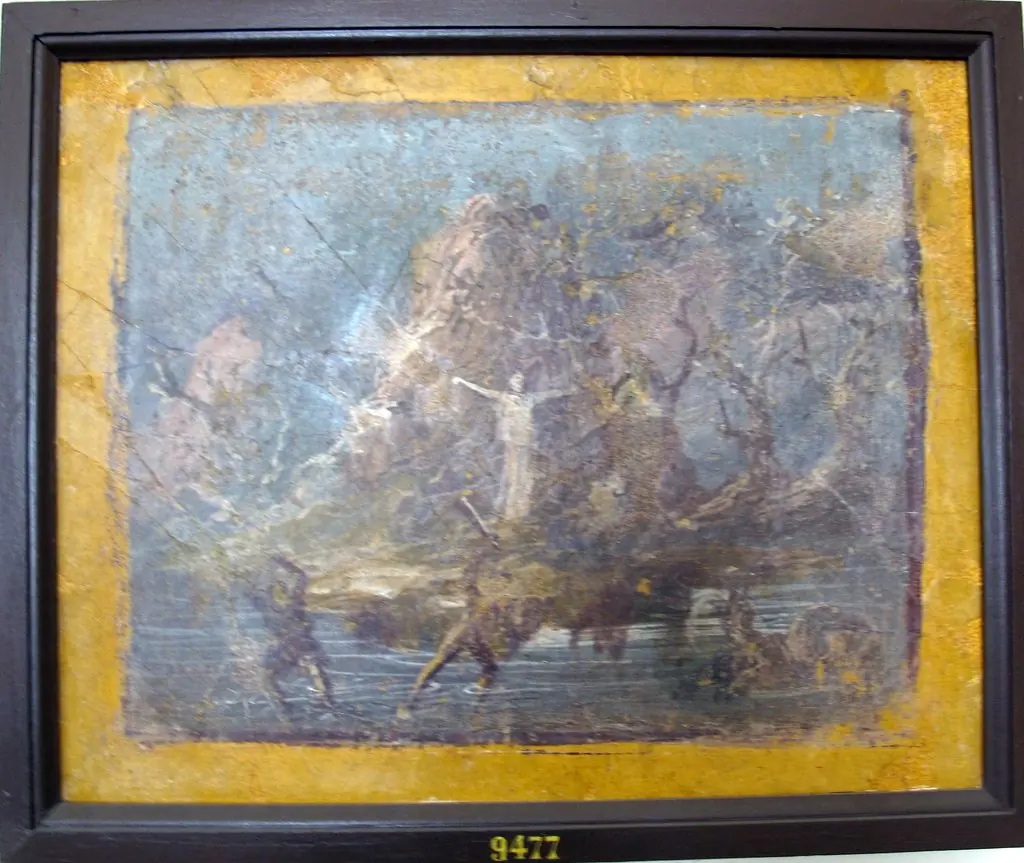
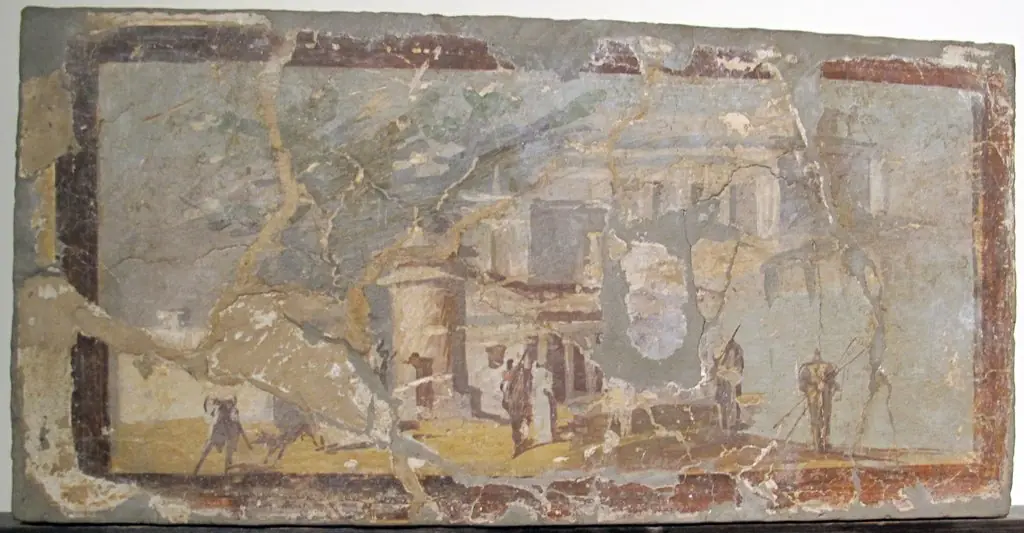
Cassandra si allontana dal cavallo di troia
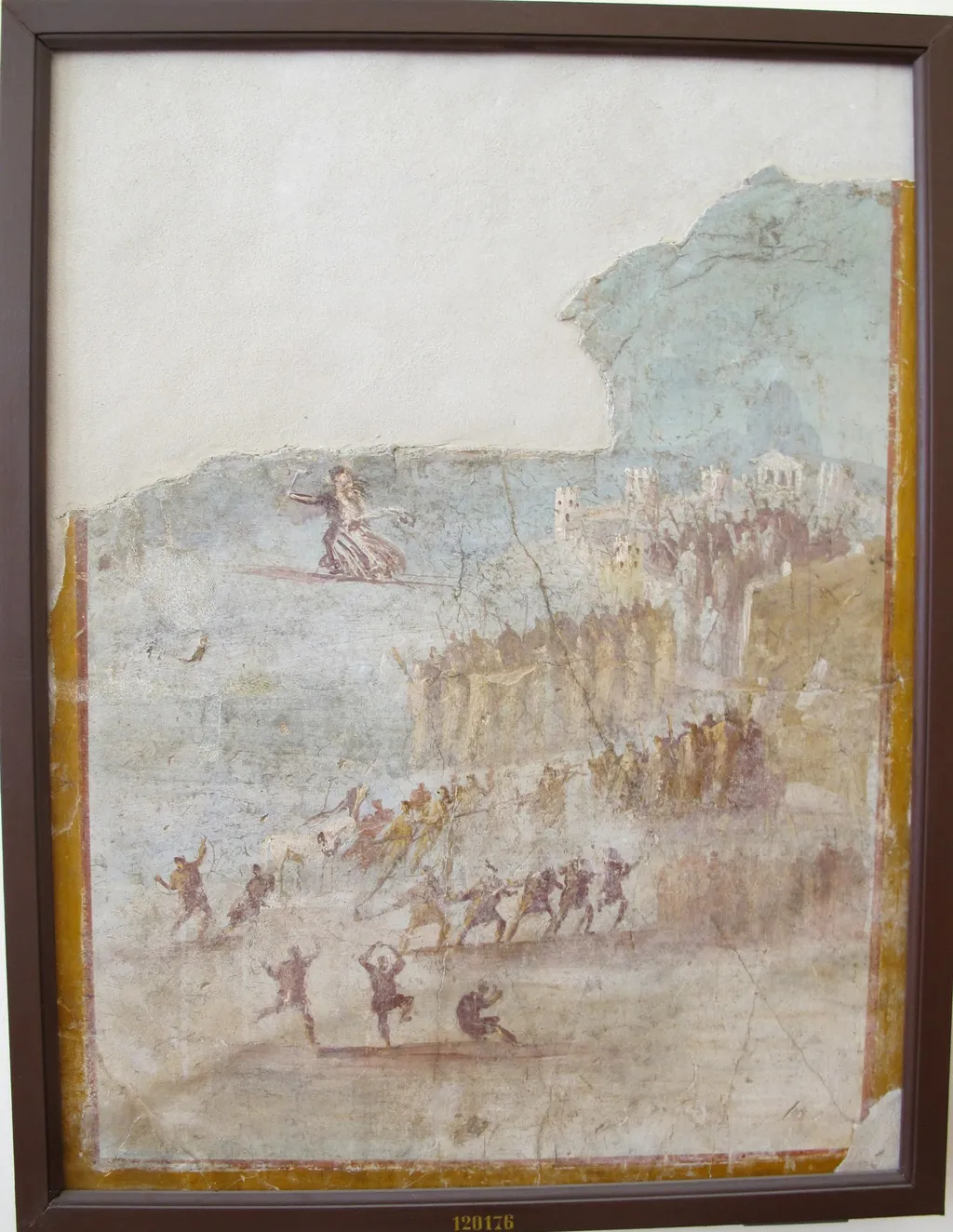
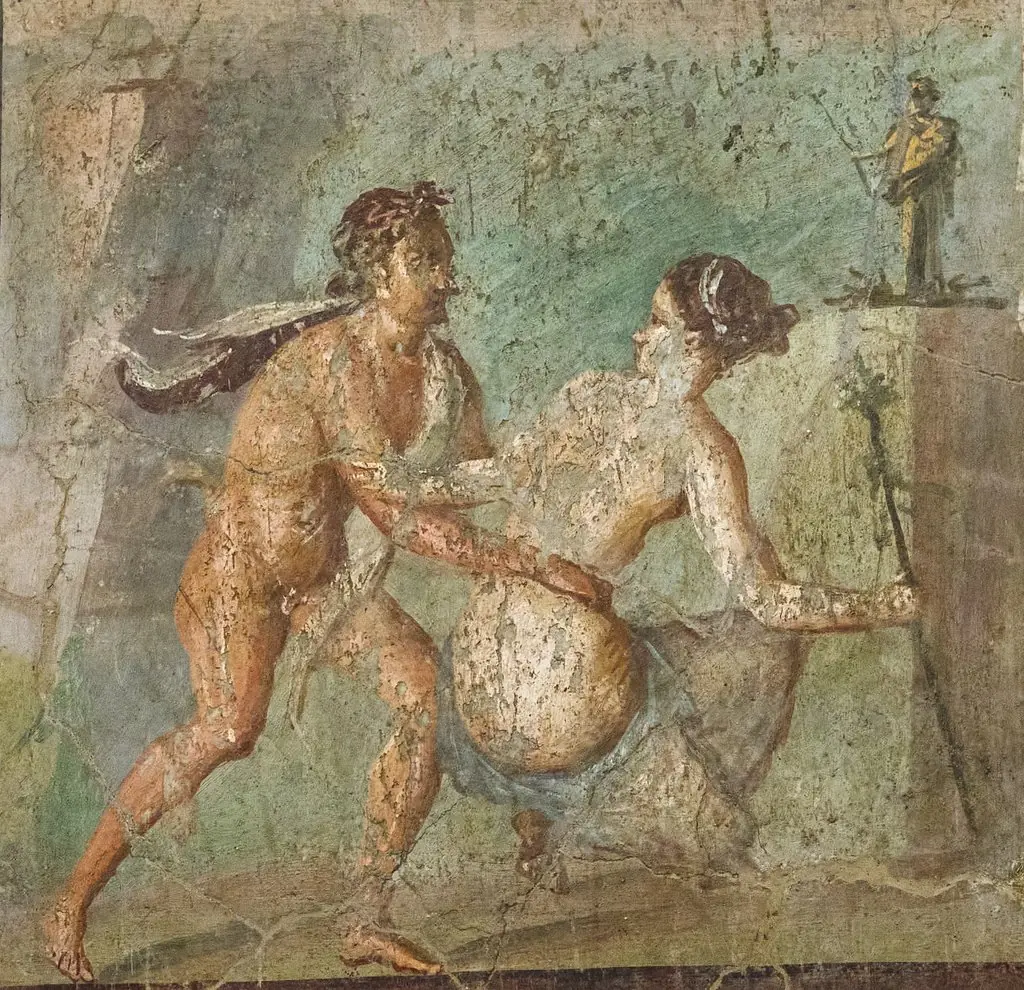
Cassandra si allontana dal cavallo di troia is a fresco painting by Unknown. It dates from 1850 and is held in the collection of the Naples National Archaeological Museum. This fresco portrays a moment of dramatic tension, centered on a lone woman positioned on a raised edge, arms extended outward.
About this work
Overview
This fresco portrays a moment of dramatic tension, centered on a lone woman positioned on a raised edge, arms extended outward. Below, a cluster of figures reacts with motion—some running, others leaping—against a backdrop of architectural forms and water. The fresco technique imparts a tactile surface, enhancing the sense of spatial depth and dynamic energy within the scene.
Subject & Meaning
The figure is likely Cassandra, the Trojan prophetess, isolated on a ledge as the fall of Troy unfolds. Her outstretched arms may signify warning or despair, contrasting with the chaotic movement of others below. The scene captures her futile attempt to alert others to impending doom, emphasizing themes of ignored truth and impending catastrophe.
Technique & Style
Applied in true fresco, the pigments were absorbed into wet plaster, creating a durable, matte finish with subtle textural variation. The artist employed fluid brushwork to suggest motion, with figures rendered in simplified forms and minimal detail, prioritizing expressive gesture over realism. The composition channels movement diagonally across the surface, reinforcing narrative urgency.
History & Provenance
The fresco originates from a domestic or public interior in a classical Mediterranean context, though its exact provenance remains undocumented. No definitive archaeological record links it to a specific site or date. Its survival suggests it was preserved within a structure that escaped major destruction, possibly during late antiquity or the early medieval period.
Context
Created during a period when mythological narratives were commonly depicted in domestic spaces, the scene reflects a cultural fascination with Trojan War legends. Frescoes like this served both decorative and didactic functions, embedding moral or tragic tales into everyday environments, reinforcing shared cultural memory through visual storytelling.
Legacy
Though not widely known today, the fresco contributes to a broader tradition of classical narrative painting in wall surfaces. Its preservation offers insight into how ancient communities visualized mythic tragedy, influencing later Renaissance and neoclassical interpretations of Cassandra’s story through its emphasis on emotional isolation amid chaos.
Artist & collection

Museum
Naples National Archaeological Museum
Continue through works from the same source collection.
 Domestic Scene
 Giacomo and Cardinal Marco, investing Andrea, Abbot of San Zeno, with his Benefice
 The Nymph of Fontainebleau
 Portrait of a Woman
 Madonna and Child with Saints in the Enclosed Garden
 Venus and Minerva
 Family Group of Four on Sofa
 Wall painting from Room H of the Villa of P. Fannius Synistor at Boscoreale