Artwork
Anoniem. Madonna met kind
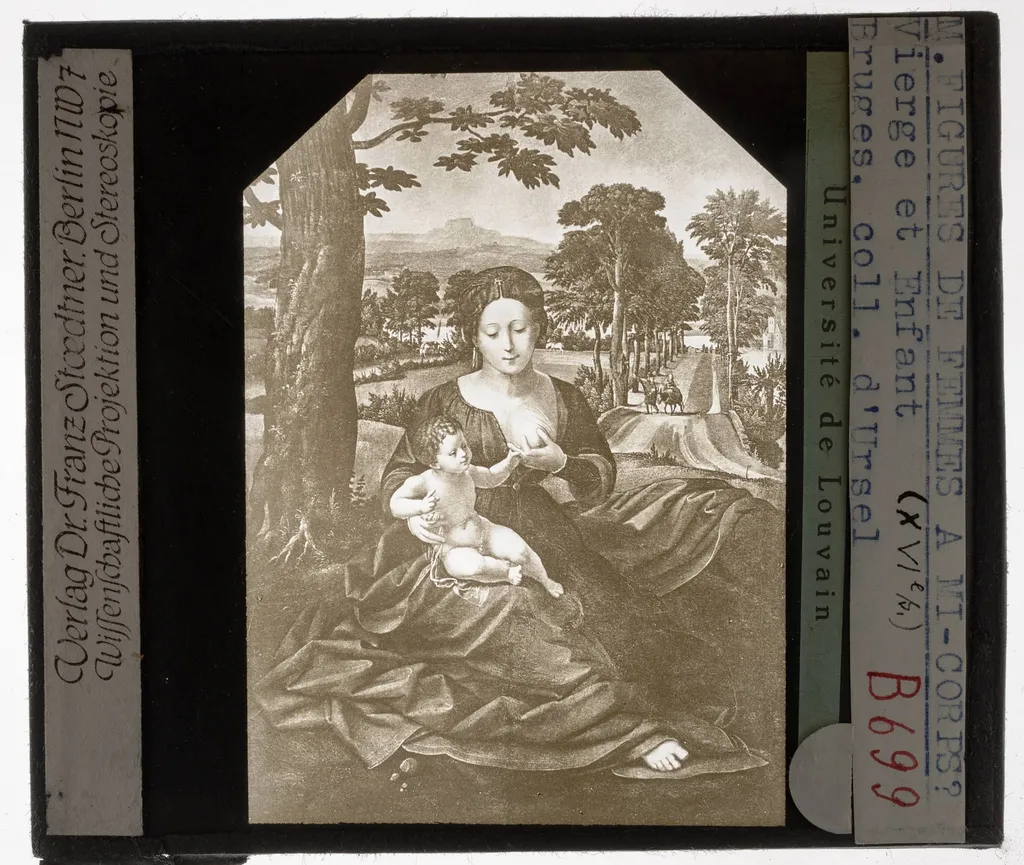
Anoniem. Madonna met kind is a photography by Unknown. It dates from 1924 and is held in the collection of the Catholic University of Leuven.
About this work
Overview
The work remains in Bruges, Belgium, and its survival through photographic reproduction reflects its role in art historical pedagogy rather than public display.
This 16th-century panel painting, attributed to an unknown artist, depicts the Virgin Mary with the infant Jesus in a quiet, intimate composition. Originating in the Northern Renaissance tradition, it was later reproduced as a glass slide for academic use by institutions in Leuven between 1839 and 1939. The work remains in Bruges, Belgium, and its survival through photographic reproduction reflects its role in art historical pedagogy rather than public display.
Subject & Meaning
The image presents Mary seated with the Christ child on her lap, a common devotional motif in Christian art. The figures are rendered without elaborate symbolism or background detail, emphasizing their emotional closeness. This simplicity suggests a focus on personal piety, aligning with devotional practices in the Low Countries where intimate representations of sacred figures were valued for private contemplation.
Technique & Style
The painting employs soft modeling of forms and muted tonal transitions characteristic of Northern Renaissance portraiture. While not using sfumato in the Italian manner, the artist achieves a gentle blending of light and shadow through layered glazes, enhancing the tactile presence of the figures. Details in fabric and facial features are rendered with careful precision, reflecting regional preferences for realism over idealization.
History & Provenance
The painting’s original commission and early ownership are undocumented. Its presence in a university collection of glass slides indicates it was selected for educational use in the 19th or early 20th century. The slide’s photographic reproduction preserved its image for classroom study, likely contributing to its continued recognition despite the loss of its physical context or attribution.
Context
Created during a period of religious upheaval in the Low Countries, this work reflects a continuity of Catholic devotional imagery even as Protestantism gained ground. Its restrained composition contrasts with the more ornate altarpieces of the era, suggesting it may have served a domestic or monastic setting rather than a public church. The emphasis on tenderness over grandeur aligns with broader trends in Northern religious art.
Legacy
Though unsigned and unattributed, the painting endured through academic reproduction, becoming a reference point in art history instruction. Its transmission via glass slide highlights how pre-digital technologies shaped the dissemination of visual knowledge. Today, it remains a quiet example of how everyday devotional art contributed to the visual culture of early modern Europe.
Artist & collection
 Domestic Scene
 Giacomo and Cardinal Marco, investing Andrea, Abbot of San Zeno, with his Benefice
 The Nymph of Fontainebleau
 Portrait of a Woman
 Madonna and Child with Saints in the Enclosed Garden
 Venus and Minerva
 Family Group of Four on Sofa
 Wall painting from Room H of the Villa of P. Fannius Synistor at Boscoreale
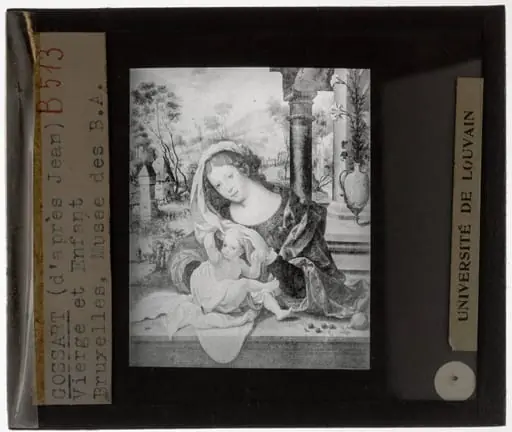 Jan Gossaert (kopie). De heilige Maagd met de sluier
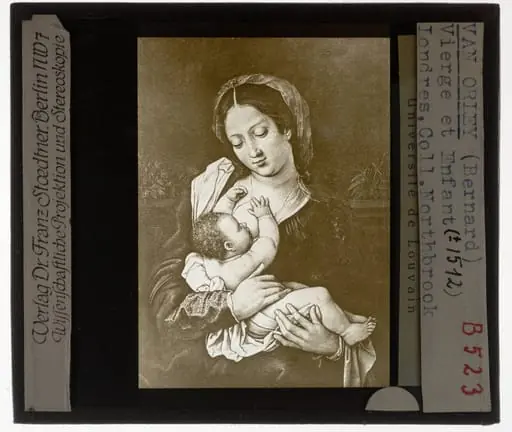 Bernard van Orley. Madonna en Kind
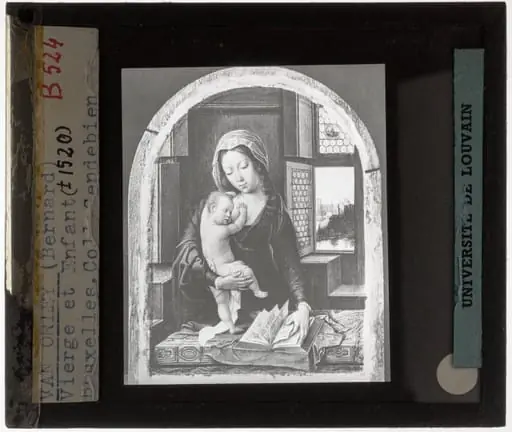 Bernard van Orley (navolger). O.L.Vrouw met Kind voor een open venster
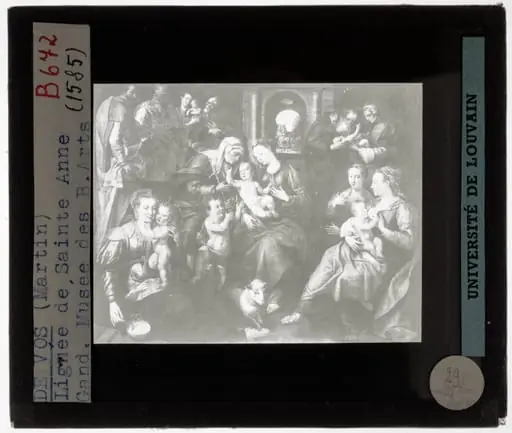 Maarten de Vos. De familie van de Heilige Anna
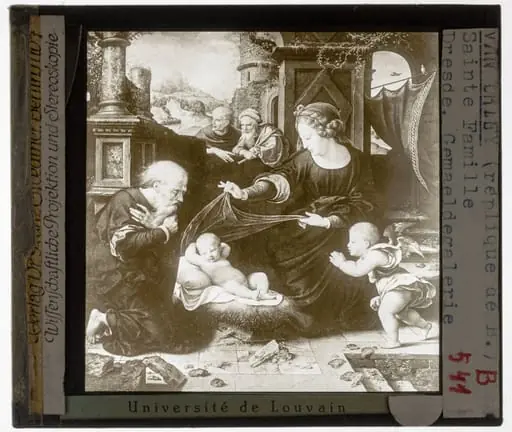 Bernard van Orley (kopie). Heilige Familie
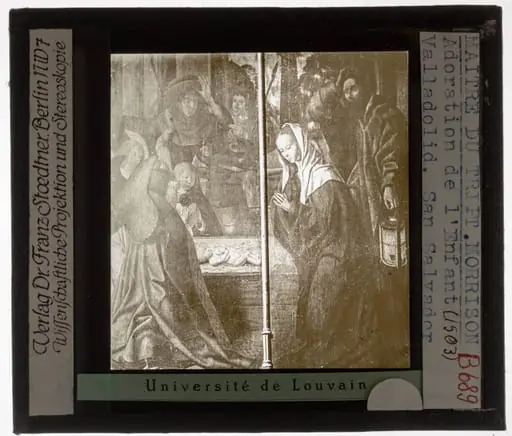 Master of the Morrison Triptych. Adoration of Christ
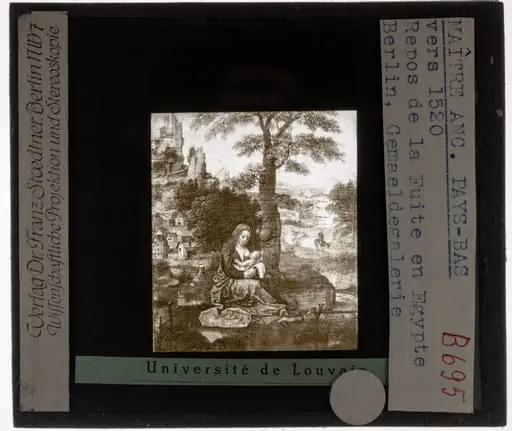 Anoniem (naar Joachim Patinir). Rust op de vlucht naar Egypte
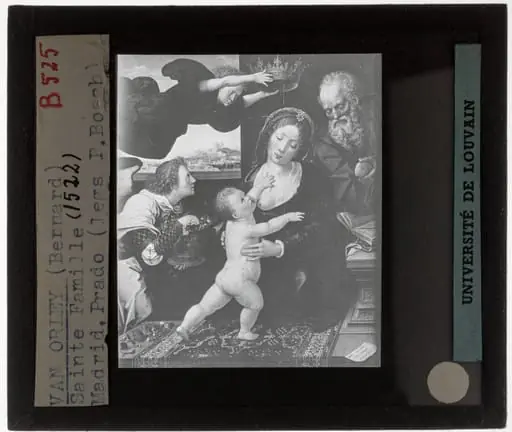 Bernard of Orley. Holy Family
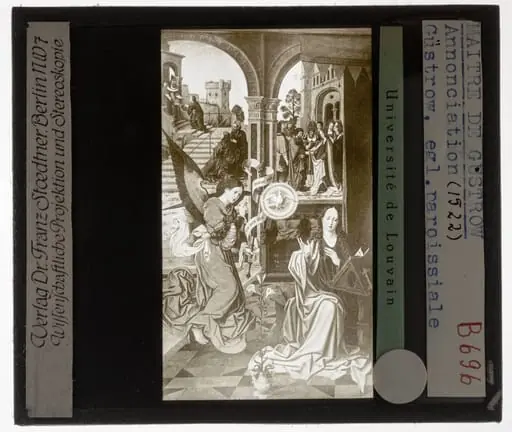 Bernard van Orley. Passieretabel Annunciatie