Artwork
Arabian jasmine
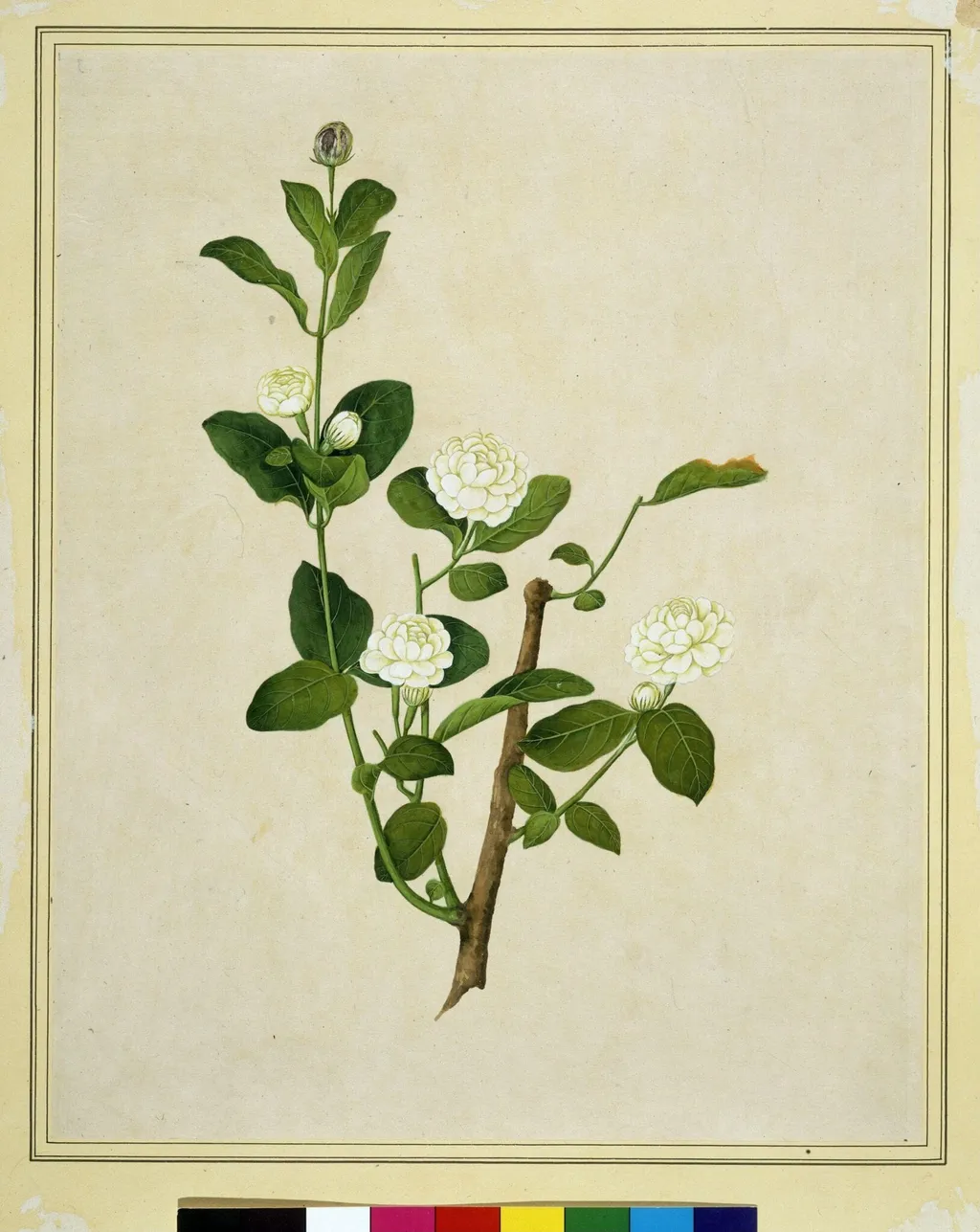
Arabian jasmine is a paint painting by the Romanticist artist Unknown. It dates from 1800 and is held in the collection of the Victoria and Albert Museum.
About this work
Overview
The work depicts delicate white jasmine flowers set against a deep, almost black branch, with a solitary green leaf providing a subtle contrast. The composition emphasizes the luminous quality of the petals, rendering the bloom with a quiet elegance that reflects the botanical interests of its era.
Subject & Meaning
The flower represented is the Arabian jasmine, known in Chinese as “mo li,” a species long cultivated in southern China’s gardens. By isolating the blossom from surrounding foliage, the image highlights the plant’s ornamental value and its appeal as an exotic specimen to foreign audiences.
Technique & Style
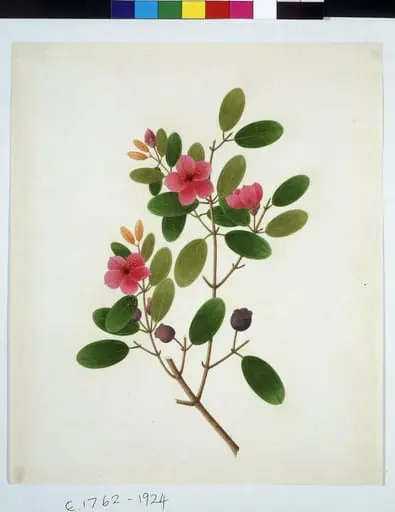
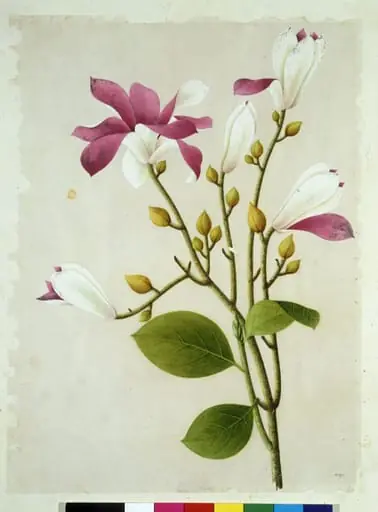
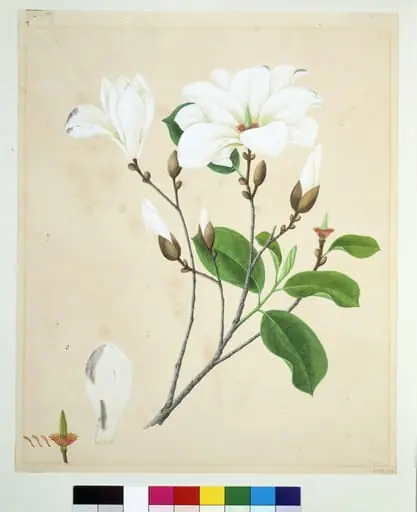
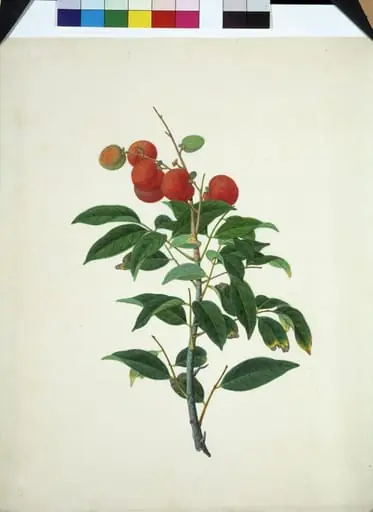
Executed in a precise, realistic manner, the painting employs fine brushwork to render the translucency of the petals and the texture of the dark branch. The limited palette—predominantly whites, deep blacks, and a single green leaf—focuses the viewer’s attention on the flower’s form and subtle shading.
History & Provenance
During the eighteenth and nineteenth centuries, British botanists and collectors showed keen interest in foreign flora, prompting travelers to bring back both live specimens and visual records. Paintings such as this one, likely sourced from China or India, entered the British market and were acquired by affluent patrons for domestic display.
Context
The piece belongs to a broader trend of botanical illustration that catered to the European fascination with exotic plants. Such works served both scientific curiosity and decorative purposes, often appearing in the interiors of wealthy homes where they signaled cultured taste and global connections.
Artist & collection

 Domestic Scene
 Giacomo and Cardinal Marco, investing Andrea, Abbot of San Zeno, with his Benefice
 The Nymph of Fontainebleau
 Portrait of a Woman
 Madonna and Child with Saints in the Enclosed Garden
 Venus and Minerva
 Family Group of Four on Sofa
 Wall painting from Room H of the Villa of P. Fannius Synistor at Boscoreale