Artwork
Arhanghelii Mihail și Gavriil
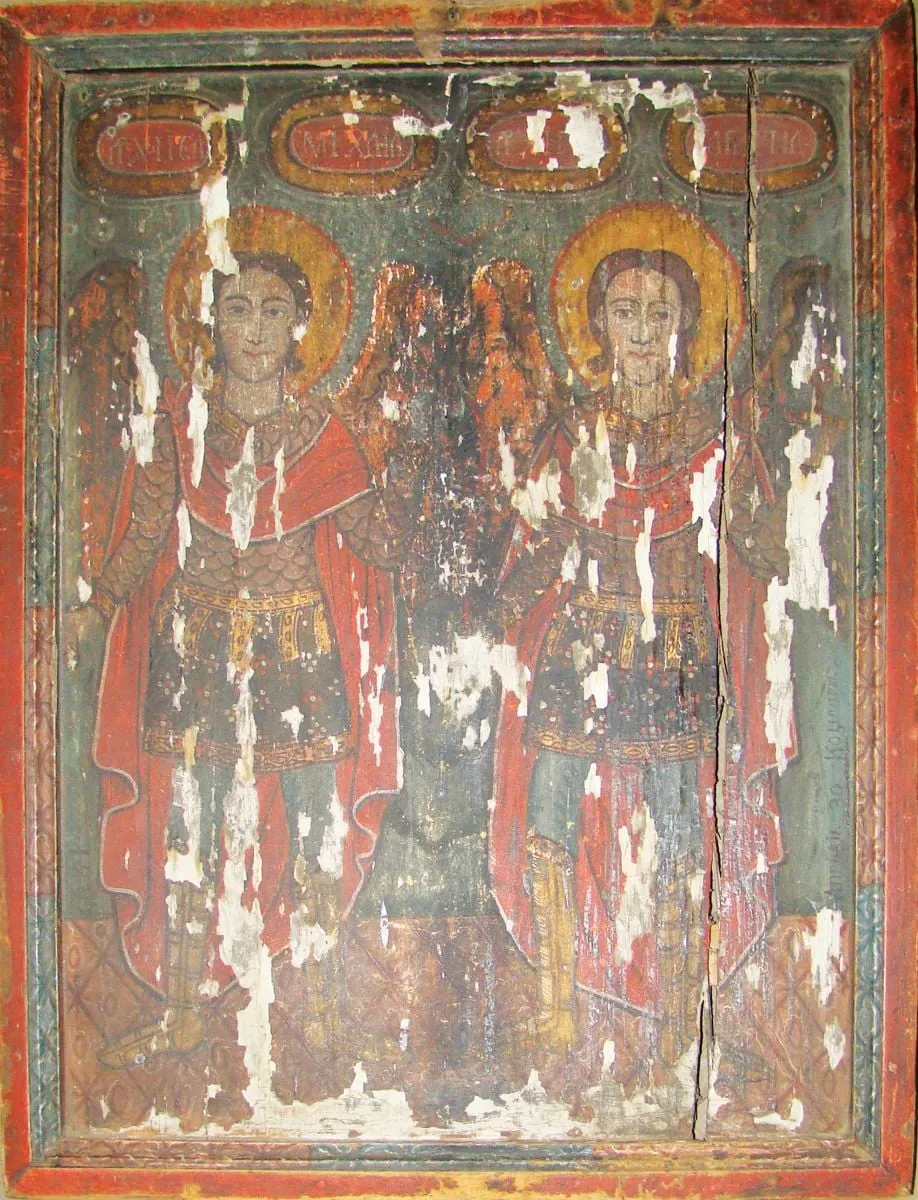
Arhanghelii Mihail și Gavriil is an unspecified painting by the Byzantine icon painting artist Unknown. It dates from 1842 and is held in the collection of the Alba Iulia Unification National Museum.
About this work
Overview
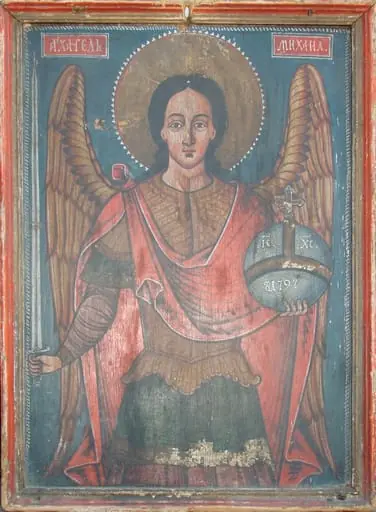
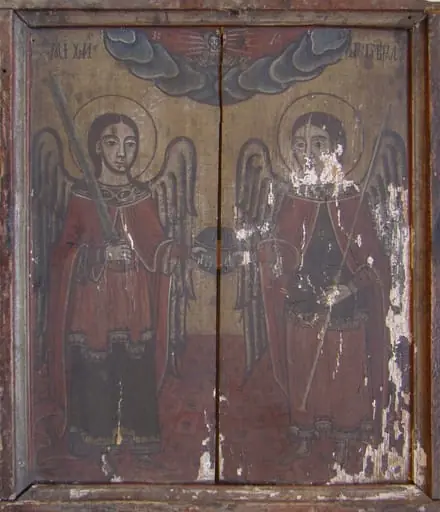
The work titled *Arhanghelii Mihail și Gavriil* depicts two towering, solemn figures side by side. Both are clad in elongated robes trimmed in gold, with vivid red garments visible beneath. Each figure bears a golden halo, and the composition is set against a dark, mottled background punctuated by three oval inscriptions near the top.
Subject & Meaning
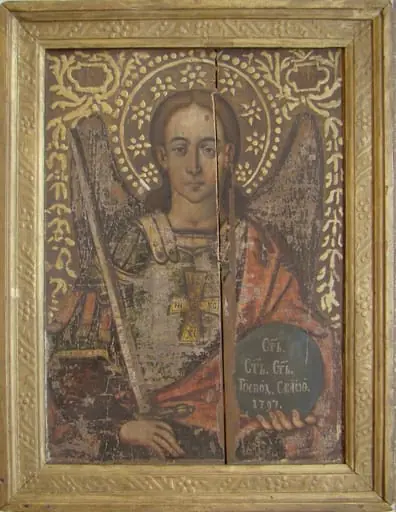
The painting represents the archangels Michael and Gabriel, traditional protectors and messengers in Christian iconography. Their serious expressions and luminous halos emphasize their divine authority, while the ambiguous objects they appear to hold suggest their respective roles—Michael as a warrior and Gabriel as a herald.
Technique & Style
The artist employed a limited palette of gold, red, and deep shadows, creating a stark contrast that highlights the figures against the somber backdrop.
Executed in oil on panel, the image shows signs of aging: paint layers have cracked and flaked in several places, revealing the work’s antiquity. The artist employed a limited palette of gold, red, and deep shadows, creating a stark contrast that highlights the figures against the somber backdrop. The three oval panels at the top contain calligraphic text, a common feature in Eastern Orthodox religious art.
History & Provenance
The piece’s exact origin remains undocumented, but its stylistic traits align with Eastern Orthodox iconography from the late medieval to early modern period. The wear and fissuring of the surface suggest it has been displayed or stored in environments that exposed it to fluctuating humidity and temperature over centuries.
Context
In Orthodox tradition, archangels are frequently portrayed together, underscoring their complementary functions within the celestial hierarchy. The use of gold trim and halos reflects the theological emphasis on divine light, while the dark background serves to isolate the holy figures, focusing the viewer’s attention on their spiritual presence.
Artist & collection
Museum
Alba Iulia Unification National Museum
Continue through works from the same source collection.
 Domestic Scene
 Giacomo and Cardinal Marco, investing Andrea, Abbot of San Zeno, with his Benefice
 The Nymph of Fontainebleau
 Portrait of a Woman
 Madonna and Child with Saints in the Enclosed Garden
 Venus and Minerva
 Family Group of Four on Sofa
 Wall painting from Room H of the Villa of P. Fannius Synistor at Boscoreale