Artwork
Arhanghelul Mihail
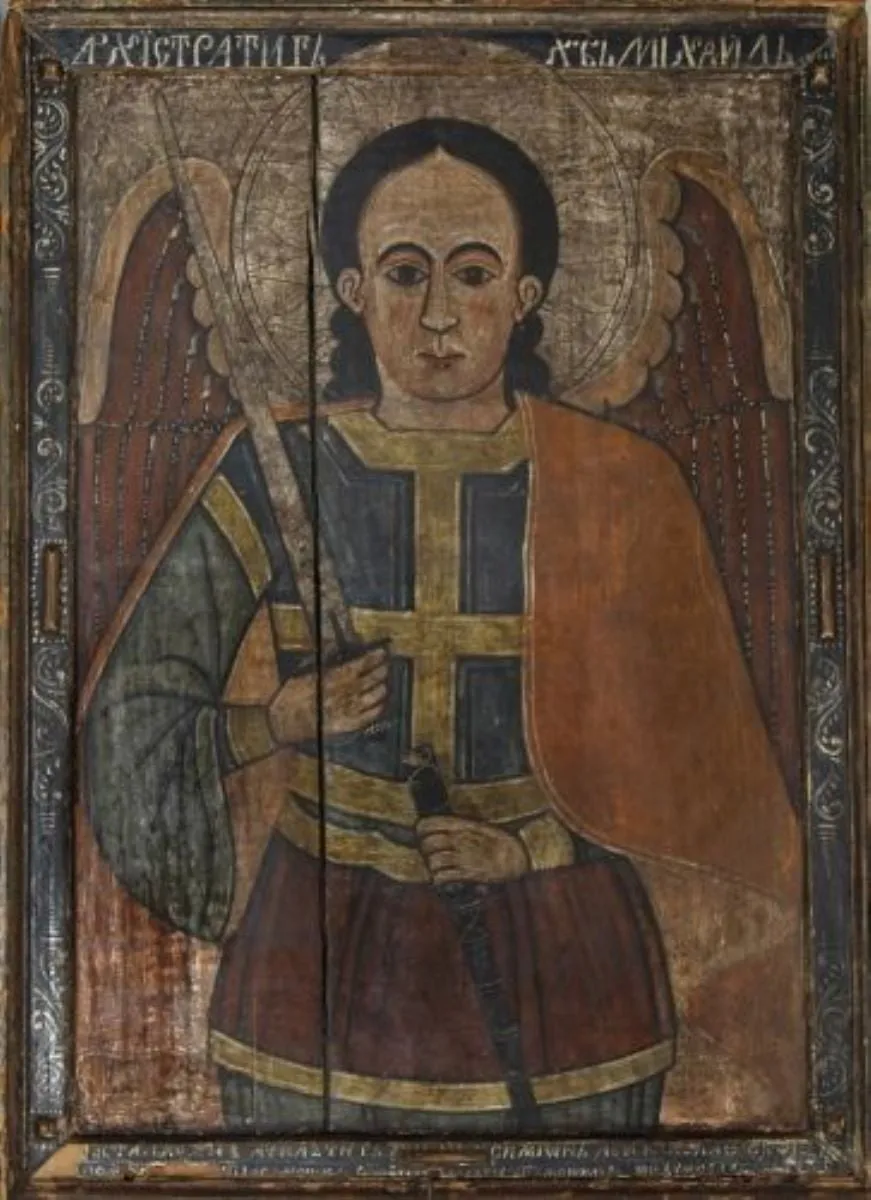
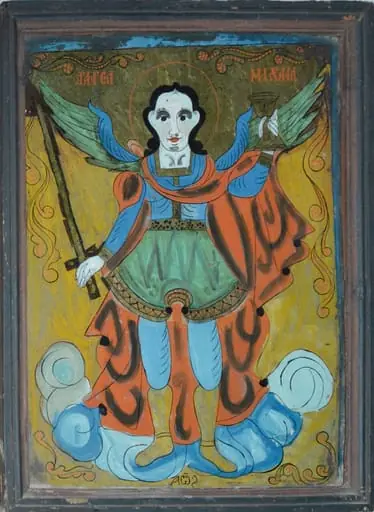
Arhanghelul Mihail is a drawing by the Baroque artist Unknown. It dates from 1749 and is held in the collection of the Romanian Peasant Museum.
About this work
Overview
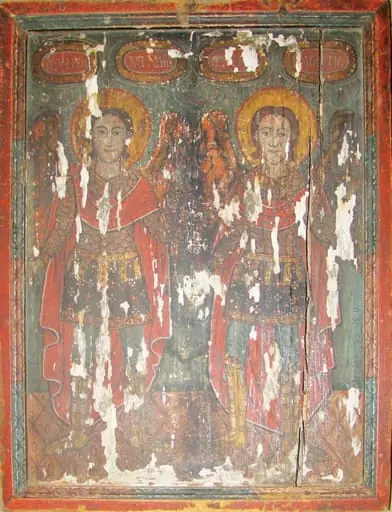
He faces the viewer with a composed expression, flanked on either side by two winged angels whose feathers are rendered in detail.
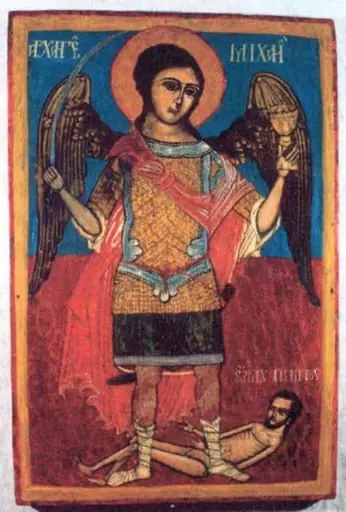
The work titled “Arhanghelul Mihail” depicts a centrally positioned, robed figure holding a gold‑painted wooden cross. He faces the viewer with a composed expression, flanked on either side by two winged angels whose feathers are rendered in detail. The central figure is dressed in a blue tunic edged in gold and a brown cloak, while the angels wear green and gold garments, set against a flat, slightly muted background.
Subject & Meaning
The composition presents the archangel Michael, traditionally identified by his role as a heavenly warrior and protector. The presence of the cross underscores a Christian symbolism of triumph over evil, while the calm demeanor of the figure conveys a sense of divine authority and serenity. The angels on either side reinforce the celestial hierarchy surrounding the central saint.
Technique & Style
Executed in a flat pictorial manner, the painting employs a limited palette of muted tones with gold accents that highlight clothing and the cross. Feathered wings are delineated with fine brushwork, contrasting with the broader, smoother surfaces of the robes. The overall effect aligns with Baroque sensibilities through its attention to detail and dramatic yet restrained presentation, despite the relatively subdued color scheme.
History & Provenance
The piece is catalogued as an image rather than a traditional canvas painting, suggesting it may have been reproduced or circulated in a devotional context. No specific dates, artists, or collection histories are provided, indicating that its origins remain undocumented within the available records.
Context
Within the broader tradition of religious iconography, depictions of Michael often emphasize his role as a defender of the faithful. The inclusion of angels and the cross situates the work within a visual language common to Eastern Orthodox and Western Catholic art, reflecting a synthesis of stylistic elements that were prevalent during the Baroque period.
Artist & collection

 Domestic Scene
 Giacomo and Cardinal Marco, investing Andrea, Abbot of San Zeno, with his Benefice
 The Nymph of Fontainebleau
 Portrait of a Woman
 Madonna and Child with Saints in the Enclosed Garden
 Venus and Minerva
 Family Group of Four on Sofa
 Wall painting from Room H of the Villa of P. Fannius Synistor at Boscoreale