Artwork
Azam Shah
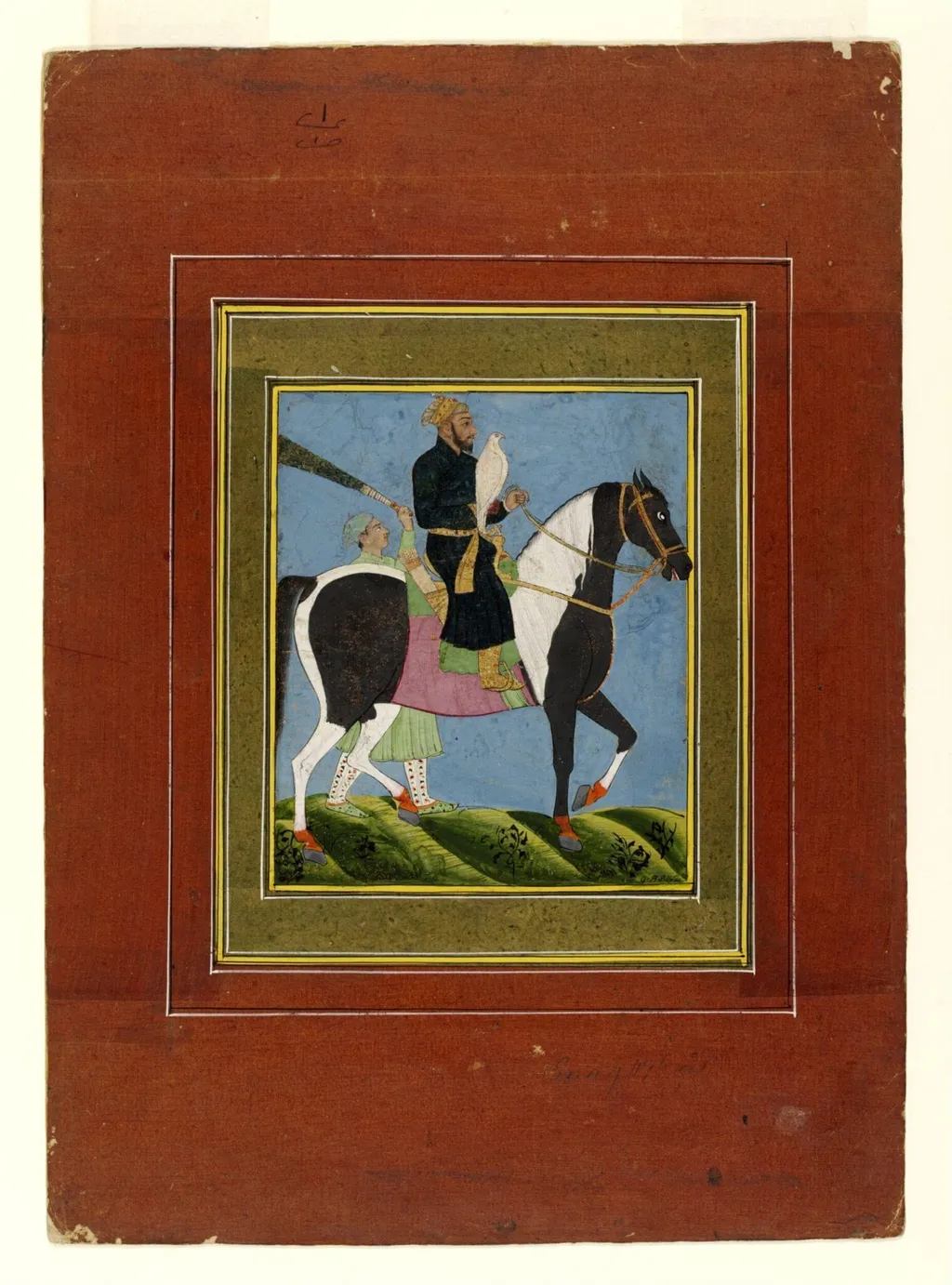
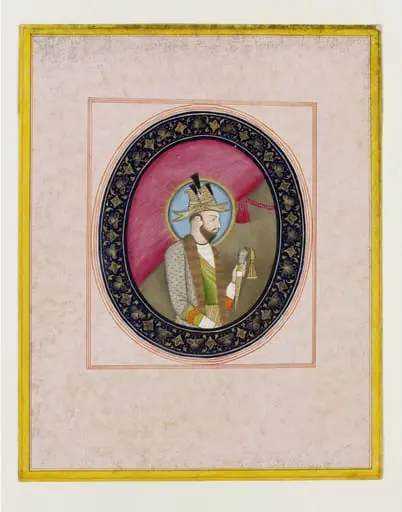
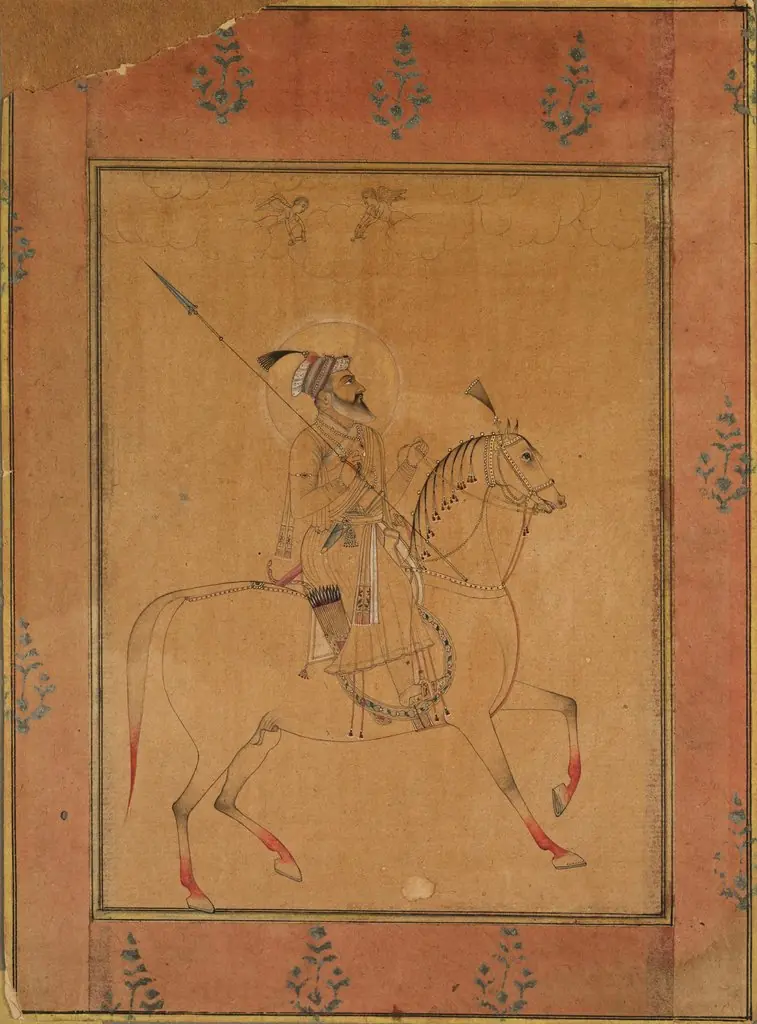
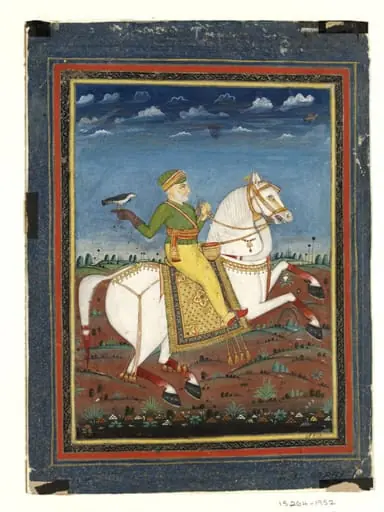
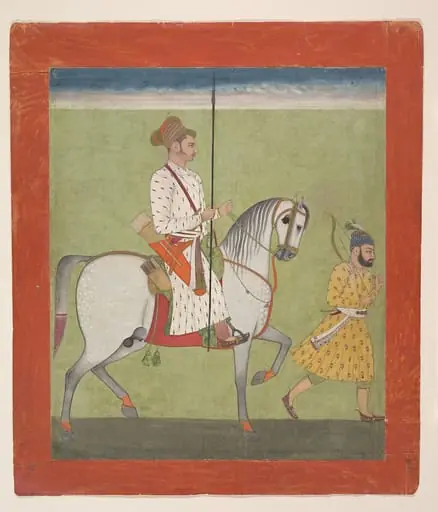
Azam Shah is a paint painting by the Mughal Painting artist Unknown. It dates from 1780 and is held in the collection of the Victoria and Albert Museum.
About this work
Overview
Though styled in the tradition of Golconda court painting from circa 1680, the work is a later reinterpretation, likely produced in the early 18th century.
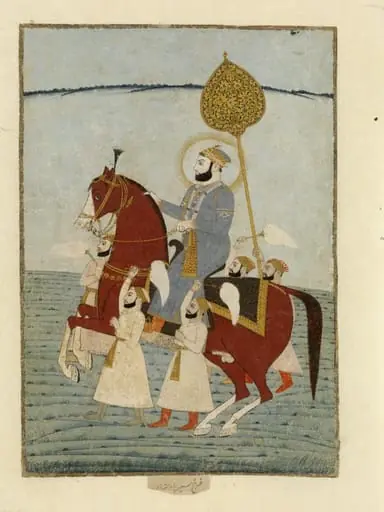
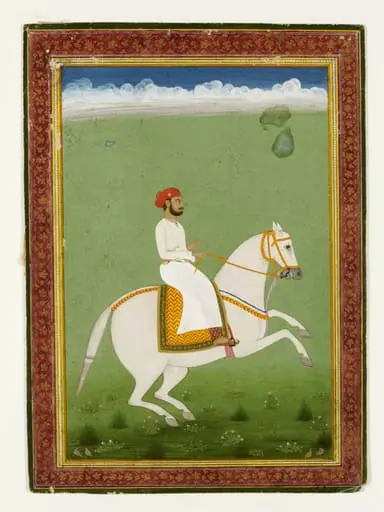
This opaque watercolor on paper portrays Azam Shah, a Mughal prince and third son of Emperor Aurangzeb, during a hunting excursion. Though styled in the tradition of Golconda court painting from circa 1680, the work is a later reinterpretation, likely produced in the early 18th century. The scene captures a moment of leisure, blending equestrian activity with pastoral elements, and reflects the continued influence of Deccan aesthetics in post-Aurangzeb Mughal art.
Subject & Meaning
The prince is depicted leading a cow by a rope, an unusual detail that may reference symbolic or ritual practices rather than literal hunting. Accompanied by an attendant carrying a bird of prey, the scene suggests a ceremonial or symbolic pursuit, possibly tied to royal status or seasonal traditions. The presence of the cow, distinct from typical falconry imagery, introduces a layer of regional or personal significance, distinguishing this from standard Mughal equestrian portraits.
Technique & Style
Executed in opaque watercolor, the painting employs flat planes of vivid color—blue robes, red footwear, and a stark black-and-white cow—against a minimalist backdrop of green hills and blue sky. Forms are simplified, with little modeling or perspective, evoking a decorative, almost narrative quality. The lack of atmospheric depth and emphasis on bold outlines align with Deccan stylistic conventions, prioritizing symbolic clarity over naturalism.
History & Provenance
The painting is not an original 17th-century Golconda work but a later adaptation, likely created in the early 1700s, possibly in a Mughal atelier influenced by Deccan traditions. Its survival suggests continued interest in the imagery of Azam Shah after his death in 1707. The composition may have been reproduced for courtly or private collectors seeking to preserve the visual legacy of a fallen prince.
Context
During the decline of Aurangzeb’s reign, regional styles like those of Golconda retained influence even as Mughal central authority waned. This painting reflects a transitional moment where courtly iconography was reimagined outside Delhi’s direct control. The inclusion of a cow, uncommon in Mughal hunting scenes, may indicate local Deccan customs or personal associations of Azam Shah, hinting at shifting cultural priorities in the early 18th century.
Legacy
The work stands as an example of how Mughal portraiture evolved after the emperor’s death, absorbing regional aesthetics and symbolic motifs. Its simplified forms and vivid palette influenced later Indian painting traditions, particularly in smaller courts that preserved older visual languages. Though not widely known, it offers insight into the persistence of Deccan visual culture within a fading imperial framework.
Artist & collection

 Domestic Scene
 Giacomo and Cardinal Marco, investing Andrea, Abbot of San Zeno, with his Benefice
 The Nymph of Fontainebleau
 Portrait of a Woman
 Madonna and Child with Saints in the Enclosed Garden
 Venus and Minerva
 Family Group of Four on Sofa
 Wall painting from Room H of the Villa of P. Fannius Synistor at Boscoreale