Artwork
Raja Madan Singh Jat
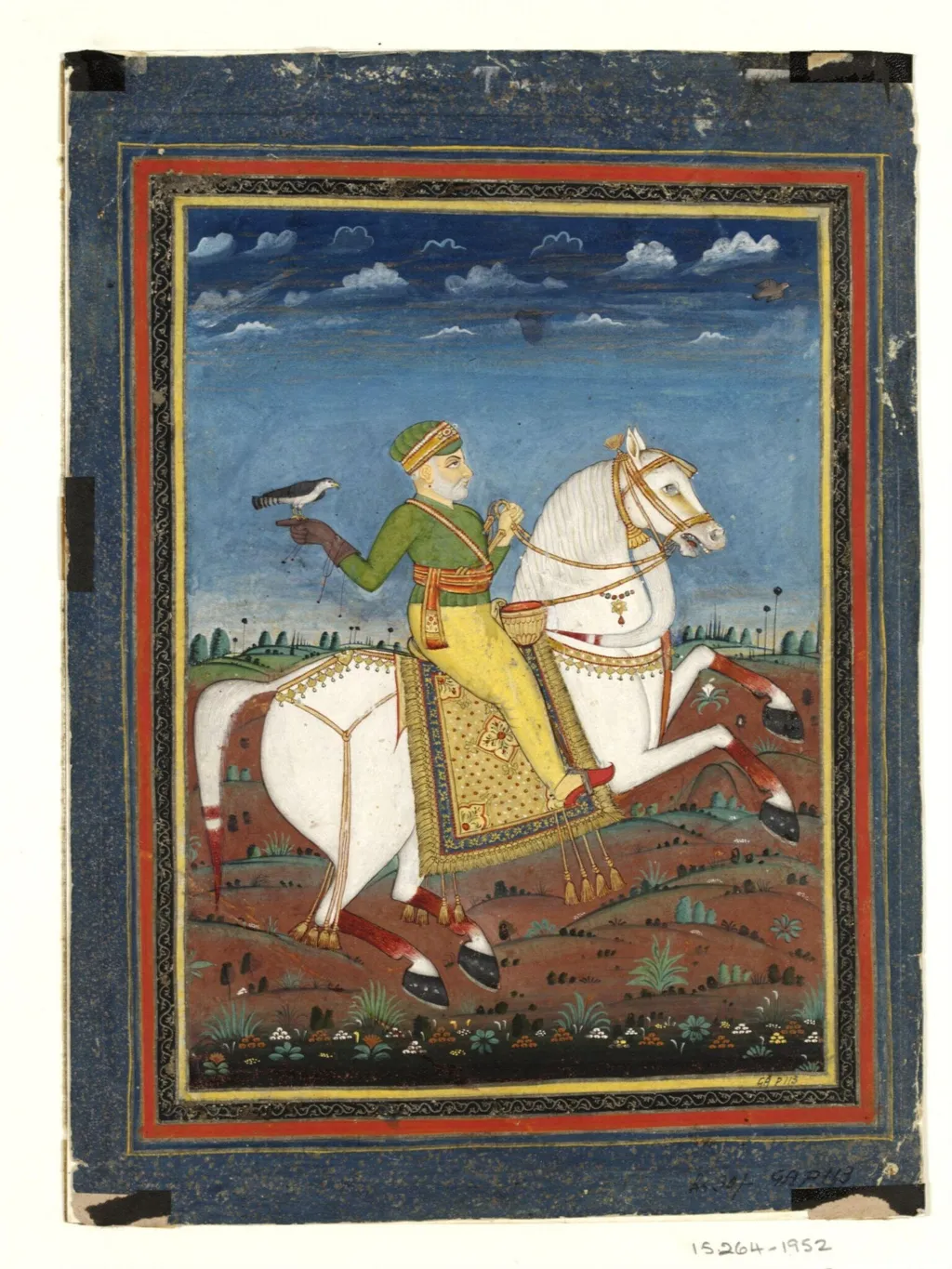
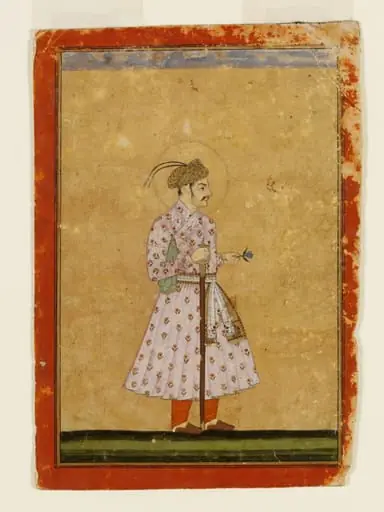
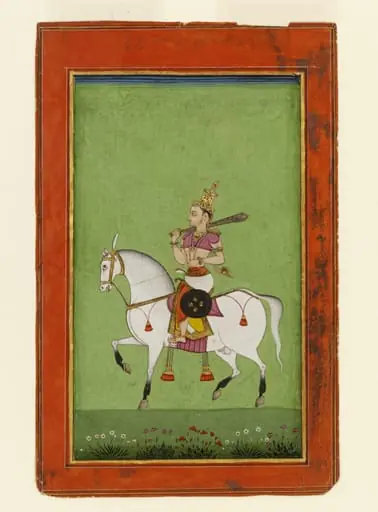
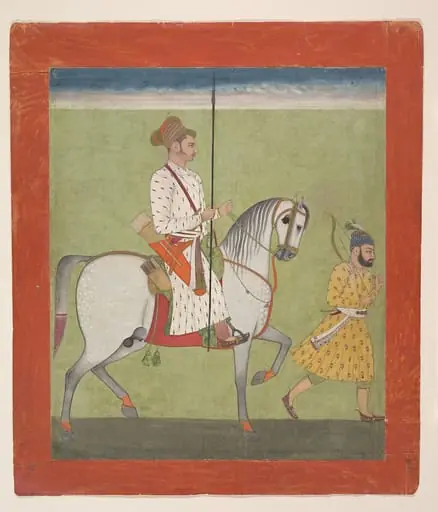
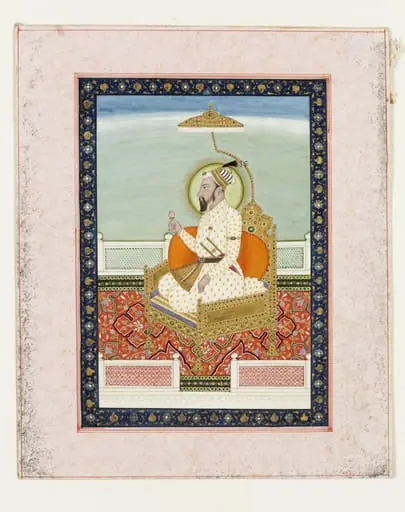
Raja Madan Singh Jat is a paint painting by the Patna School of Painting artist Unknown. It dates from 1800 and is held in the collection of the Victoria and Albert Museum.
About this work
Overview
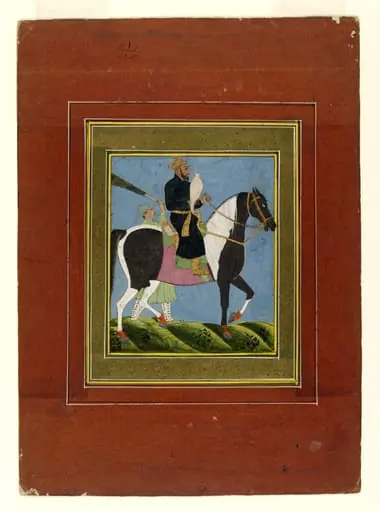
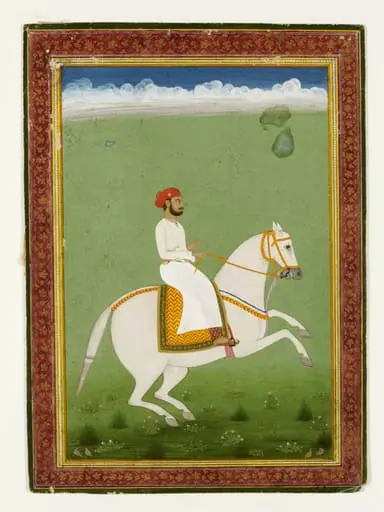
This opaque watercolour on paper, dated to around 1800, portrays Raja Madan Singh Jat, a regional ruler, during the practice of hawking.
This opaque watercolour on paper, dated to around 1800, portrays Raja Madan Singh Jat, a regional ruler, during the practice of hawking. Executed in the North Indian tradition, the work captures a moment of aristocratic leisure. The composition centers on the figure mounted on a finely adorned horse, set against a soft landscape with distant hills and a clear sky, reflecting a refined aesthetic common in courtly portraiture of the period.
Subject & Meaning
Raja Madan Singh Jat is depicted in the act of hawking, a sport associated with nobility and martial skill in South Asian courts. The falcon on his gloved hand symbolizes control, precision, and status. His attire and the horse’s ornate trappings reinforce his position within the local elite. The scene is not merely recreational but serves as a visual assertion of authority, tradition, and the ruler’s connection to elite pastimes.
Technique & Style
The painting employs opaque watercolour with fine brushwork to render textures of fabric, metalwork, and feathers. Details such as the gold embroidery on the horse’s blanket and the delicate rendering of clouds reflect a meticulous approach. While the composition shows naturalistic elements, the stylized landscape and flattened perspective align with regional Indian painting conventions rather than European Romanticism, which is not an accurate classification for this work.
History & Provenance
The painting originates from the Jat princely state in northern India, likely commissioned to commemorate the ruler’s public appearances or ceremonial activities. Its survival suggests it was preserved within the family or court collection. Though specific ownership records are sparse, its style and subject place it within a broader corpus of early 19th-century Rajput and Jat court paintings produced in the Delhi and Agra regions.
Context
During the early 1800s, regional rulers like Madan Singh Jat maintained cultural traditions amid the expanding influence of the British East India Company. Hawking remained a symbol of indigenous aristocratic identity. Paintings of such activities served both as personal mementos and as diplomatic gifts, reinforcing social hierarchies and cultural continuity in a period of political transition.
Legacy
This work contributes to the understanding of how local Indian courts preserved their visual culture during colonial encroachment. It stands as an example of the enduring importance of equestrian and falconry imagery in regional portraiture. Though not widely known outside specialist circles, it remains a valuable artifact for studying the intersection of power, performance, and artistic expression in pre-colonial India.
Artist & collection

 Domestic Scene
 Giacomo and Cardinal Marco, investing Andrea, Abbot of San Zeno, with his Benefice
 The Nymph of Fontainebleau
 Portrait of a Woman
 Madonna and Child with Saints in the Enclosed Garden
 Venus and Minerva
 Family Group of Four on Sofa
 Wall painting from Room H of the Villa of P. Fannius Synistor at Boscoreale