Artwork
Ba[...] Alexandria Bedouin
![Ba[...] Alexandria Bedouin, by Unknown, watercolor, 1850](https://artifactworldgallery.com/img/unknown--ba-alexandria-bedouin--2d8e2dd10891233f-w1024.webp)
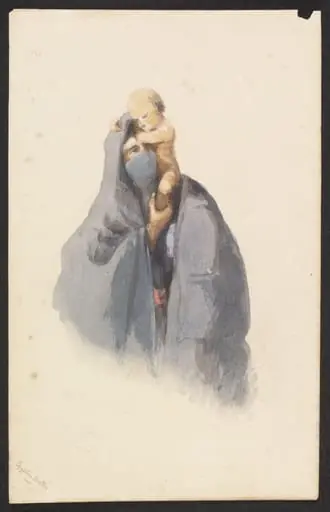
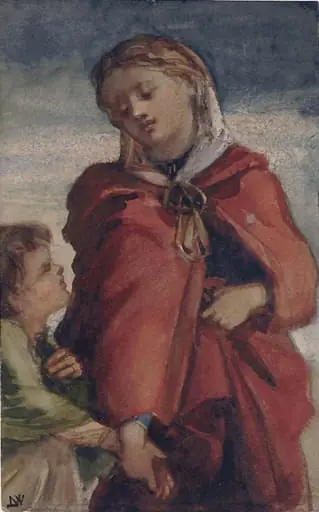
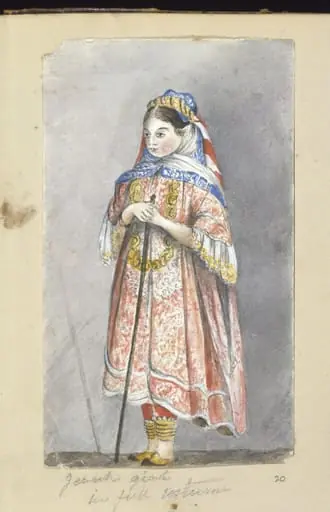
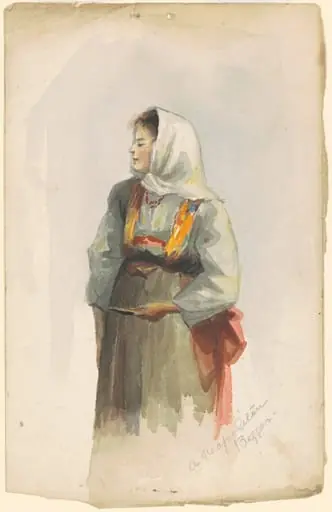
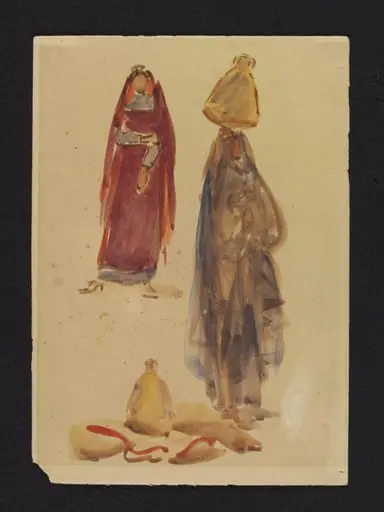
Ba[...] Alexandria Bedouin is a watercolor work on paper by the Impressionist artist Unknown. It dates from 1850 and is held in the collection of the Victoria and Albert Museum. This watercolour depicts a woman and child standing side by side in a quiet, intimate moment.
About this work
Overview
This watercolour depicts a woman and child standing side by side in a quiet, intimate moment. Rendered with soft washes and minimal detail, the figures emerge against a plain beige background that eliminates distraction. The artist employs subtle tonal shifts to define form, emphasizing stillness and closeness without narrative elaboration.
Subject & Meaning
The figures appear to be engaged in a private, everyday act—perhaps holding or preparing clothing. The woman’s hooded robe and bare feet suggest a Bedouin or rural North African identity, while the child’s simple dress and shawl reinforce a sense of modesty and domestic life. The scene conveys quiet dignity rather than spectacle, focusing on the unspoken bond between caregiver and child.
Technique & Style
Watercolour is used with restraint, allowing the paper’s texture to contribute to the softness of the forms. Delicate layering creates subtle chiaroscuro, particularly in the folds of fabric and the contours of the figures’ bodies. The absence of sharp lines and the muted palette enhance the tender, contemplative mood, avoiding theatricality in favor of understated realism.
History & Provenance
Its provenance traces to private collections in Egypt and Europe, though the artist’s full identity remains undocumented.
The work is attributed to an artist associated with 19th-century Alexandria, likely part of a broader tradition of local watercolour studies documenting regional dress and daily life. Its provenance traces to private collections in Egypt and Europe, though the artist’s full identity remains undocumented. The piece was likely made for personal or ethnographic interest rather than public exhibition.
Context
Created during a period of increased European interest in North African cultures, the painting reflects a local perspective on Bedouin life, distinct from orientalist tropes. Unlike exoticized depictions common in Western art, this work avoids embellishment, presenting its subjects with observational neutrality and cultural specificity grounded in direct observation.
Legacy
Though not widely exhibited, the painting contributes to a quieter archive of regional portraiture from Ottoman-era Egypt. It preserves details of dress and posture that might otherwise be lost, offering a modest but valuable record of everyday life in Alexandria’s periphery. Its legacy lies in its unassuming authenticity rather than artistic fame.
Artist & collection

 Domestic Scene
 Giacomo and Cardinal Marco, investing Andrea, Abbot of San Zeno, with his Benefice
 The Nymph of Fontainebleau
 Portrait of a Woman
 Madonna and Child with Saints in the Enclosed Garden
 Venus and Minerva
 Family Group of Four on Sofa
 Wall painting from Room H of the Villa of P. Fannius Synistor at Boscoreale