Artwork
Egyptian Mother
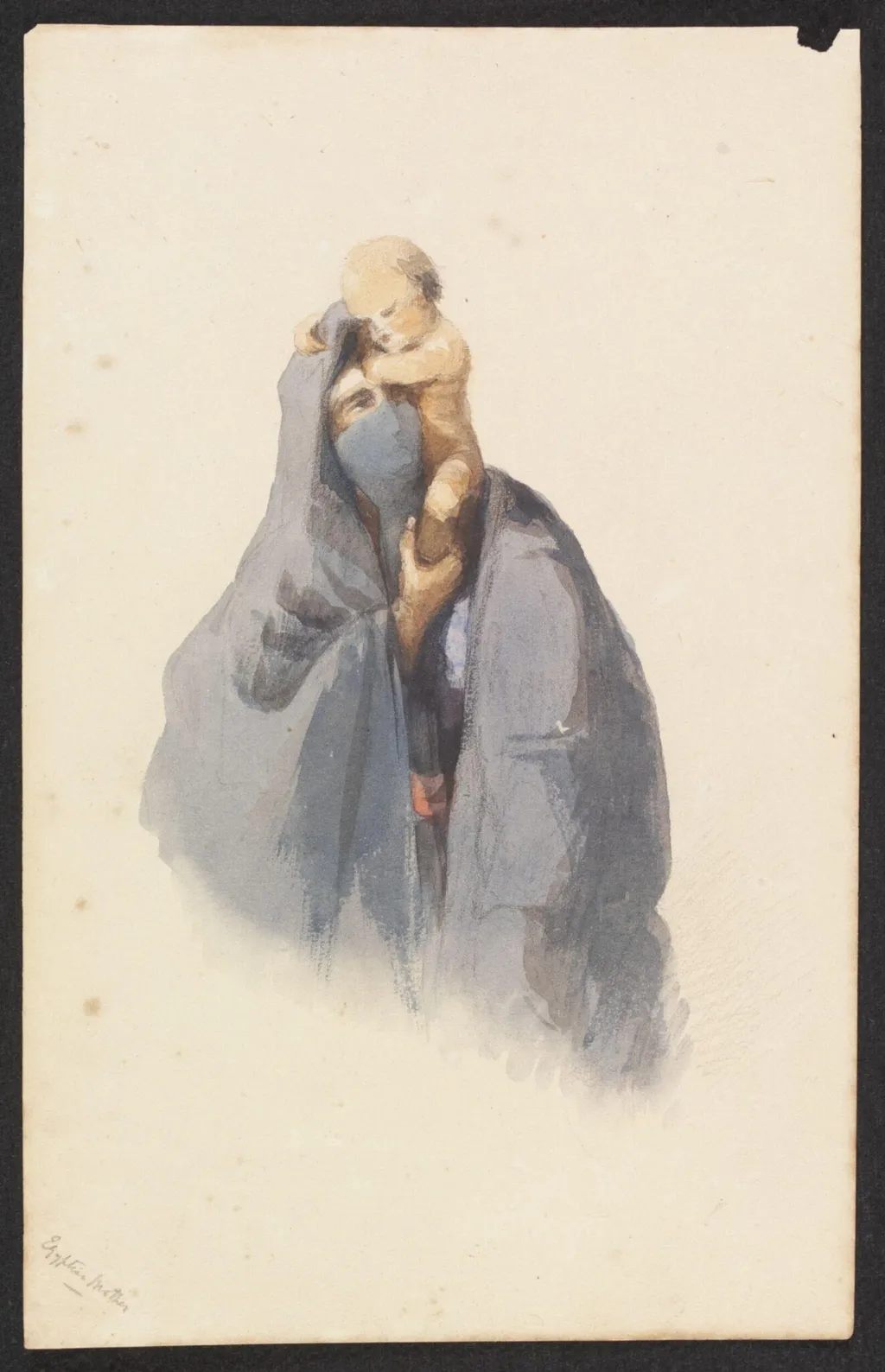
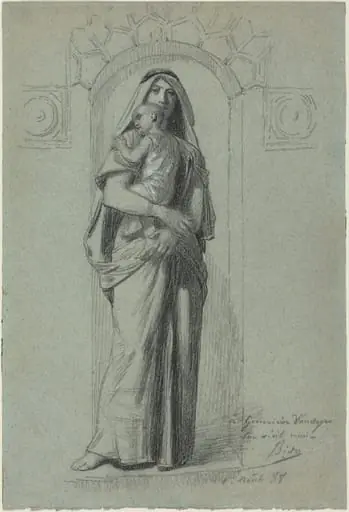
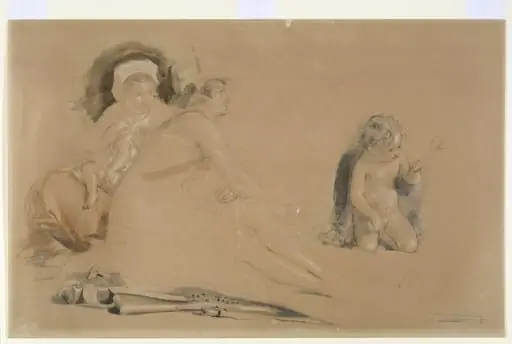
Egyptian Mother is a watercolor work on paper by the Impressionist artist Unknown. It dates from 1850 and is held in the collection of the Victoria and Albert Museum. This watercolour sketch depicts a mother and child in a quiet, intimate moment.
About this work
Overview
This watercolour sketch depicts a mother and child in a quiet, intimate moment. Executed with loose, rapid brushwork, the piece conveys immediacy rather than polished detail. The limited palette of soft blues, browns, and a touch of red on the sleeve suggests restraint and focus on form and gesture. The plain, light background isolates the figures, reinforcing the emotional core of the scene.
Subject & Meaning
The subject is a mother embracing her child, her face rendered indistinct, emphasizing physical closeness over individual identity. Her hand rests gently on the child’s head, a gesture of protection and tenderness. The obscured facial features universalize the image, transforming it from a portrait into a symbol of maternal care, common across cultures and time.
Technique & Style
The artist employed watercolour with a fluid, spontaneous approach, using diluted pigments to create soft edges and subtle gradations. The brushstrokes are unrefined and swift, suggesting an on-the-spot observation rather than a studio composition. The minimal use of colour and absence of detail reflect a sketch-like quality, prioritizing emotional resonance over finish.
History & Provenance
The work’s origin is undocumented, but its style aligns with 19th-century travel sketches made by European artists in Egypt. Such works often captured daily life with observational immediacy, sometimes for private collections or academic interest. Its current location is not specified, though similar pieces reside in institutions like the Victoria and Albert Museum.
Context
During the 19th century, European artists and travellers frequently recorded scenes of Egyptian life, often focusing on domestic moments. These works, though sometimes romanticized, offered glimpses into local customs beyond monumental architecture. This sketch fits within that tradition, valuing quiet human interaction over exotic spectacle.
Legacy
Though unsigned and unattributed, the piece contributes to a broader archive of intimate, everyday imagery from colonial-era Egypt. Its unassuming nature—lacking grandeur or narrative—makes it a quiet counterpoint to more monumental depictions of the region. It endures as a modest but resonant record of personal connection in a historical context often dominated by spectacle.
Artist & collection

 Domestic Scene
 Giacomo and Cardinal Marco, investing Andrea, Abbot of San Zeno, with his Benefice
 The Nymph of Fontainebleau
 Portrait of a Woman
 Madonna and Child with Saints in the Enclosed Garden
 Venus and Minerva
 Family Group of Four on Sofa
 Wall painting from Room H of the Villa of P. Fannius Synistor at Boscoreale
![Ba[...] Alexandria Bedouin, by Unknown](https://artifactworldgallery.com/img/unknown--ba-alexandria-bedouin--2d8e2dd10891233f-w320.webp)