Artwork
A Man with a Staff, Thebes
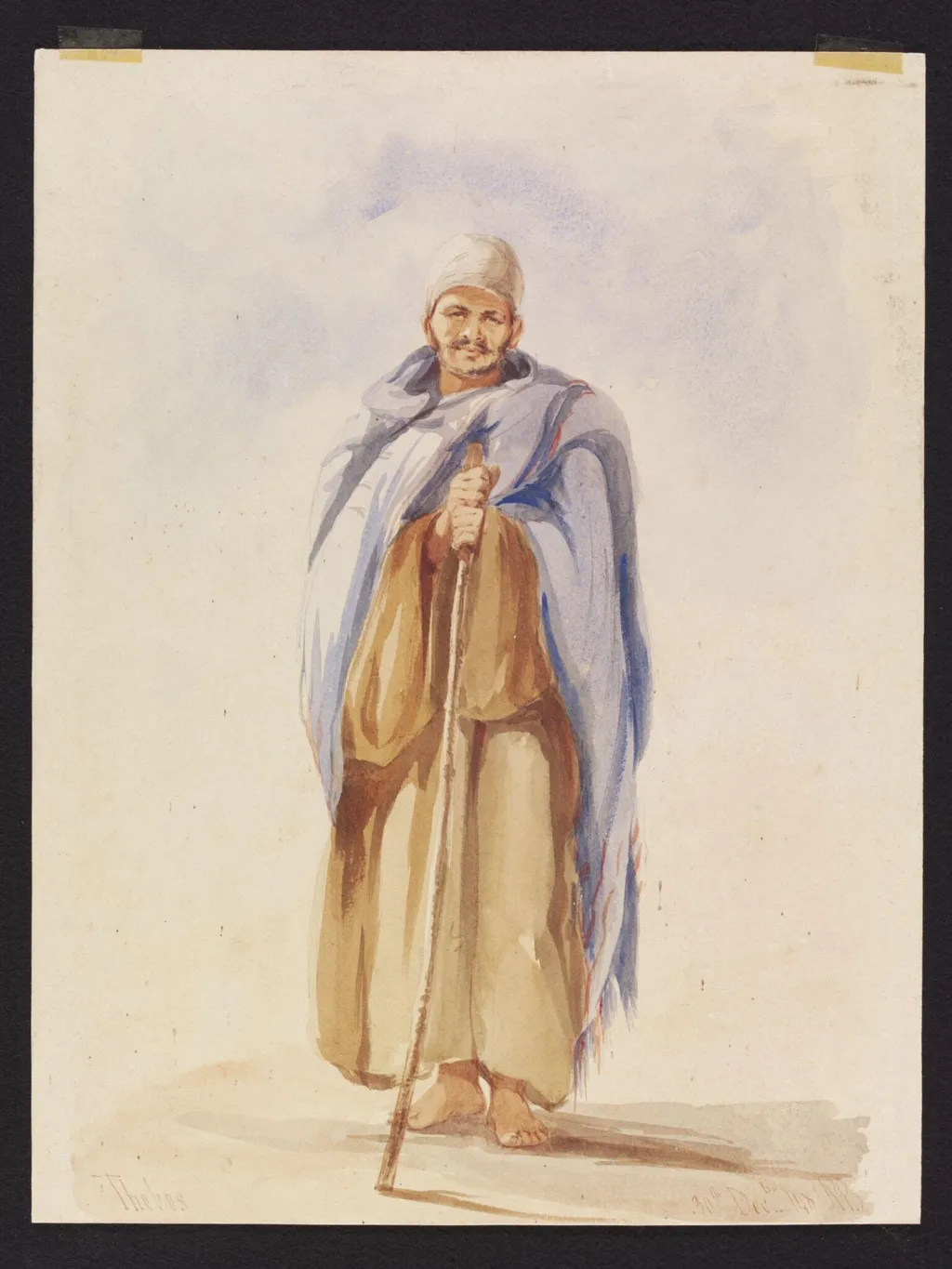
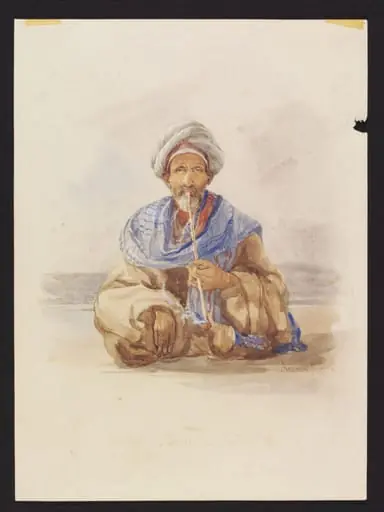
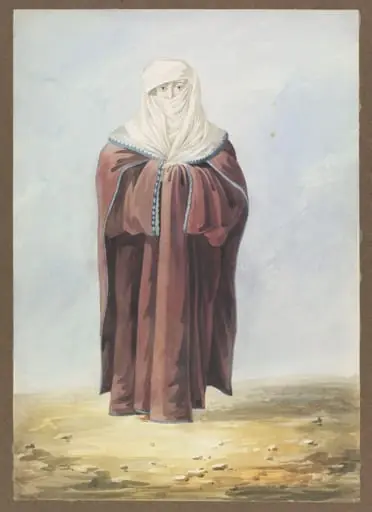
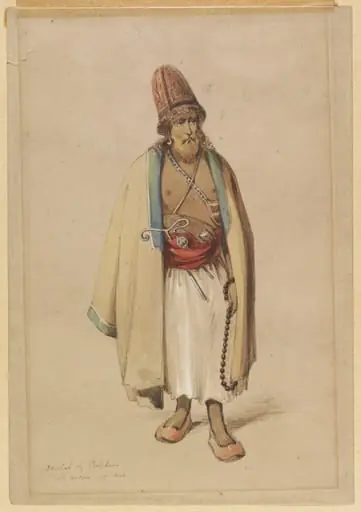
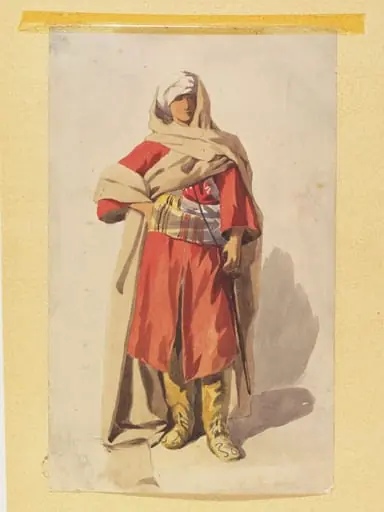
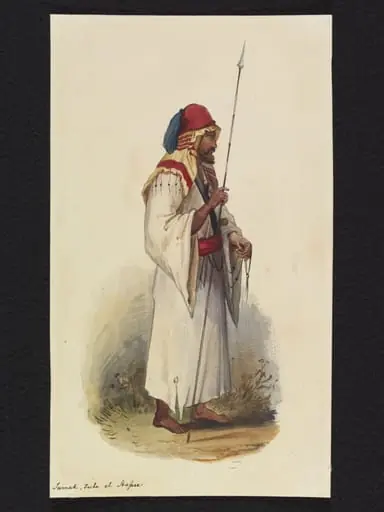
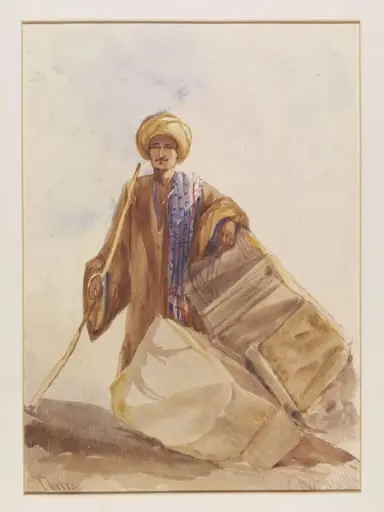
A Man with a Staff, Thebes is a watercolor work on paper by the Romanticist artist Unknown. It dates from 1848 and is held in the collection of the Victoria and Albert Museum. Created in December 1848, this watercolour portrays a solitary figure standing with a staff in his right hand.
About this work
Overview
Created in December 1848, this watercolour portrays a solitary figure standing with a staff in his right hand. The anonymous artist rendered the scene with a restrained palette of earth tones and a delicate handling of paint, producing an atmosphere of quiet stillness. The work is part of a series of sketches documenting the creator’s journeys through the eastern Mediterranean in the late 1840s.
Subject & Meaning
The central figure is dressed in a long, light‑brown robe, a blue shawl draped across his shoulders, and a white head covering, attire typical of a traveler or pilgrim in the region. His upright posture and contemplative expression suggest a moment of introspection, inviting viewers to consider themes of wander‑lust, solitude, and the inner life of a wayfarer.
Technique & Style
Executed in watercolour, the piece relies on muted hues and soft, fluid brushstrokes that blur edges and soften forms. This approach aligns with Romantic sensibilities, emphasizing mood and emotional resonance over precise detail. The artist’s focus on light, atmospheric effects and the figure’s expressive face underscores the work’s meditative tone.
History & Provenance
The drawing originates from an unnamed hand, recorded as part of a travel journal that includes sketches from Trieste in the early 1840s, Thebes in late 1848, and Bethlehem in April 1849. The watercolour entered the museum’s collection through a 20th‑century acquisition of the artist’s travel sketchbooks, preserving the original date and context of its creation.
Context
Produced during a period when European artists were increasingly drawn to the exotic landscapes and cultures of the Near East, the work reflects the Romantic fascination with distant lands and the personal experience of travel. Its subdued palette and focus on individual contemplation echo broader artistic trends that valued interiority and the sublime in everyday encounters.
Artist & collection

 Domestic Scene
 Giacomo and Cardinal Marco, investing Andrea, Abbot of San Zeno, with his Benefice
 The Nymph of Fontainebleau
 Portrait of a Woman
 Madonna and Child with Saints in the Enclosed Garden
 Venus and Minerva
 Family Group of Four on Sofa
 Wall painting from Room H of the Villa of P. Fannius Synistor at Boscoreale