Artwork
Balarama
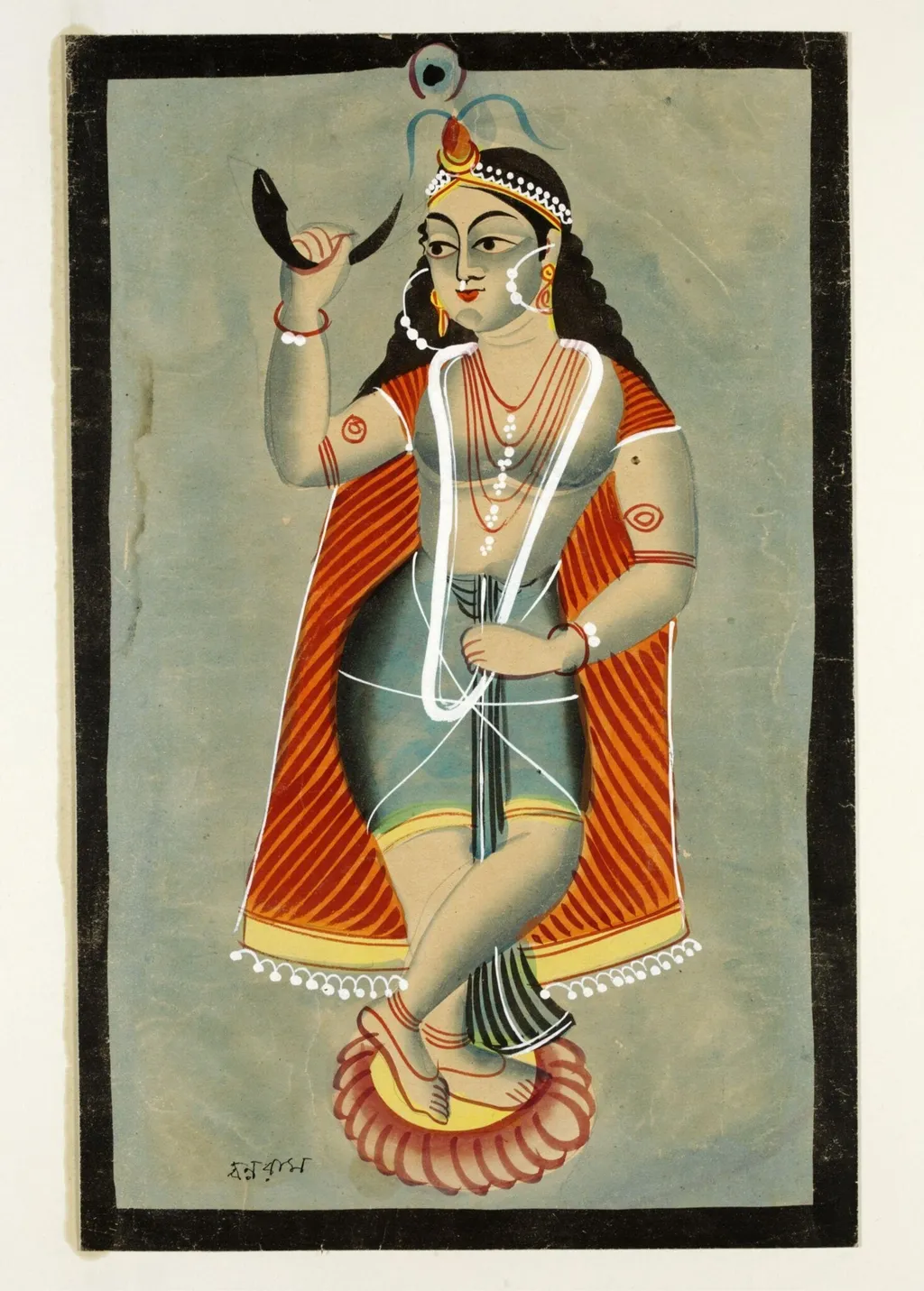
Balarama is a paint painting by the Impressionist artist Unknown. It dates from 1885 and is held in the collection of the Victoria and Albert Museum.
About this work
Overview
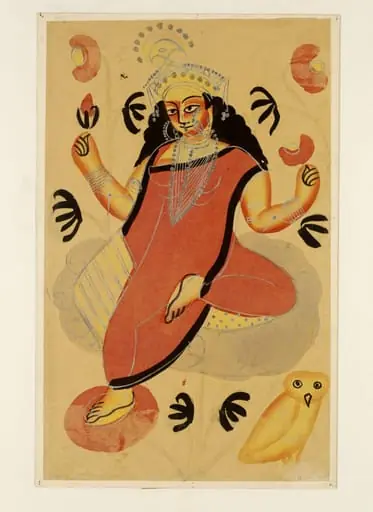
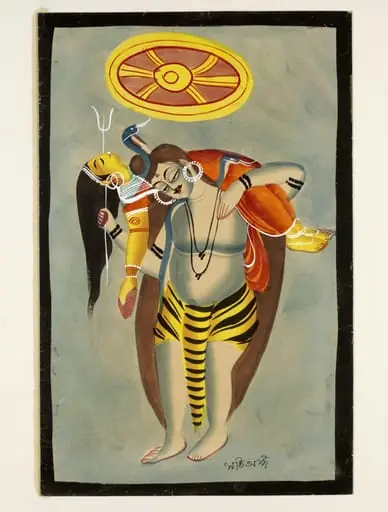
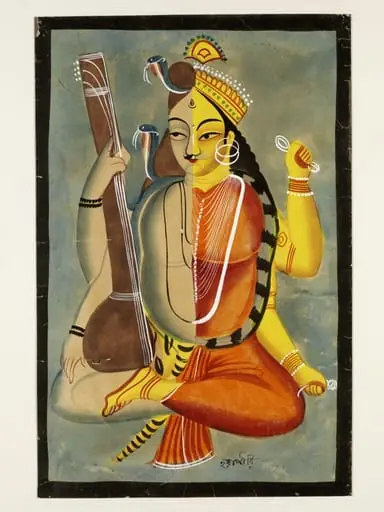
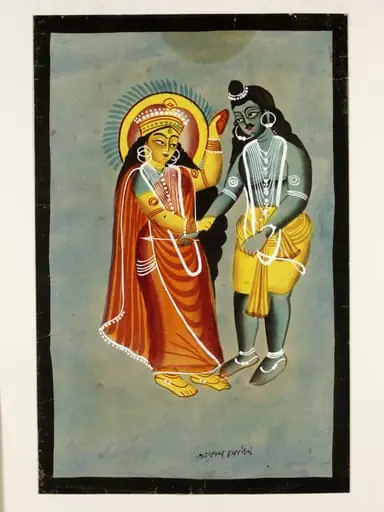
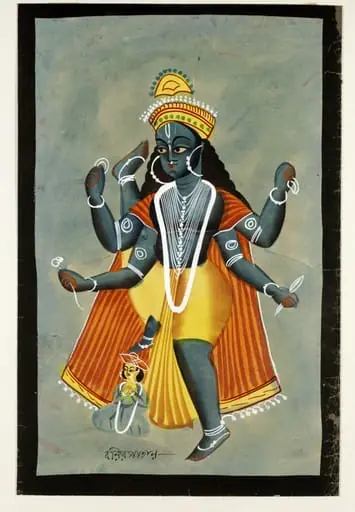
Created in 1885, this opaque watercolor on paper portrays the Hindu deity Balarama positioned atop a lotus blossom. He is rendered in vivid attire, including a red cape and an array of ornaments, and holds a staff in one hand while a fan rests in the other. The composition is set against a subdued green backdrop that highlights the bright reds, yellows, and whites of the figure.
Subject & Meaning
The work presents Balarama, a brother of Krishna, in a serene pose that emphasizes his role as a protector and agricultural patron. The lotus base signifies purity, while the staff and fan are traditional attributes associated with his mythic functions. The abundance of jewelry and the striking costume underscore his divine status and the cultural symbolism attached to his worship.
Technique & Style
Executed with opaque watercolor, the artist employs flat washes of saturated pigment, avoiding chiaroscuro or modeling.
Executed with opaque watercolor, the artist employs flat washes of saturated pigment, avoiding chiaroscuro or modeling. Clean, unembellished lines define the figure and its garments, creating a graphic clarity. The limited palette of reds, yellows, whites, and muted greens produces a strong visual contrast, characteristic of late‑nineteenth‑century Indian miniature influences adapted for a Western audience.
History & Provenance
The painting entered the collection of Miss M. Steele in 1894, having been inherited from her mother, a Sanskrit scholar affiliated with Cambridge University. It is believed that the work, or its source material, may have originated with Steele’s grandmother, who spent time in India. This lineage reflects a familial transmission of Indian artistic objects to British collectors during the colonial period.
Artist & collection

 Domestic Scene
 Giacomo and Cardinal Marco, investing Andrea, Abbot of San Zeno, with his Benefice
 The Nymph of Fontainebleau
 Portrait of a Woman
 Madonna and Child with Saints in the Enclosed Garden
 Venus and Minerva
 Family Group of Four on Sofa
 Wall painting from Room H of the Villa of P. Fannius Synistor at Boscoreale