Artwork
Lakshmi
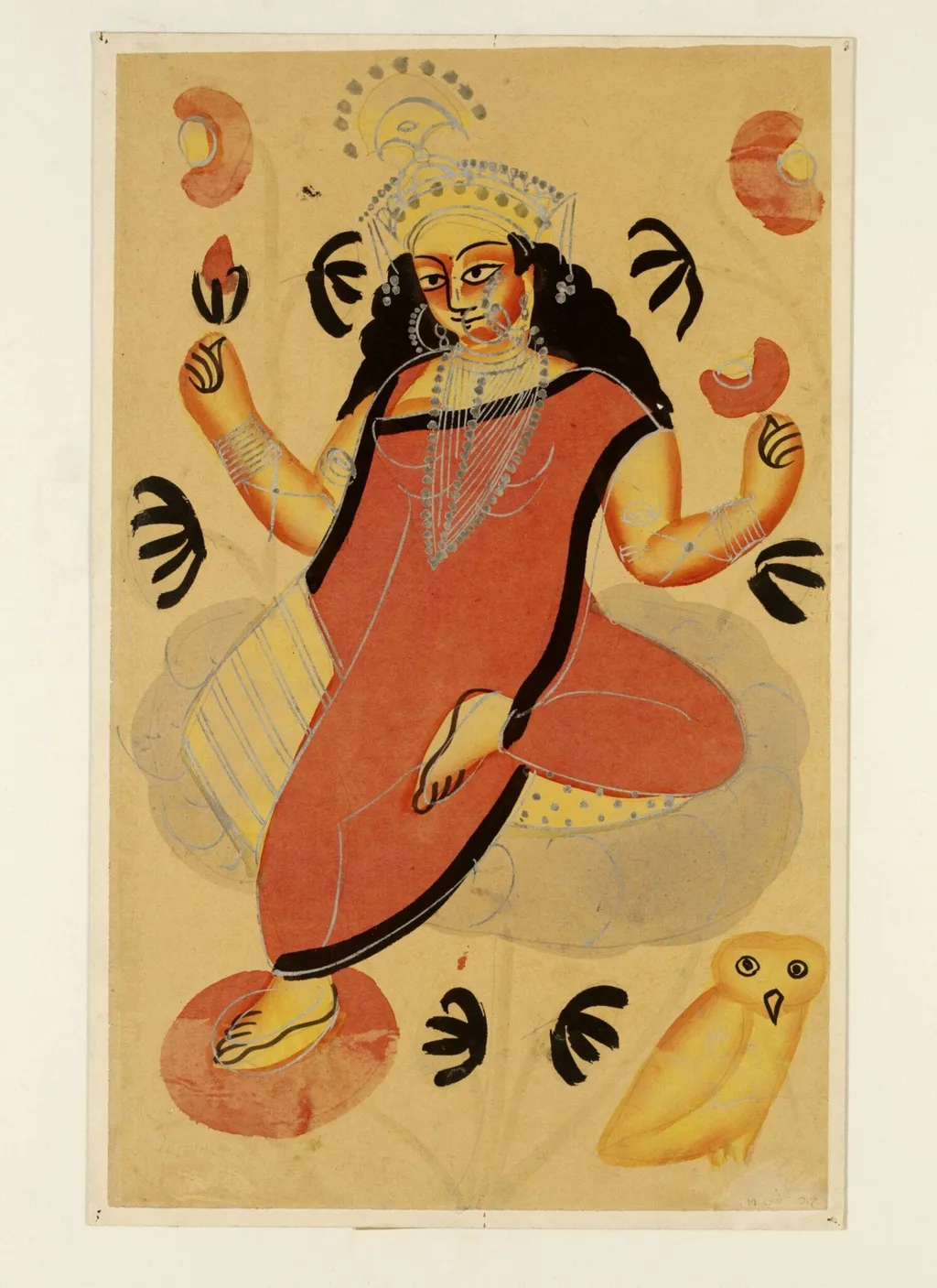
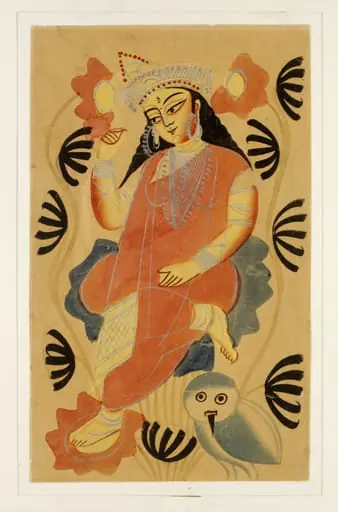
Lakshmi is a paint painting by the Impressionist artist Unknown. It dates from 1890 and is held in the collection of the Victoria and Albert Museum.
About this work
Overview
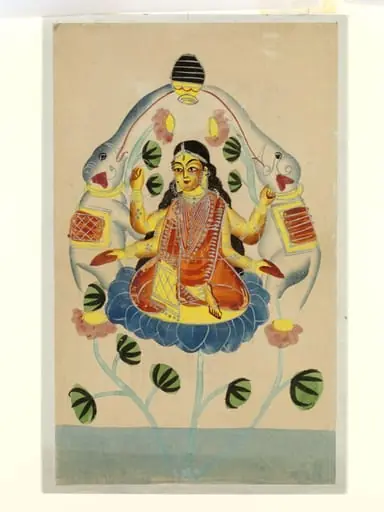
Created in 1890, this opaque watercolor on paper portrays the Hindu deity Lakshmi seated on a red lotus. She is shown with four arms, adorned in a red garment, gold ornaments and a crown of coins, while an owl accompanies her. The composition includes typical decorative motifs such as surrounding flowers and swirling background patterns.
Subject & Meaning
Lakshmi, the goddess of wealth and prosperity, is depicted holding a lotus and a pot, symbols of purity and abundance, while one hand gestures upward and another rests on her knee. The presence of the owl, traditionally linked to the goddess, reinforces themes of fortune and vigilance within the visual narrative.
Technique & Style
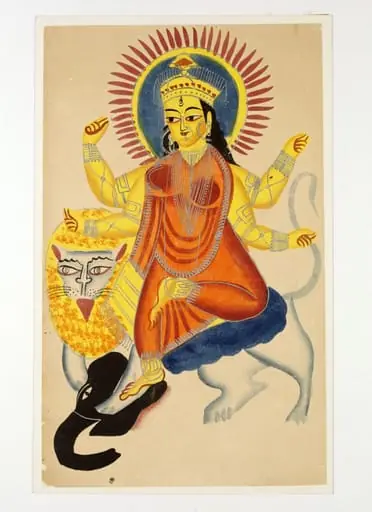
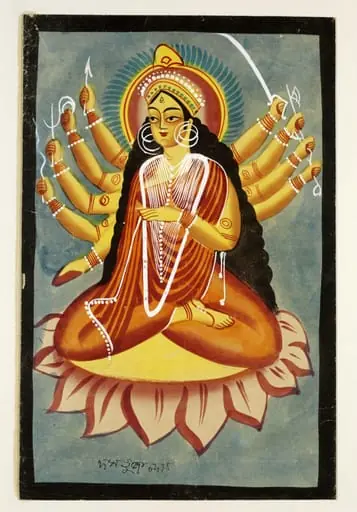
The work exemplifies the 19th‑century Kalighat school, recognizable through its vivid palette, strong outlines, and a blend of devotional iconography with everyday visual elements. The use of opaque watercolor on paper allows for bright, flat areas of color that emphasize the figure’s decorative attire and the surrounding ornamental patterns.
History & Provenance
The painting formed part of a larger album comprising 196 prints, paintings, and drawings assembled by J. Lockwood Kipling during his travels in Upper India and Bengal between 1865 and 1893. In 1917, the collection was bequeathed to the museum by Kipling’s son, the writer Rudyard Kipling.
Context
Kalighat paintings emerged from the bustling religious market of Kolkata’s Kalighat temple, where artists catered to both devotional patrons and secular buyers. This dual audience encouraged the incorporation of mythological subjects like Lakshmi alongside motifs drawn from contemporary daily life, reflecting a transitional moment in Indian visual culture.
Artist & collection

 Domestic Scene
 Giacomo and Cardinal Marco, investing Andrea, Abbot of San Zeno, with his Benefice
 The Nymph of Fontainebleau
 Portrait of a Woman
 Madonna and Child with Saints in the Enclosed Garden
 Venus and Minerva
 Family Group of Four on Sofa
 Wall painting from Room H of the Villa of P. Fannius Synistor at Boscoreale