Artwork
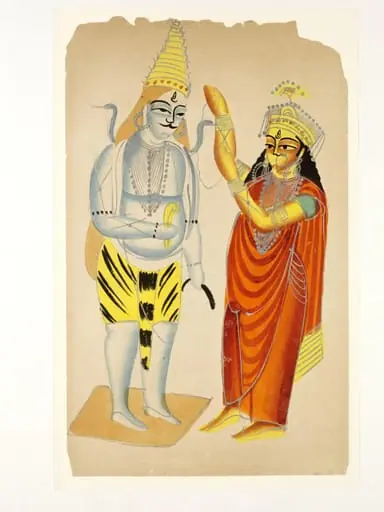
Shiva and Sati
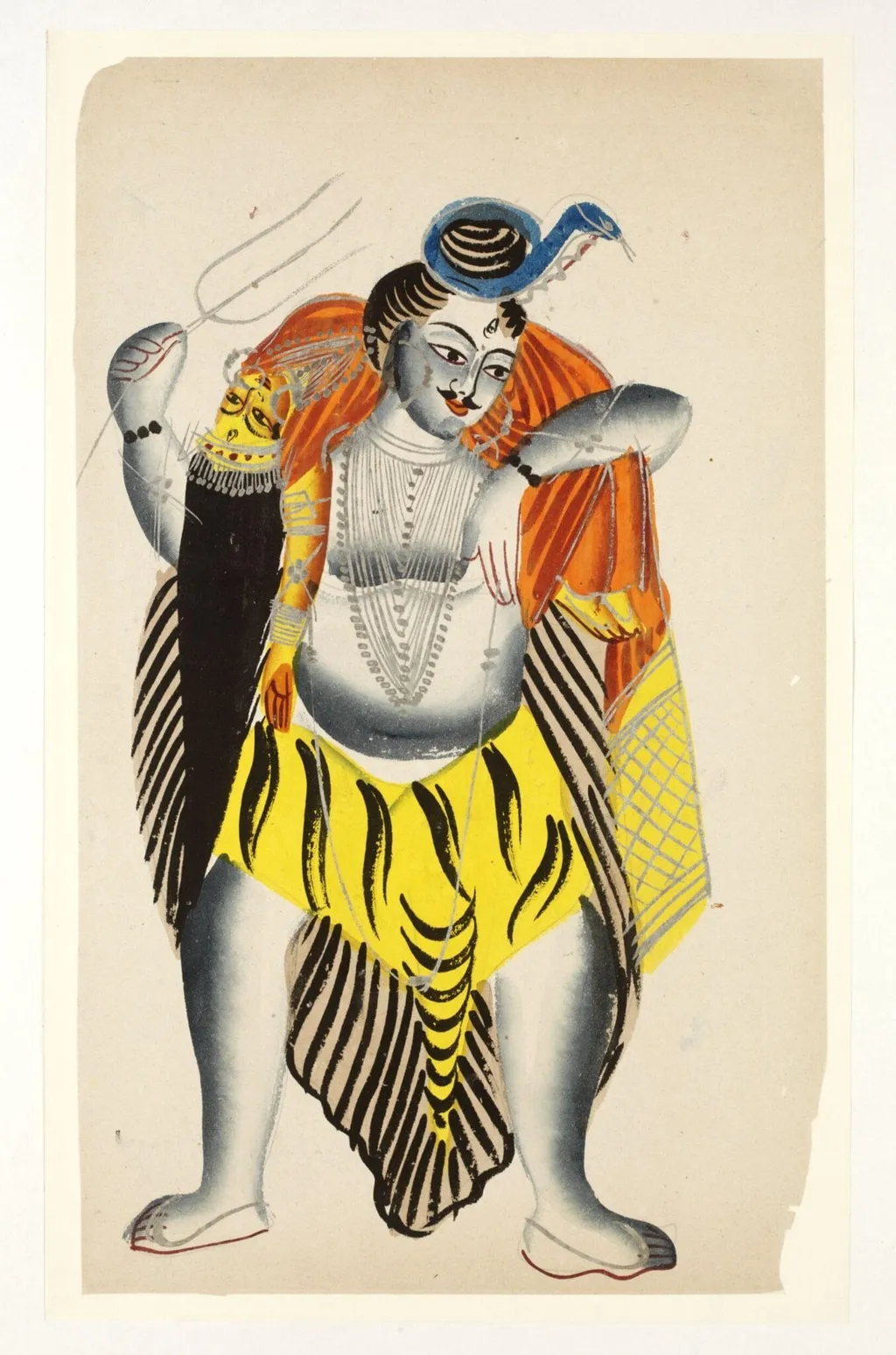
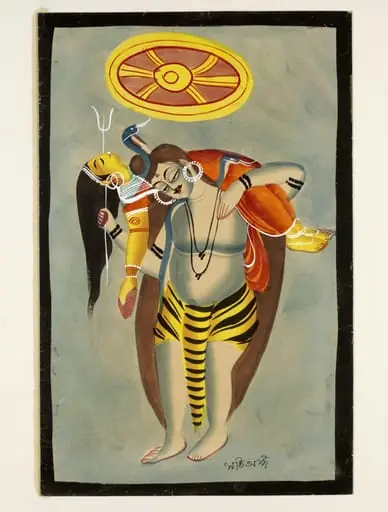
Shiva and Sati is a paint painting by the Impressionist artist Unknown. It dates from 1890 and is held in the collection of the Victoria and Albert Museum.
About this work
Overview
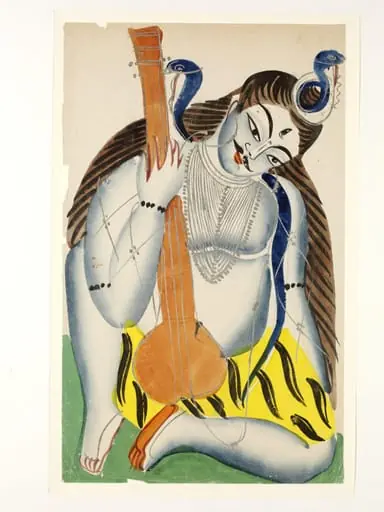
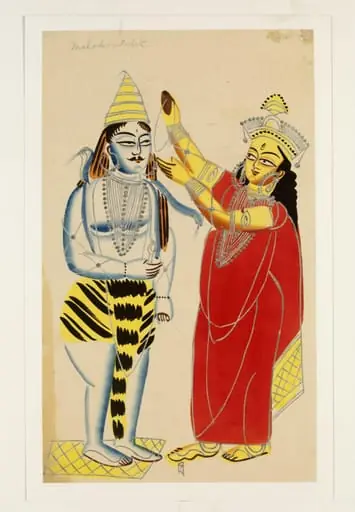
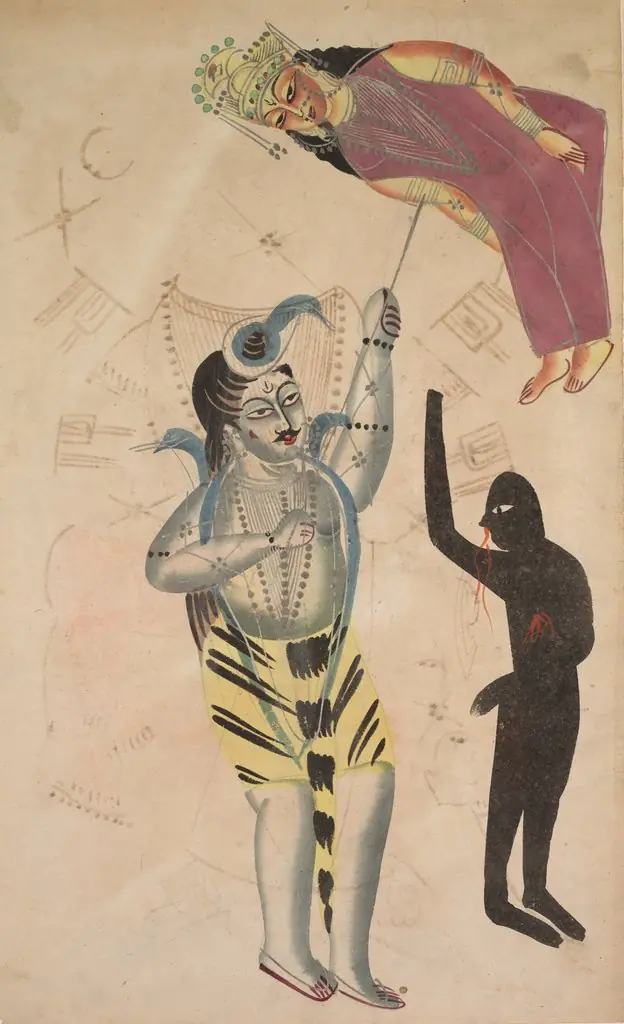
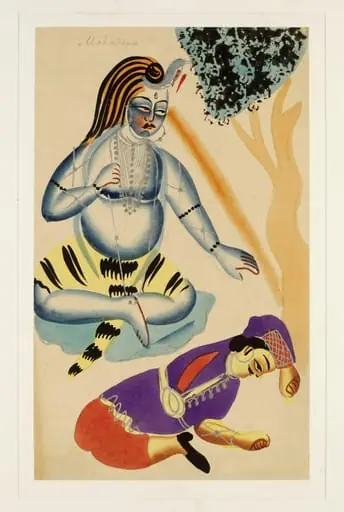
The work is a watercolor and tin‑alloy painting on paper that portrays a mythological scene in which a male deity cradles a lifeless female figure. Executed in the characteristic visual language of Kalighat painting, the composition uses vivid hues and brisk brushwork to convey movement and emotional intensity.
Subject & Meaning
The figures are identified as Shiva and Sati, central characters in Hindu mythology whose tragic reunion symbolizes the cycle of death and renewal. Shiva is shown with his iconic third eye and a coiled serpent, while Sati appears draped in orange, emphasizing her role in the narrative of self‑sacrifice.
Technique & Style
The artist employs the Kalighat tradition that arose in 19th‑century Calcutta, marked by bold color contrasts, simplified outlines, and rapid, expressive strokes. The use of tin alloy pigment alongside watercolor creates a luminous surface, while the flat decorative patterns reflect the commercial print aesthetic of the period.
History & Provenance
The painting entered the museum collection through a donation by M. N. Varvill in 1955. Its acquisition coincided with growing scholarly interest in colonial‑era Indian popular art, helping to document the visual culture of Bengal under British rule.
Context
Kalighat artists responded to the social and political upheavals of colonial Bengal, depicting mythic, religious, and everyday subjects for a burgeoning urban audience. This piece illustrates how traditional narratives were reinterpreted through a modern, market‑driven visual vocabulary.
Artist & collection

 Domestic Scene
 Giacomo and Cardinal Marco, investing Andrea, Abbot of San Zeno, with his Benefice
 The Nymph of Fontainebleau
 Portrait of a Woman
 Madonna and Child with Saints in the Enclosed Garden
 Venus and Minerva
 Family Group of Four on Sofa
 Wall painting from Room H of the Villa of P. Fannius Synistor at Boscoreale