Artwork
Baman and Bali
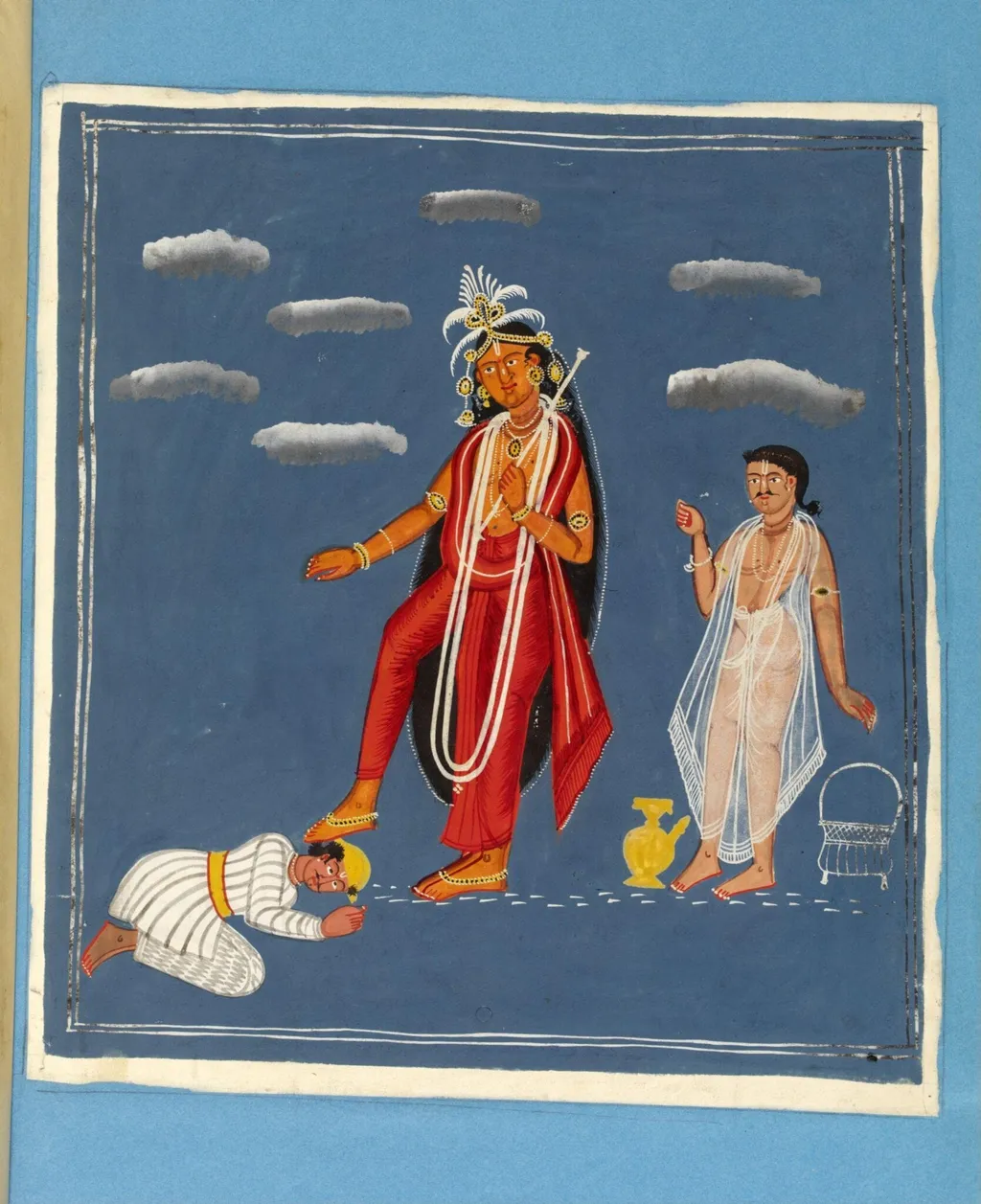
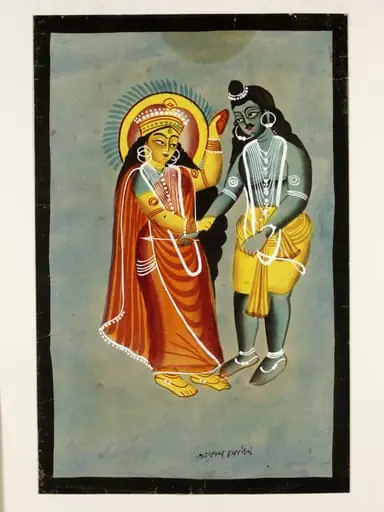
Baman and Bali is a paint painting by the Impressionist artist Unknown. It dates from 1850 and is held in the collection of the Victoria and Albert Museum.
About this work
Overview
Executed in a vibrant palette, the work belongs to the Pahari or Rajasthani miniature tradition.
This opaque watercolor on paper, dated to around 1850, illustrates a moment from Hindu mythology involving Vishnu’s dwarf incarnation, Baman, and the demon king Bali. Executed in a vibrant palette, the work belongs to the Pahari or Rajasthani miniature tradition. It was transferred to its current collection from the Department of Engraving, Illustration & Design, with the catalog reference RP 51/2237, indicating its institutional history within a colonial-era archive.
Subject & Meaning
The scene captures Vishnu as Baman, who, after being granted three paces of land by the pious king Bali, expands to cosmic size. With one step covering the earth and another the heavens, Baman asks where to place the third. Bali, recognizing his guest’s divine nature, offers his own head. The moment symbolizes devotion’s triumph over ego, and the humility of even powerful rulers before the divine.
Technique & Style
The painting employs fine brushwork and opaque watercolor to achieve rich, flat planes of color against a luminous blue sky. Figures are rendered with delicate outlines and ornate details—jewelry, feathered crowns, striped garments—typical of regional miniature traditions. The composition centers the standing figure, using scale and color contrast to emphasize hierarchy, while clouds and empty space suggest a celestial setting without perspective.
History & Provenance
The work originated in a courtly atelier, likely in North India, during the mid-19th century. It entered institutional custody through the Department of Engraving, Illustration & Design, a colonial-era administrative unit that collected and cataloged Indian artworks. Its catalog number, RP 51/2237, reflects its documentation during this period, though its earlier ownership and exact place of creation remain undocumented.
Context
This painting reflects the continued patronage of Hindu mythological themes in regional courts during British colonial rule. Artists preserved traditional iconography even as new materials and institutional frameworks emerged. Comparable works from the same period appear in collections at the Victoria and Albert Museum and other institutions, suggesting a broader network of visual storytelling rooted in devotional literature.
Legacy
Though not widely exhibited, the painting contributes to the understanding of 19th-century Indian miniature painting as a living tradition. Its preservation within a colonial archive highlights the complex history of cultural documentation. The work remains a quiet testament to the endurance of mythic narratives in visual form, beyond the reach of political change.
Artist & collection

 Domestic Scene
 Giacomo and Cardinal Marco, investing Andrea, Abbot of San Zeno, with his Benefice
 The Nymph of Fontainebleau
 Portrait of a Woman
 Madonna and Child with Saints in the Enclosed Garden
 Venus and Minerva
 Family Group of Four on Sofa
 Wall painting from Room H of the Villa of P. Fannius Synistor at Boscoreale
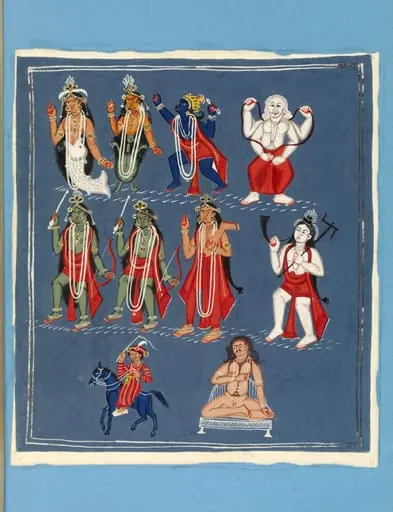 Ten avataras of Vishnu
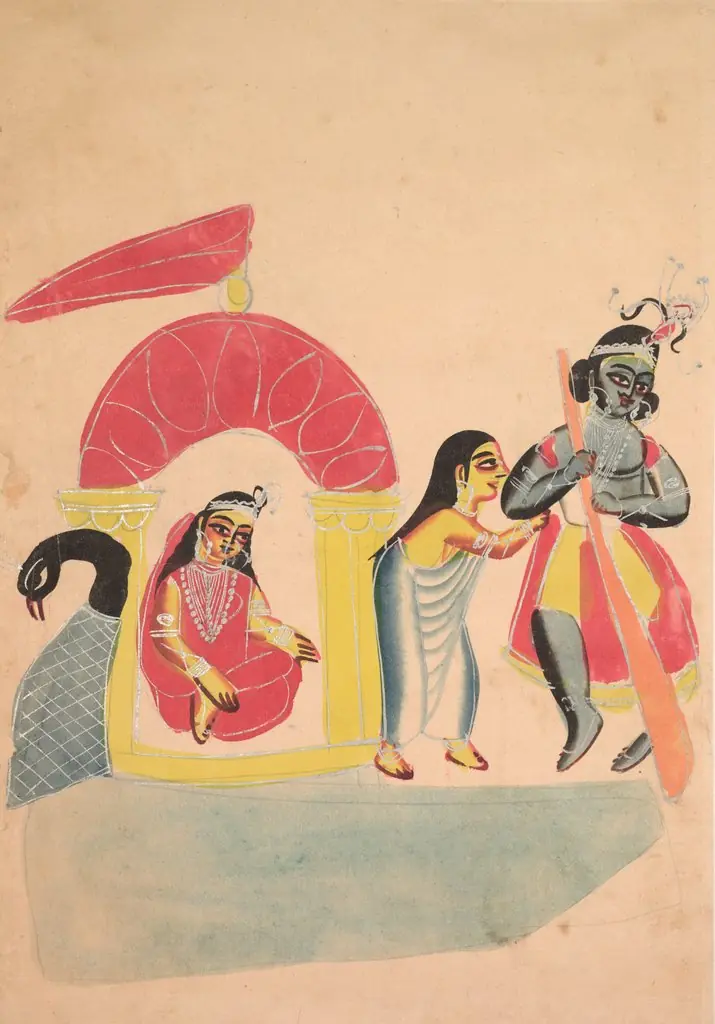 Krishna Ferrying Radha Across the Yamuna River
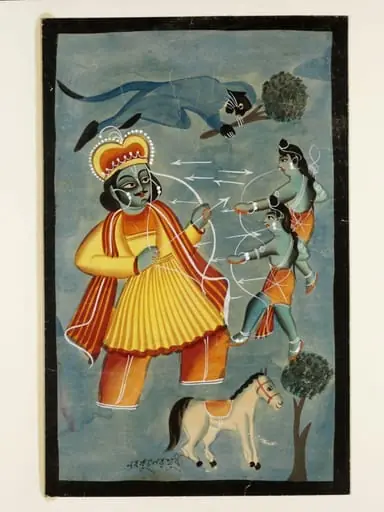 Rama, Lava and Kusha
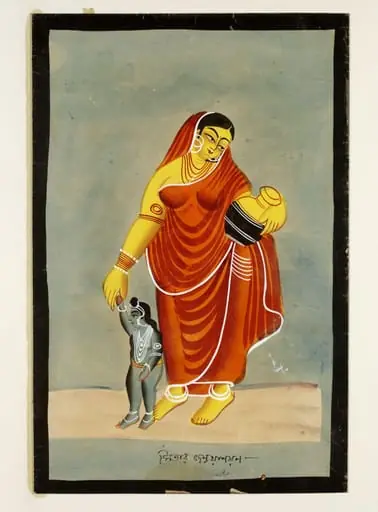 Sita and Lava
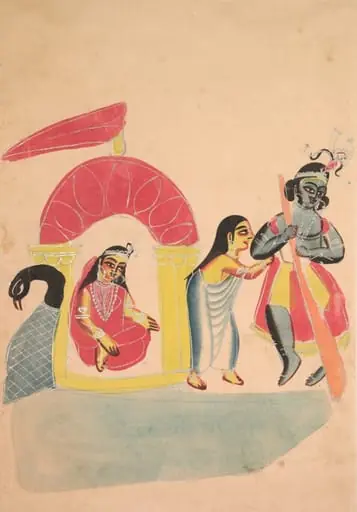 Krishna Ferrying Radha Across the Yamuna River
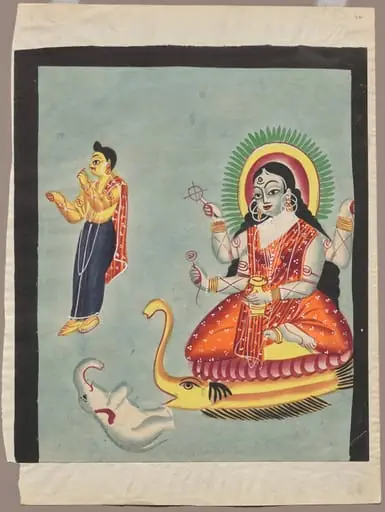 The Goddess Ganga, from a Kalighat album
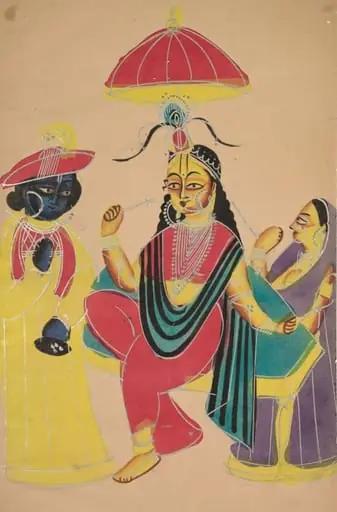 Krishna Standing by Radha who is Seated on a Chair
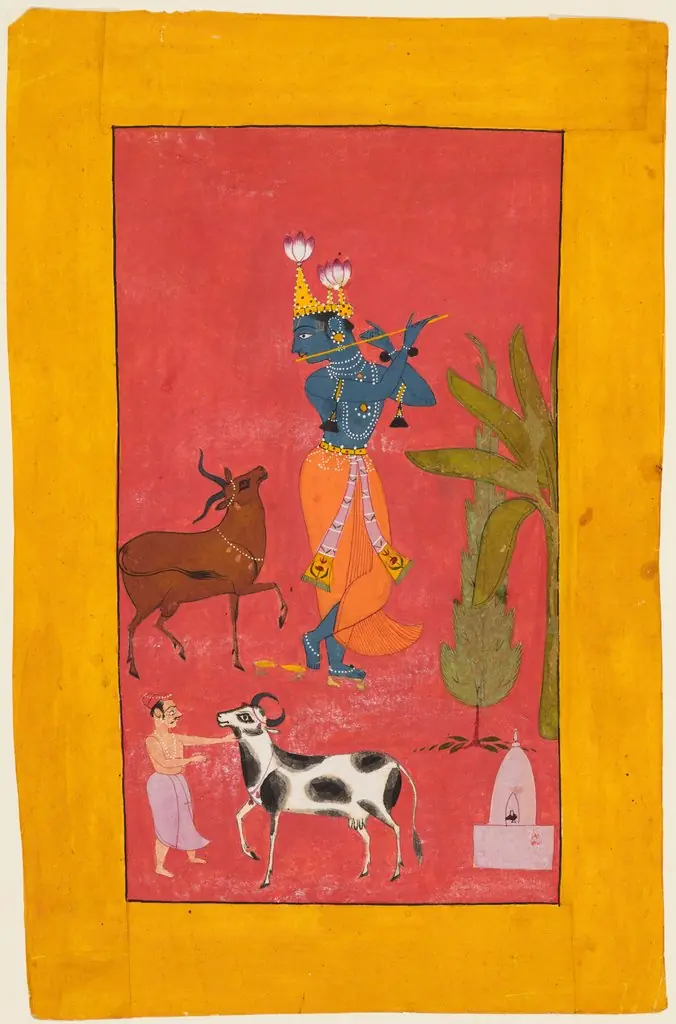 Krishna Fluting
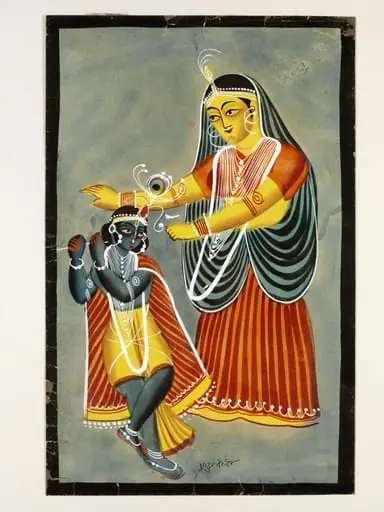 Jasoda and Krishna
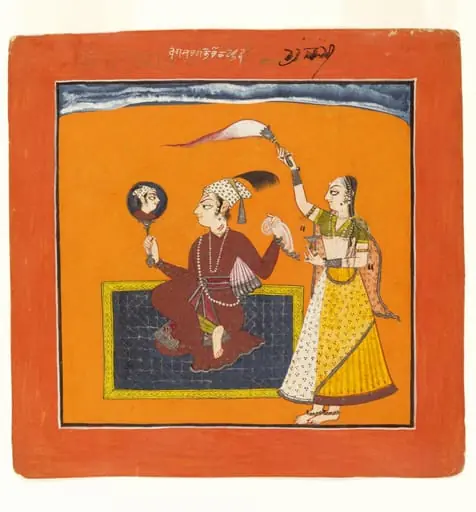 Vangala Raga
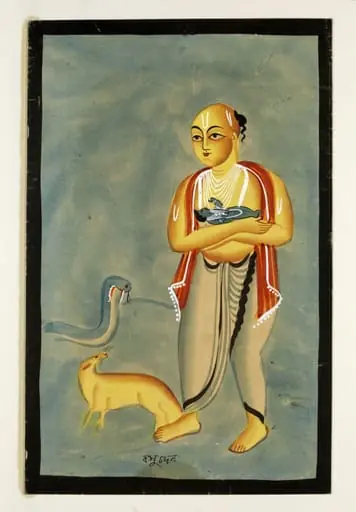 Vasudeva and Krishna
 Durga and Rama