Artwork
Rama, Lava and Kusha
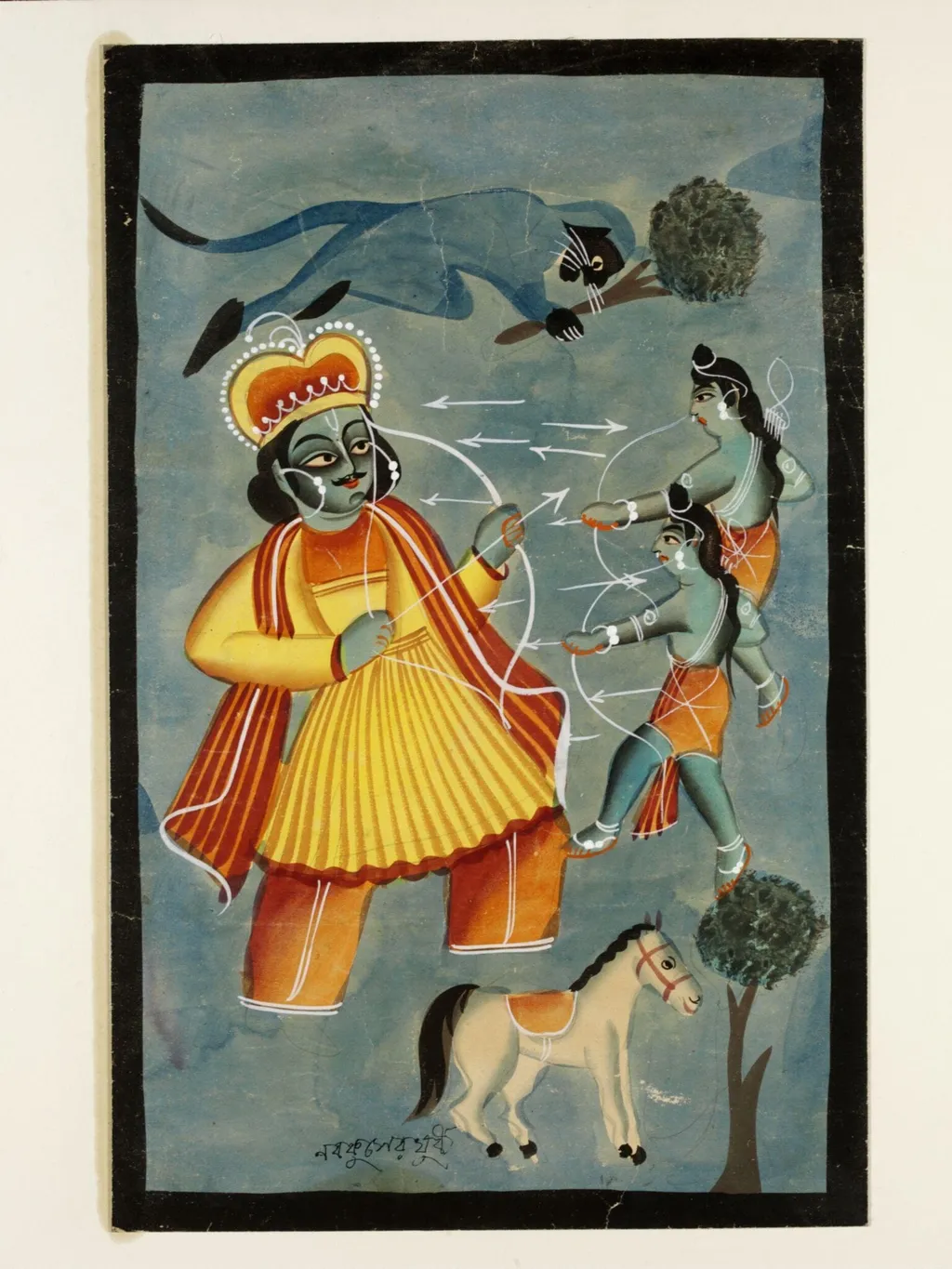
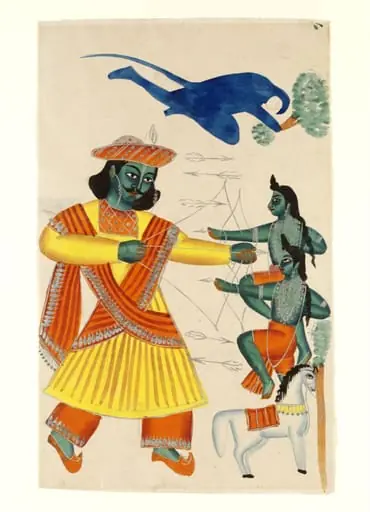
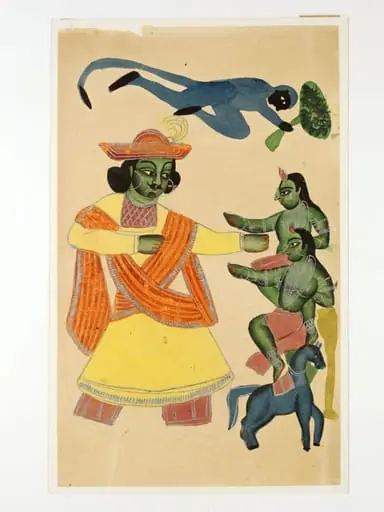
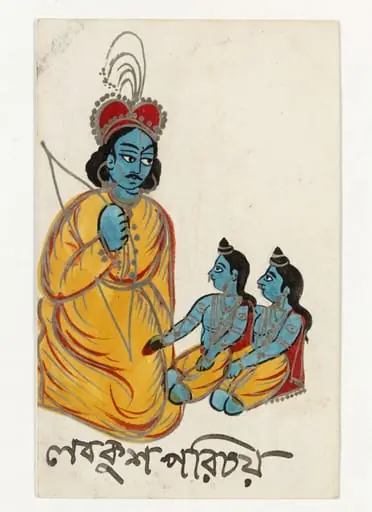
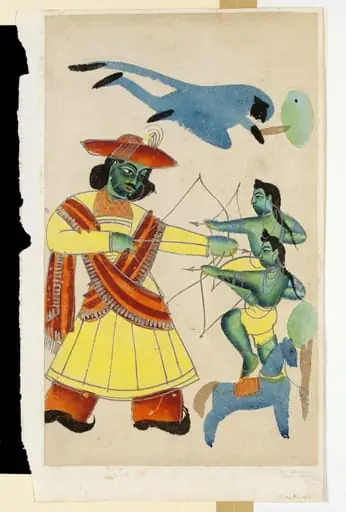
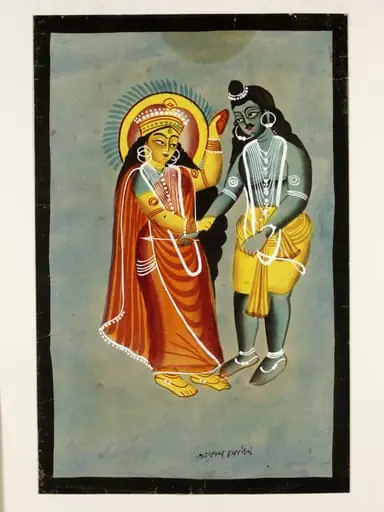
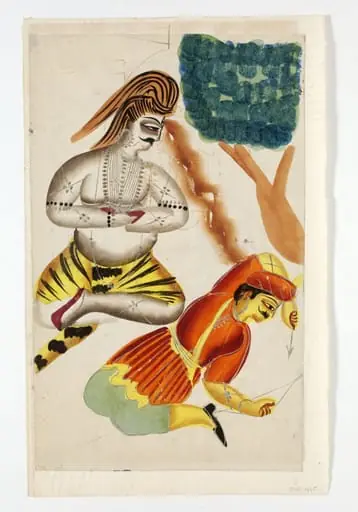
Rama, Lava and Kusha is a paint painting by the Impressionist artist Unknown. It dates from 1885 and is held in the collection of the Victoria and Albert Museum. The work is an opaque watercolor on paper dating to 1885, attributed to an anonymous hand.
About this work
Overview
It portrays a dramatic encounter involving the mythic figure Rama and his twin sons, Lava and Kusha, rendered in vivid hues against a clear blue sky.
The work is an opaque watercolor on paper dating to 1885, attributed to an anonymous hand. It portrays a dramatic encounter involving the mythic figure Rama and his twin sons, Lava and Kusha, rendered in vivid hues against a clear blue sky. The composition is populated by a woman in a yellow skirt and red sleeves, two male figures—one armed with a sword—and a white horse, all underscored by dynamic white lines suggesting motion.
Subject & Meaning
The scene draws on a episode from the Ramayana in which Rama confronts his sons, who have been raised apart from him. The inclusion of a female figure holding an object, the sword‑bearing male, and the airborne dark shape allude to the narrative tension between duty, identity, and revelation that culminates in the reunion of father and sons.
Technique & Style
Executed in opaque watercolor, the painting employs flat, saturated colors without modeling or chiaroscuro. Figures are outlined in bold black lines, and white streaks function as visual arrows that convey kinetic energy, giving the image a sequential, almost comic‑strip quality. The lack of shading emphasizes surface pattern over three‑dimensional illusion.
History & Provenance
The piece entered the museum’s holdings in 1894 when it was purchased from Miss M. Steele. Steele’s mother, a Sanskrit scholar based at Cambridge, had assembled a collection of Indian artworks that likely originated with her own mother, who had spent time in India. The painting’s anonymous authorship and its passage through a scholarly family reflect the 19th‑century European interest in Indian literary and visual culture.
Context
Created during the late colonial period, the work reflects the Victorian fascination with exotic narratives from South Asia. Its narrative focus on a Hindu epic and its stylized visual language align with contemporary efforts to document and aestheticize Indian subjects for Western audiences, while also preserving a visual record of traditional storytelling motifs.
Artist & collection

 Domestic Scene
 Giacomo and Cardinal Marco, investing Andrea, Abbot of San Zeno, with his Benefice
 The Nymph of Fontainebleau
 Portrait of a Woman
 Madonna and Child with Saints in the Enclosed Garden
 Venus and Minerva
 Family Group of Four on Sofa
 Wall painting from Room H of the Villa of P. Fannius Synistor at Boscoreale