Artwork
Bharata and Hanuman
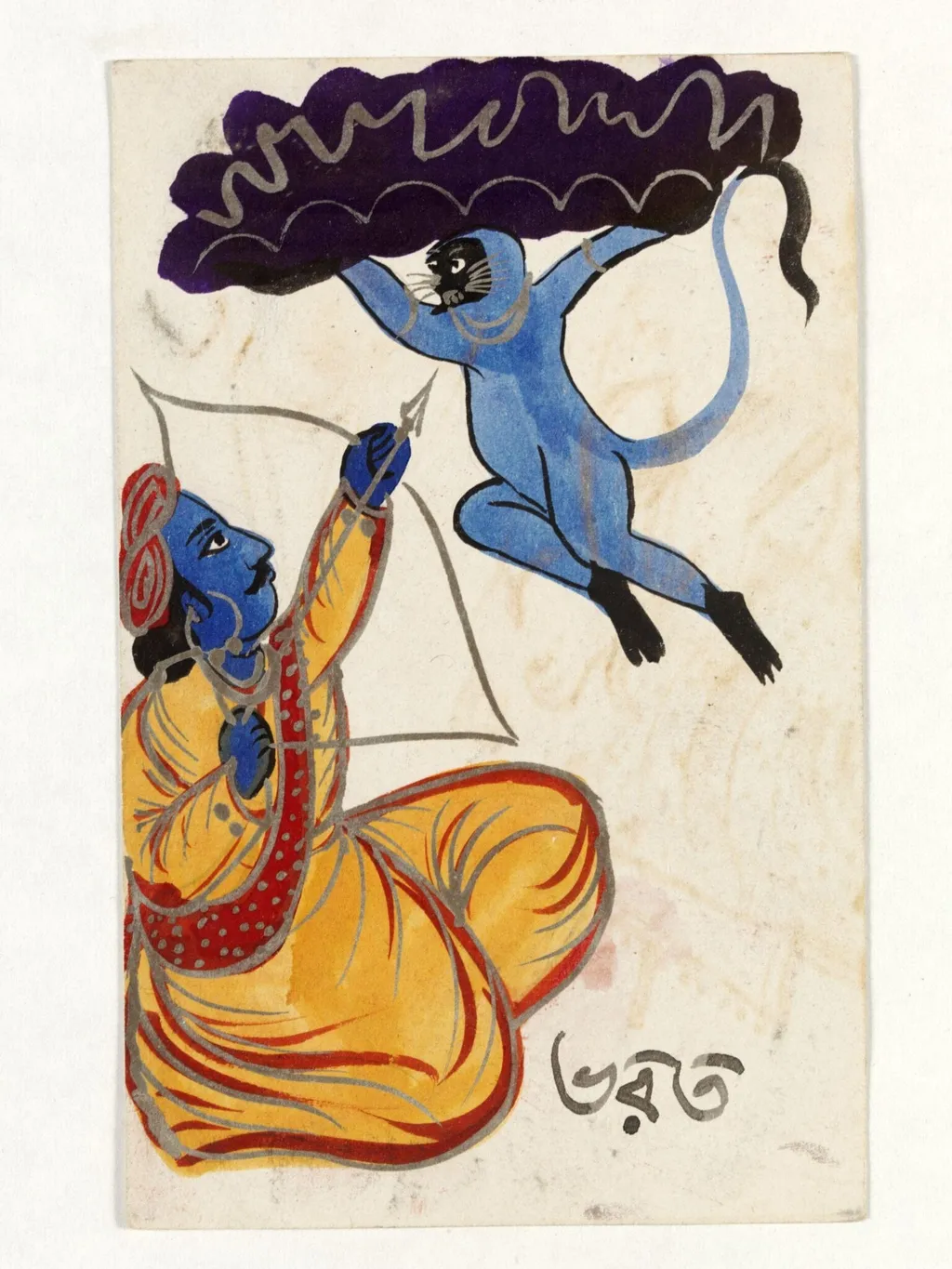
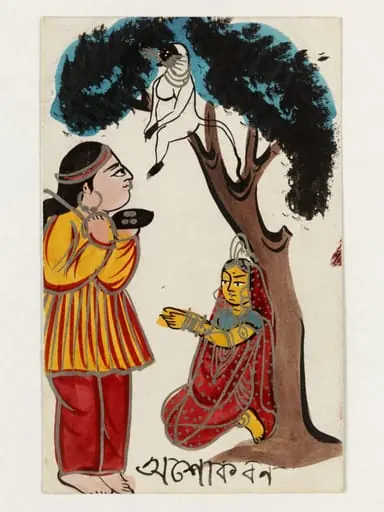
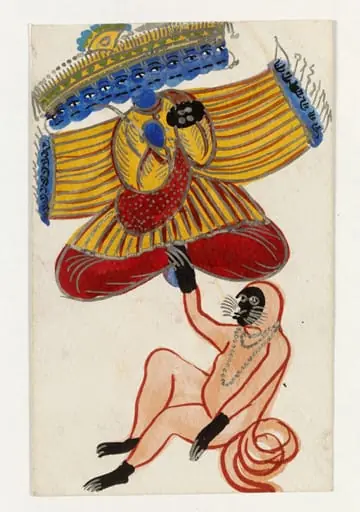
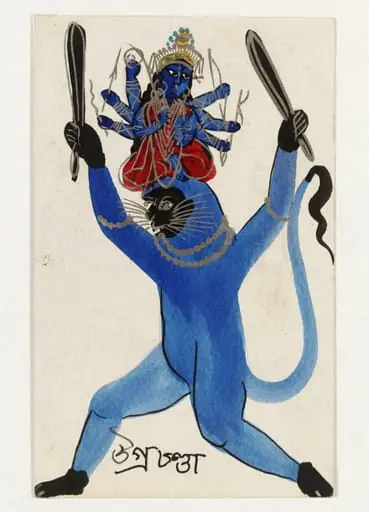
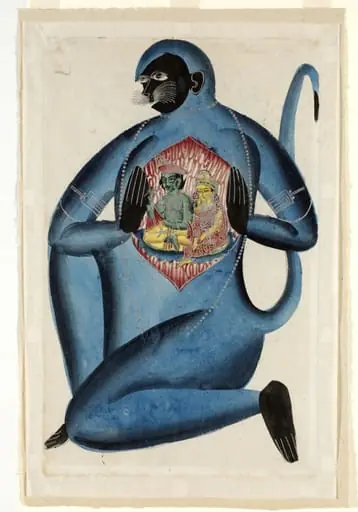
Bharata and Hanuman is a paint painting by the Impressionist artist Unknown. It dates from 1890 and is held in the collection of the Victoria and Albert Museum. This 1890 watercolour and tin alloy painting on cardboard illustrates a dramatic episode from the Ramayana.
About this work
Overview
The work belongs to a tradition of Indian narrative painting that adapted epic themes for visual storytelling in the late 19th century.
This 1890 watercolour and tin alloy painting on cardboard illustrates a dramatic episode from the Ramayana. It portrays Bharata, seated and armed, preparing to shoot an arrow at Hanuman, who is mid-flight bearing a mountain. The composition emphasizes motion and stillness in contrast, rendered with vivid pigments on a pale ground. The work belongs to a tradition of Indian narrative painting that adapted epic themes for visual storytelling in the late 19th century.
Subject & Meaning
The scene captures a moment of conflict between Bharata, Rama’s devoted brother, and Hanuman, the monkey god and Rama’s loyal servant. Bharata, unaware that Hanuman carries the life-saving herb-laden mountain, prepares to strike in defense. The tension reflects themes of duty, misidentification, and divine intervention. Hanuman’s flight symbolizes devotion’s power, while Bharata’s stance embodies human caution under pressure.
Technique & Style
The artist employed watercolour with metallic tin alloy accents to enhance luminosity, applying bold, flat hues against a neutral beige background. Brushwork is expressive, with fluid lines defining Hanuman’s motion and sharper contours for Bharata’s still form. The use of metallic pigment adds subtle texture, while the lack of perspective and stylized figures align with regional pictorial conventions rather than Western realism or impressionism.
History & Provenance
Created in 1890, the painting emerged during a period when Indian artists were reinterpreting religious narratives for both local patrons and colonial audiences. Its materials—cardboard, watercolour, and tin alloy—suggest it was made for a private or devotional context rather than institutional display. No documented ownership history precedes its modern cataloguing, but its style reflects the influence of Pahari and Rajput miniature traditions adapted to new media.
Context
In late 19th-century India, illustrated manuscripts and devotional paintings continued to circulate despite the rise of Western academic art. This work reflects a living tradition of epic illustration, where stories from the Ramayana were visually reinforced in homes and temples. The choice of Hanuman—a symbol of strength and loyalty—and Bharata—a figure of moral duty—underscores the cultural resonance of these characters beyond religious texts.
Legacy
The painting stands as an example of how traditional Indian narrative art persisted into the colonial era, blending indigenous aesthetics with evolving materials. It contributes to the understanding of regional painting practices that resisted full assimilation into European styles. While not widely exhibited, it remains a valuable record of how mythological themes were sustained visually in everyday artistic practice.
Artist & collection

 Domestic Scene
 Giacomo and Cardinal Marco, investing Andrea, Abbot of San Zeno, with his Benefice
 The Nymph of Fontainebleau
 Portrait of a Woman
 Madonna and Child with Saints in the Enclosed Garden
 Venus and Minerva
 Family Group of Four on Sofa
 Wall painting from Room H of the Villa of P. Fannius Synistor at Boscoreale