Artwork
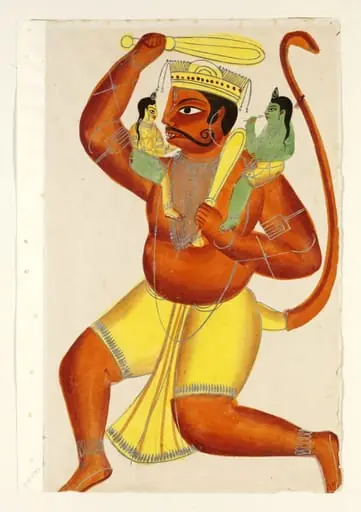
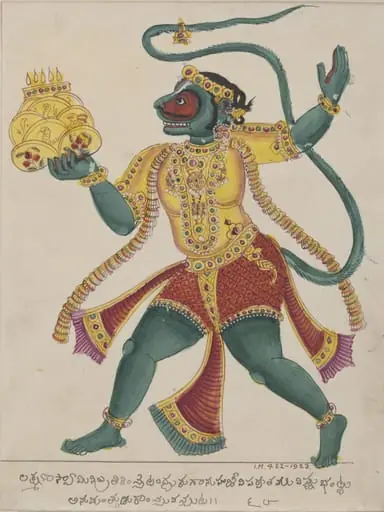
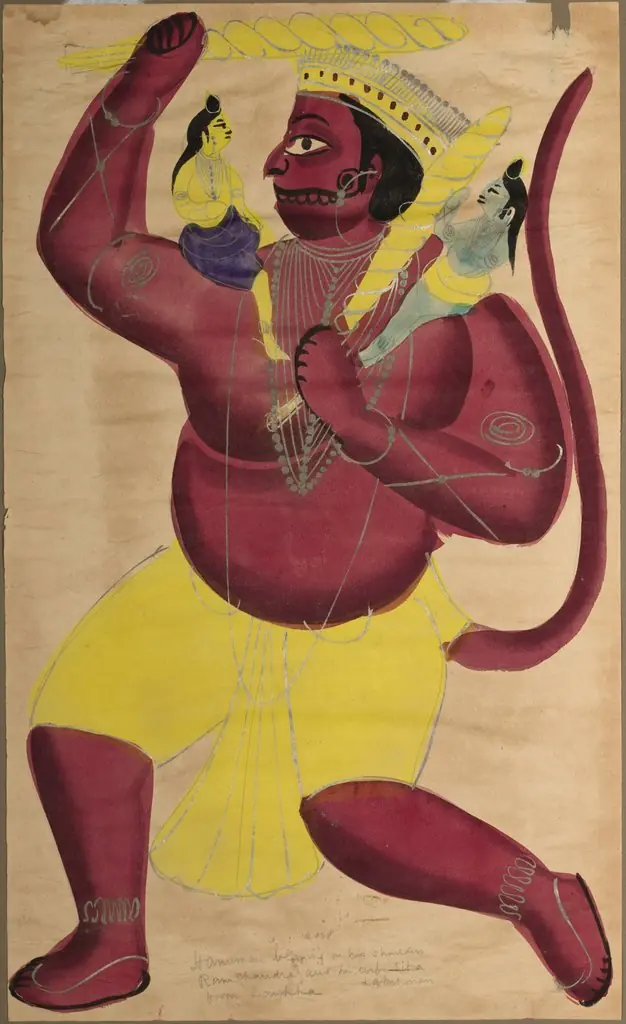
Hanuman, Rama and Sita
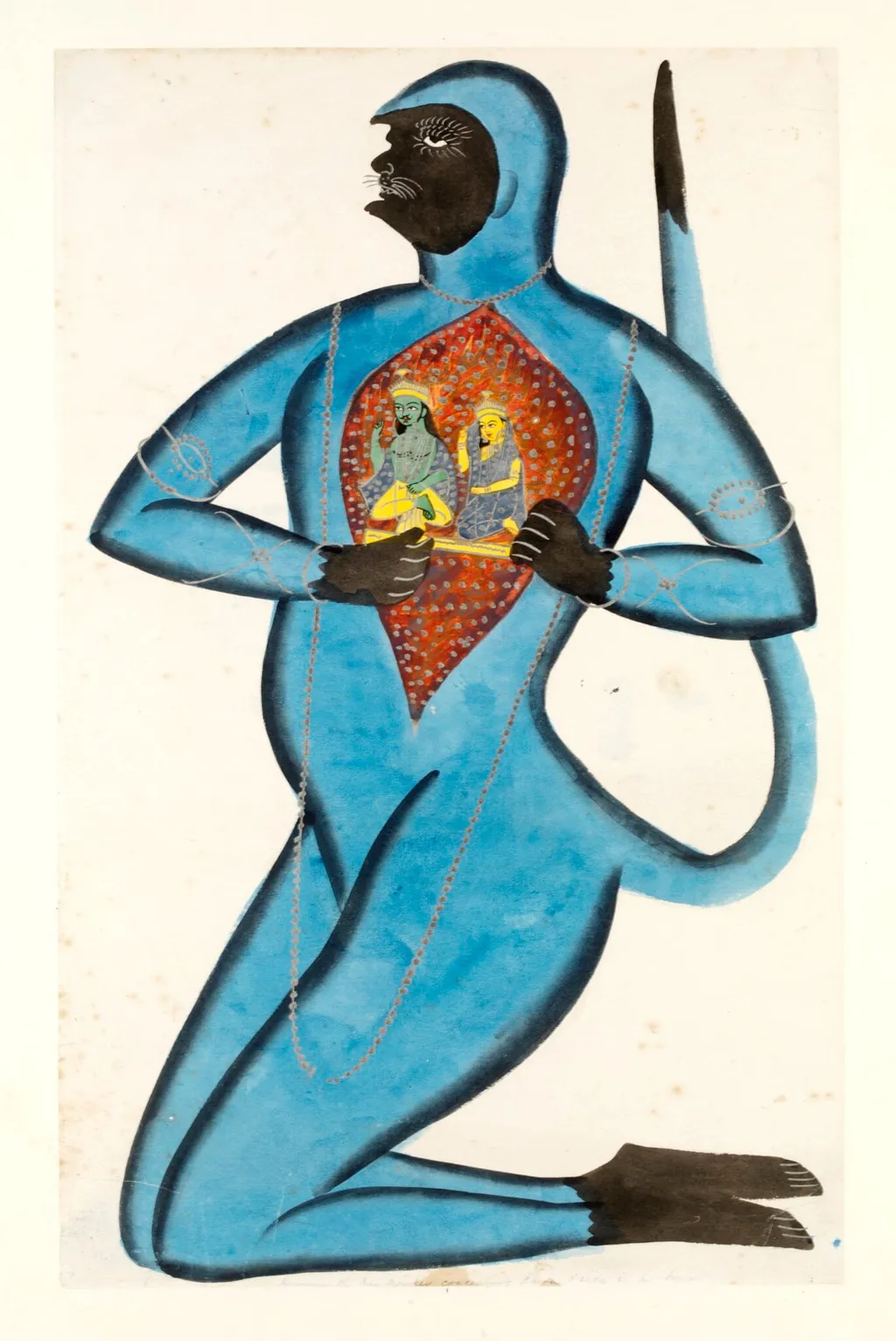
Hanuman, Rama and Sita is a paint painting by the Patna School of Painting artist Unknown. It dates from 1830 and is held in the collection of the Victoria and Albert Museum.
About this work
Overview
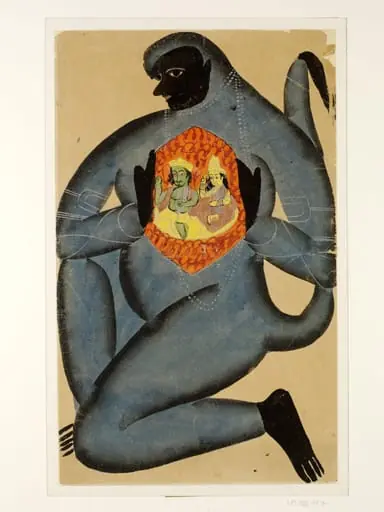
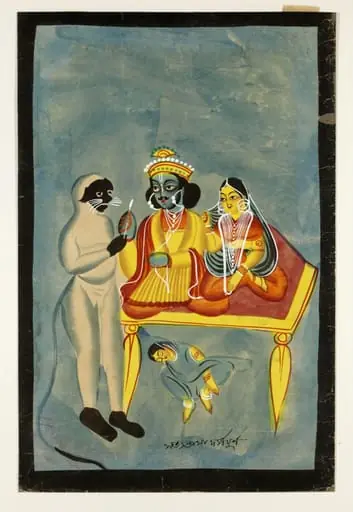
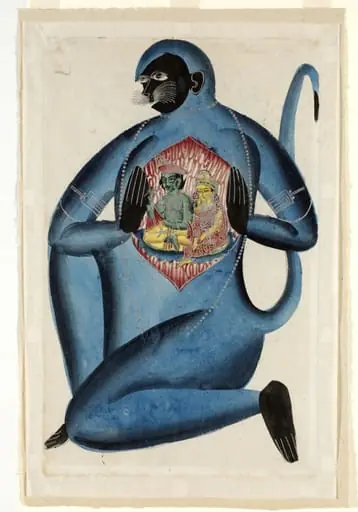
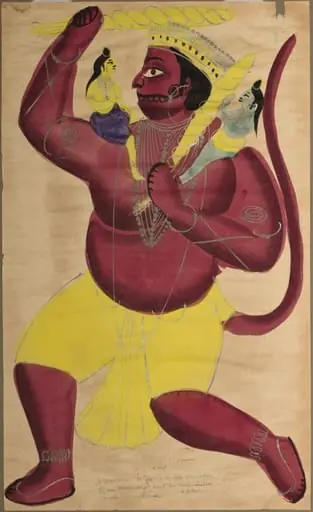
This circa 1830 painting, executed in the Kalighat style, portrays a pivotal scene from Hindu mythology featuring Hanuman, Rama, and Sita, characterized by vibrant colors and distinctive artistic conventions.
Subject & Meaning
Hanuman, depicted with human-like facial features and a blue body, kneels in reverence with folded hands. His chest encloses miniature, ornate figures of Rama (seated on a red cushion) and Sita, symbolizing their sacred presence within the monkey deity. The composition conveys a moment of serene devotion.
Technique & Style
The work embodies the Kalighat tradition through its use of bold outlines, flat color areas, and the absence of shading or depth. The artists' rapid brushwork and simplified forms are evident, while tin-alloy embellishments add luminosity to the deities' adornments.
History & Provenance
Created in Calcutta around 1830, this painting reflects the artistic output of the region during a period of colonial transition. Its origins tie it to the flourishing Kalighat painting style of the 19th century, though specific provenance details are not provided.
Context
Produced in a time of colonial change, the painting represents the enduring influence of Hindu mythology on local art practices, contrasting with the broader cultural shifts of the era. Similar works can be found in collections like the Victoria and Albert Museum.
Legacy
This painting contributes to the legacy of Kalighat-style art, illustrating its distinctive aesthetic and thematic focus on mythological subjects. It remains a testament to the style's popularity and the artistic traditions of 19th-century Calcutta.
Artist & collection

 Domestic Scene
 Giacomo and Cardinal Marco, investing Andrea, Abbot of San Zeno, with his Benefice
 The Nymph of Fontainebleau
 Portrait of a Woman
 Madonna and Child with Saints in the Enclosed Garden
 Venus and Minerva
 Family Group of Four on Sofa
 Wall painting from Room H of the Villa of P. Fannius Synistor at Boscoreale