Artwork
Bhuvanesvari
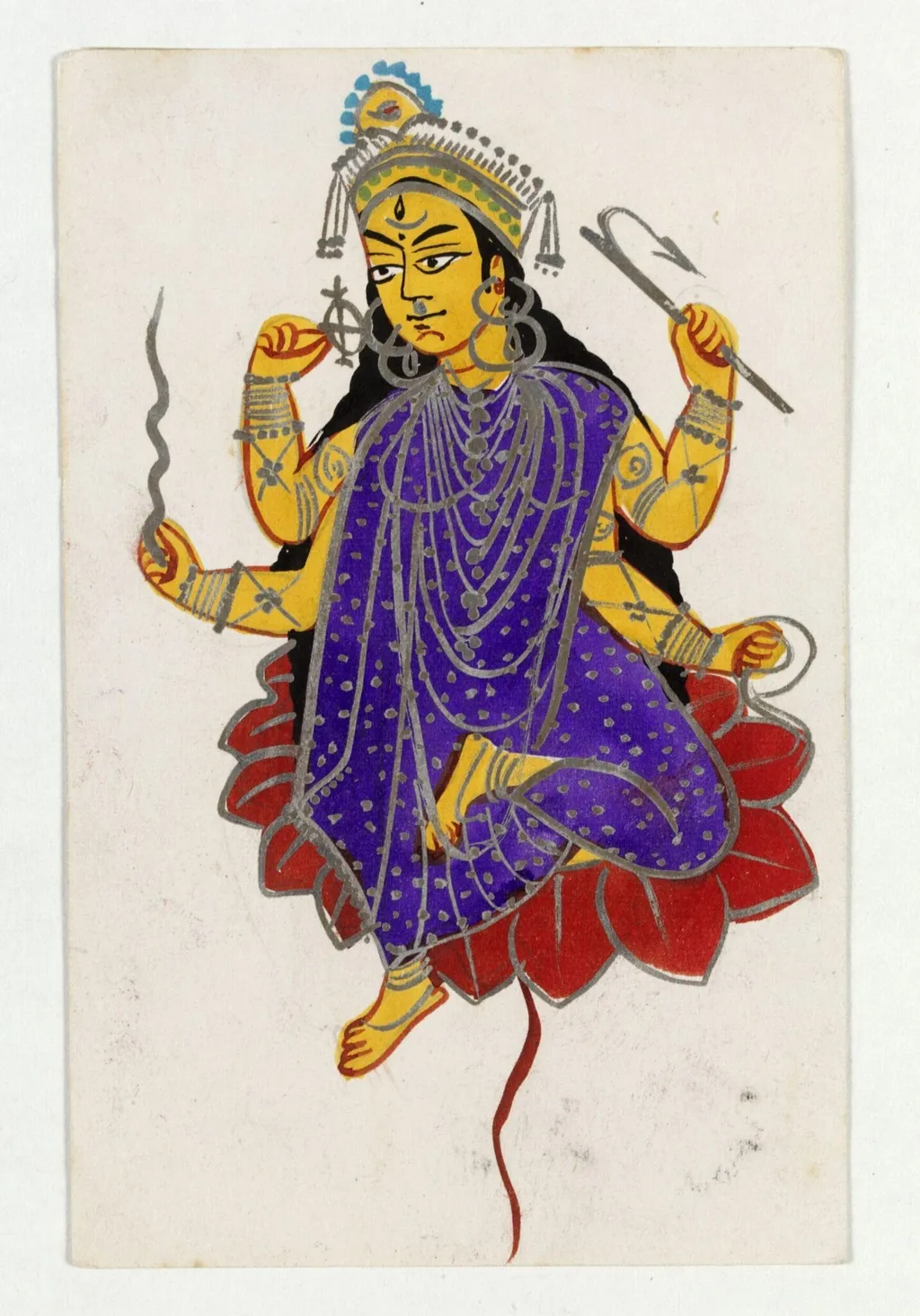
Bhuvanesvari is a paint painting by the Impressionist artist Unknown. It dates from 1890 and is held in the collection of the Victoria and Albert Museum.
About this work
Overview
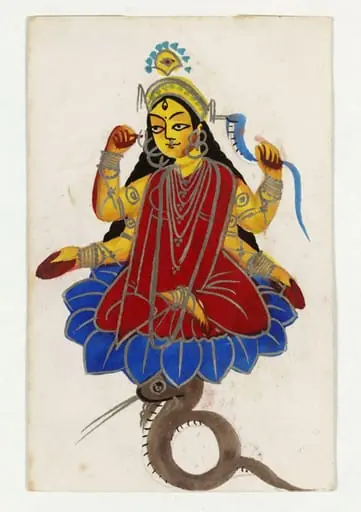
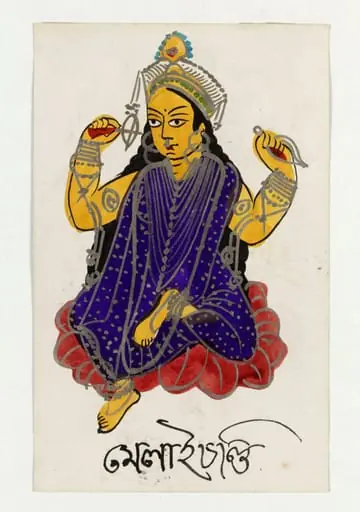
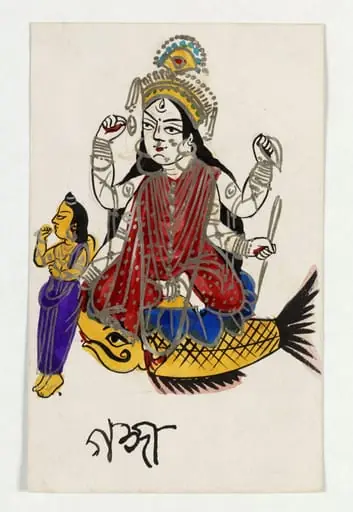
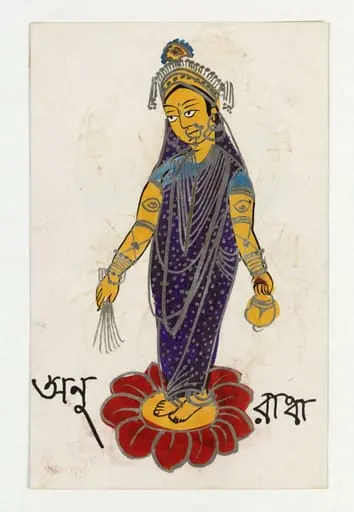
This watercolor and tin alloy painting on cardboard portrays Bhuvanesvari, a Hindu goddess associated with cosmic order and sovereignty.
This watercolor and tin alloy painting on cardboard portrays Bhuvanesvari, a Hindu goddess associated with cosmic order and sovereignty. Rendered with bold outlines and vivid pigments, the image emphasizes her divine authority through stylized form and symbolic attributes. The stark white background isolates her figure, heightening the visual impact of her richly detailed adornments and dynamic posture.
Subject & Meaning
Bhuvanesvari is depicted with four arms, each holding ritual objects: a noose, a goad, a discus, and a small drum. These items signify control over time, destruction of ignorance, and the rhythm of creation. Her third eye denotes inner wisdom, while her seated posture on a pink lotus reflects spiritual purity and transcendence. The fierce expression conveys her role as a protective, unyielding force in the cosmic order.
Technique & Style
The artist employs sharp, confident lines and flat areas of intense color—purple robes with gold trim, red footwear, and yellow-streaked hair—to create visual rhythm. Tin alloy adds subtle metallic sheen to jewelry and crown, enhancing luminosity. The composition avoids depth, favoring decorative flatness typical of regional Indian devotional art, where symbolic clarity outweighs naturalistic representation.
History & Provenance
The work likely originates from 19th-century Bengal, where artists adapted traditional iconography for portable devotional images. Painted on cardboard with water-based pigments, it reflects the commercial and devotional practices of Kalighat-style ateliers. Such works were sold near temple precincts, serving both worship and cultural transmission among urban devotees.
Context
This painting emerges from a tradition where deities were rendered in accessible, expressive forms for lay worshippers. The bold features and vivid palette align with Kalighat art’s urban aesthetic, which blended folk motifs with classical Hindu iconography. Unlike temple sculptures, these images prioritized emotional immediacy and portability, meeting the needs of a changing religious marketplace.
Legacy
The painting exemplifies how regional Indian art preserved theological concepts through visual shorthand. Its stylistic traits—flattened perspective, symbolic objects, and expressive faces—influenced later folk and modernist reinterpretations of Hindu deities. Though produced for popular consumption, it remains a testament to the enduring visual language of South Asian devotion.
Artist & collection

 Domestic Scene
 Giacomo and Cardinal Marco, investing Andrea, Abbot of San Zeno, with his Benefice
 The Nymph of Fontainebleau
 Portrait of a Woman
 Madonna and Child with Saints in the Enclosed Garden
 Venus and Minerva
 Family Group of Four on Sofa
 Wall painting from Room H of the Villa of P. Fannius Synistor at Boscoreale