Artwork
Manasa Devi
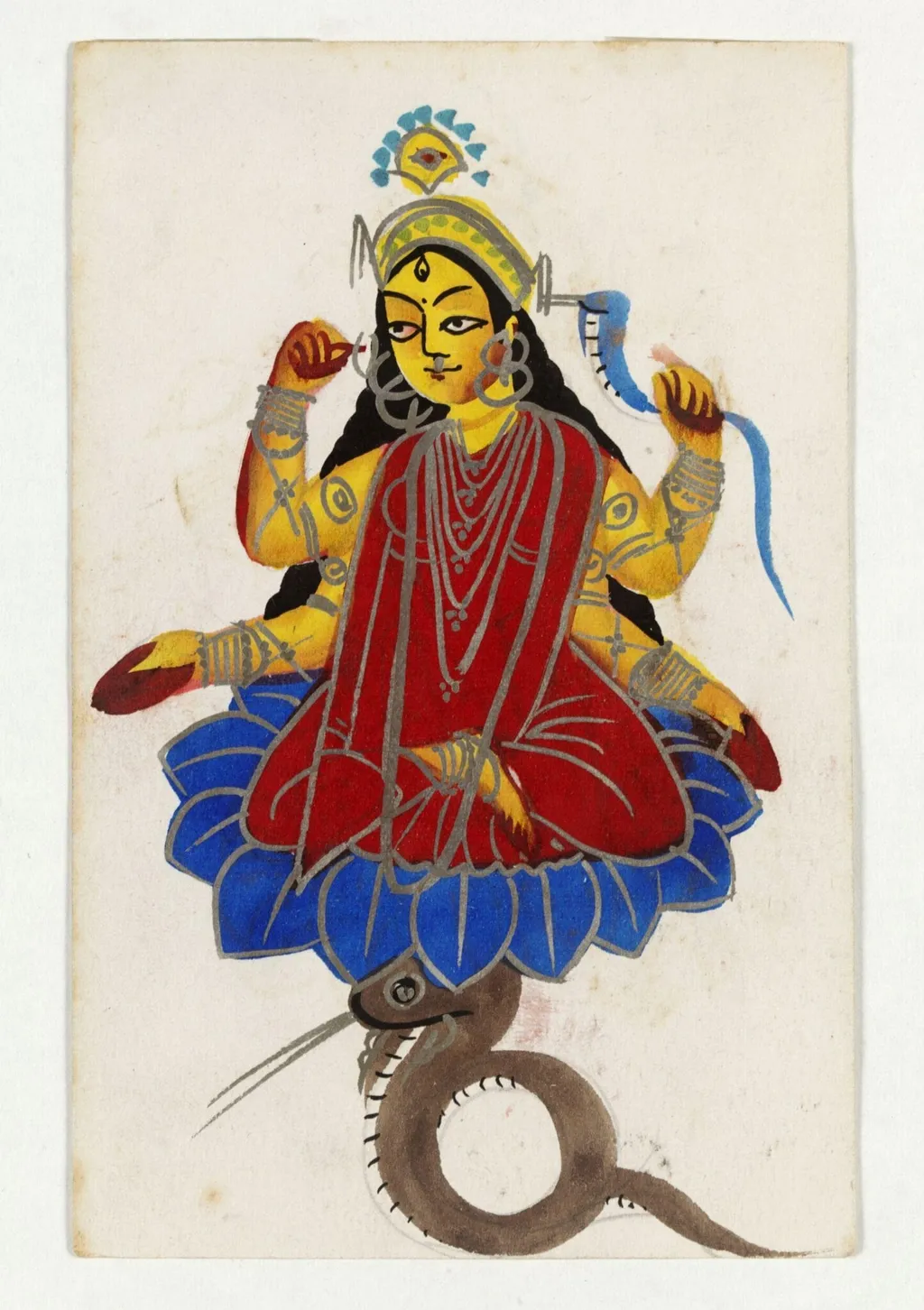
Manasa Devi is a paint painting by the Impressionist artist Unknown. It dates from 1890 and is held in the collection of the Victoria and Albert Museum.
About this work
Overview
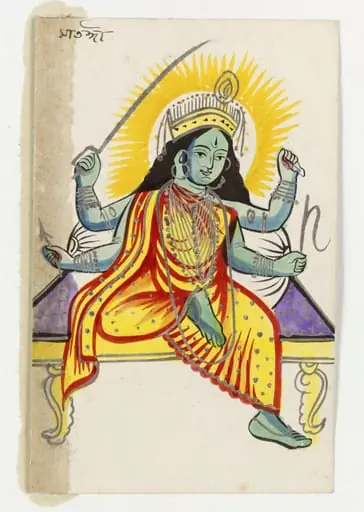
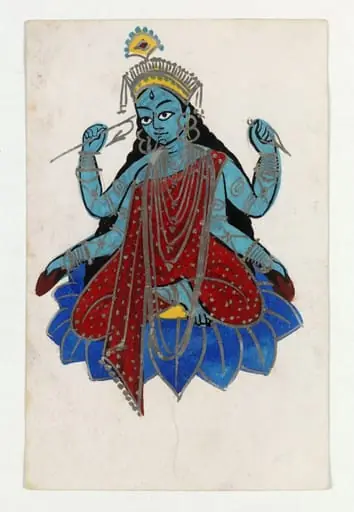
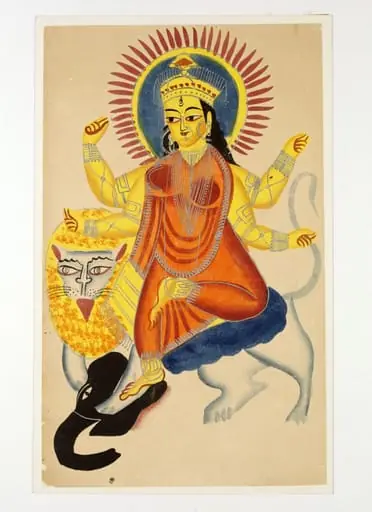
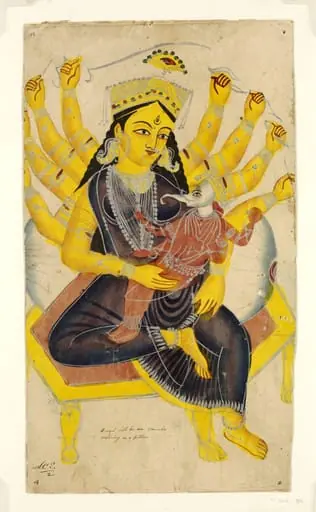
This painting represents Manasa Devi, a Hindu goddess associated with serpents and fertility. Executed in watercolor and metallic pigment on cardboard, the work centers on a seated female figure elevated above a coiled serpent. The composition balances vivid chromatic contrasts with a restrained palette to emphasize the deity’s divine presence.
Subject & Meaning
Manasa Devi, revered as the serpent goddess, embodies protection and healing in Hindu tradition. The image conveys her dual nature—benevolent yet powerful—through symbolic attributes: the lotus signifies purity, while the serpent beneath her evokes both danger and cosmic energy. Her raised hand and serene expression suggest divine authority and tranquility.
Technique & Style
The artist employs water-based pigments and tin alloy to achieve luminous hues and subtle metallic accents. Bold outlines define the figure’s contours, while flat color fields create a two-dimensional effect. The use of an off-white background directs focus toward the central figure, whose elongated proportions and stylized features align with regional devotional painting traditions.
History & Provenance
Details of the painting’s creation and early ownership remain undocumented. Its materials and stylistic traits suggest a twentieth-century origin, likely produced within a devotional or folk-art context. The work’s survival on cardboard indicates an informal or ephemeral purpose, possibly intended for private worship rather than institutional display.
Context
Paintings of this type often served as visual aids in domestic shrines or public rituals, reinforcing the goddess’s role in everyday spiritual practice.
Manasa Devi holds significance in Bengali and broader South Asian folklore, where she is invoked for protection against snakebites and misfortune. Paintings of this type often served as visual aids in domestic shrines or public rituals, reinforcing the goddess’s role in everyday spiritual practice. The imagery reflects syncretic influences, merging Hindu iconography with local artistic conventions.
Legacy
While not part of a canonical artistic movement, this painting exemplifies the enduring vitality of folk devotional art. Its straightforward composition and symbolic clarity continue to resonate within communities that venerate Manasa Devi. The work contributes to broader discussions of how regional traditions preserve religious narratives through accessible visual forms.
Artist & collection

 Domestic Scene
 Giacomo and Cardinal Marco, investing Andrea, Abbot of San Zeno, with his Benefice
 The Nymph of Fontainebleau
 Portrait of a Woman
 Madonna and Child with Saints in the Enclosed Garden
 Venus and Minerva
 Family Group of Four on Sofa
 Wall painting from Room H of the Villa of P. Fannius Synistor at Boscoreale