Artwork
Olai Chandi
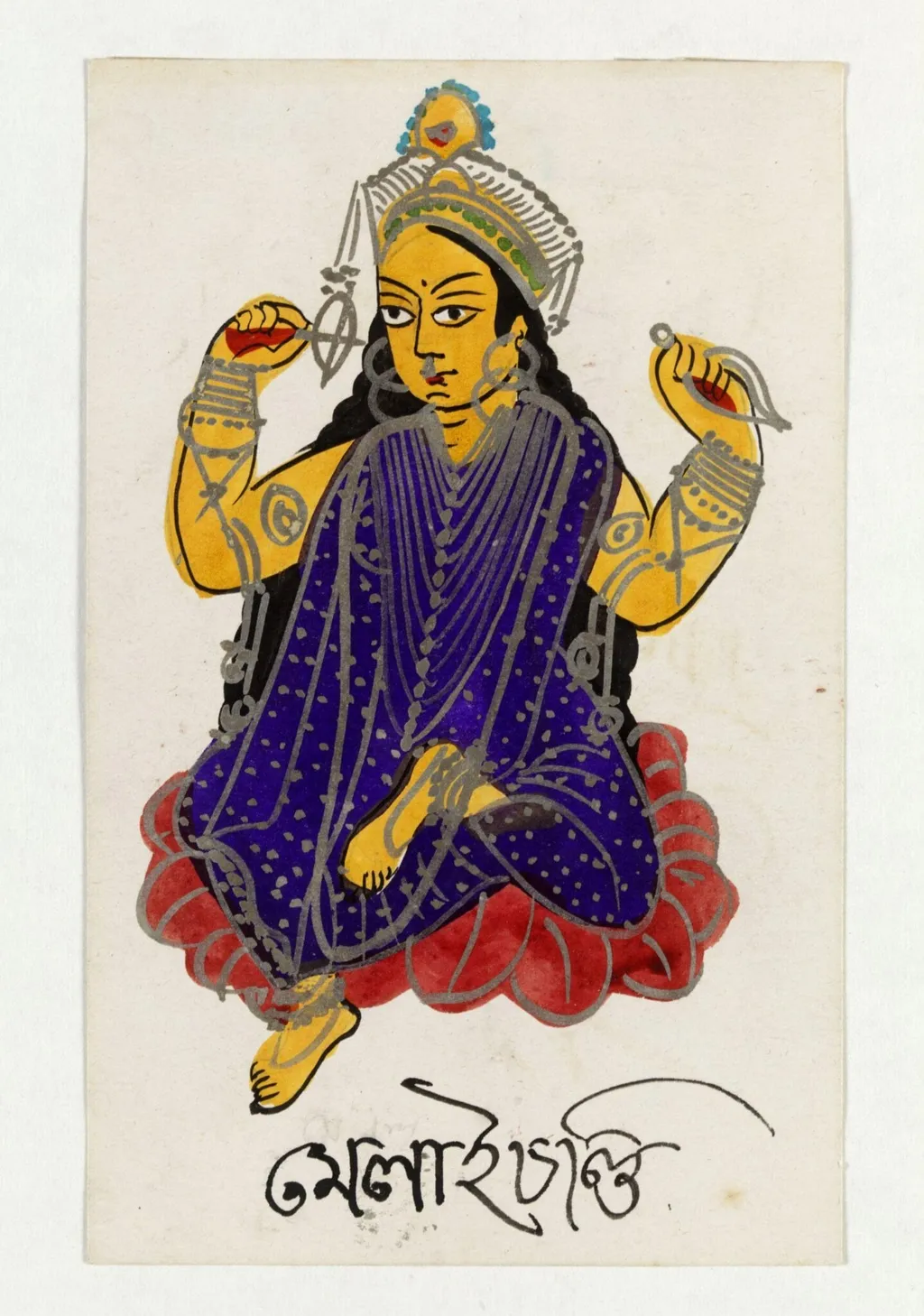
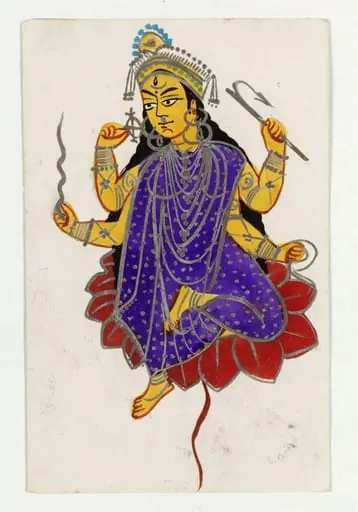
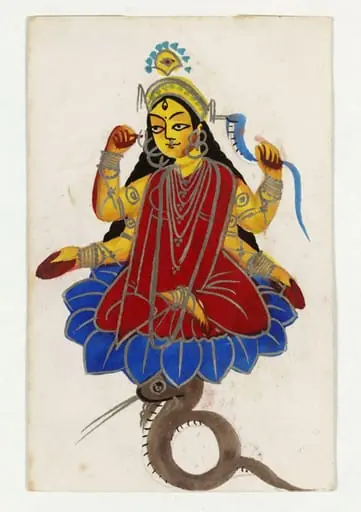
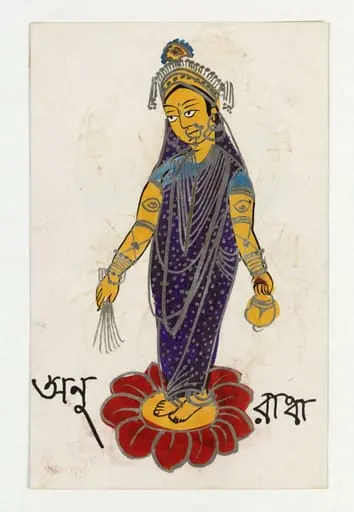
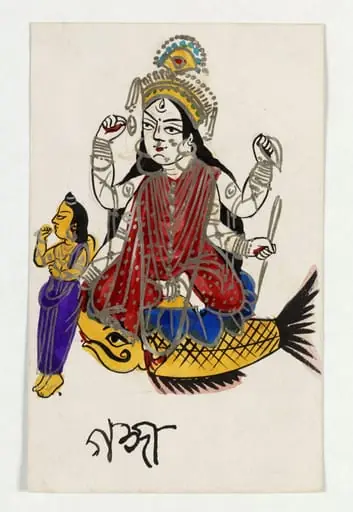
Olai Chandi is a paint painting by the Impressionist artist Unknown. It dates from 1890 and is held in the collection of the Victoria and Albert Museum.
About this work
Overview
Olai Chandi is a small-scale painting executed in watercolor combined with tin alloy on a cardboard support.
Olai Chandi is a small-scale painting executed in watercolor combined with tin alloy on a cardboard support. The work portrays a female deity seated upon a pink lotus, her figure framed by a vivid red cloud. She wears a purple sari, a decorative crown, and holds a conch shell and discus in one hand, while a sword and a bowl of blood appear in the other, her expression solemn and her face rendered in a yellow hue.
Subject & Meaning
The composition presents the Hindu goddess Durga, known as Olai Chandi, embodying martial power and protective virtues. The lotus symbolizes purity, the conch and discus reference divine authority, while the sword and blood-filled bowl allude to her role as a vanquisher of evil. The solemn gaze reinforces the deity’s seriousness in confronting chaos.
Technique & Style
The artist employed transparent watercolor washes to achieve bright, saturated tones, while tin alloy accents provide metallic highlights on the crown and weaponry. Rendered on cardboard, the piece exhibits simplified line work and patterned ornamentation on the sari and headdress, evoking a traditional folk aesthetic reminiscent of historic Indian miniature painting.
History & Provenance
Olai Chandi is part of the collection of the Victoria and Albert Museum in London. The museum acquired the work in the mid‑20th century as part of its effort to represent South Asian decorative arts, though the exact date of creation and the artist’s identity remain undocumented.
Context
The painting reflects a syncretic visual language that blends devotional iconography with decorative motifs common in regional courtly art. Its bright palette and stylized forms align with the broader tradition of religious illustration that circulated in India’s northern kingdoms during the 18th and 19th centuries.
Artist & collection

 Domestic Scene
 Giacomo and Cardinal Marco, investing Andrea, Abbot of San Zeno, with his Benefice
 The Nymph of Fontainebleau
 Portrait of a Woman
 Madonna and Child with Saints in the Enclosed Garden
 Venus and Minerva
 Family Group of Four on Sofa
 Wall painting from Room H of the Villa of P. Fannius Synistor at Boscoreale