Artwork
blid
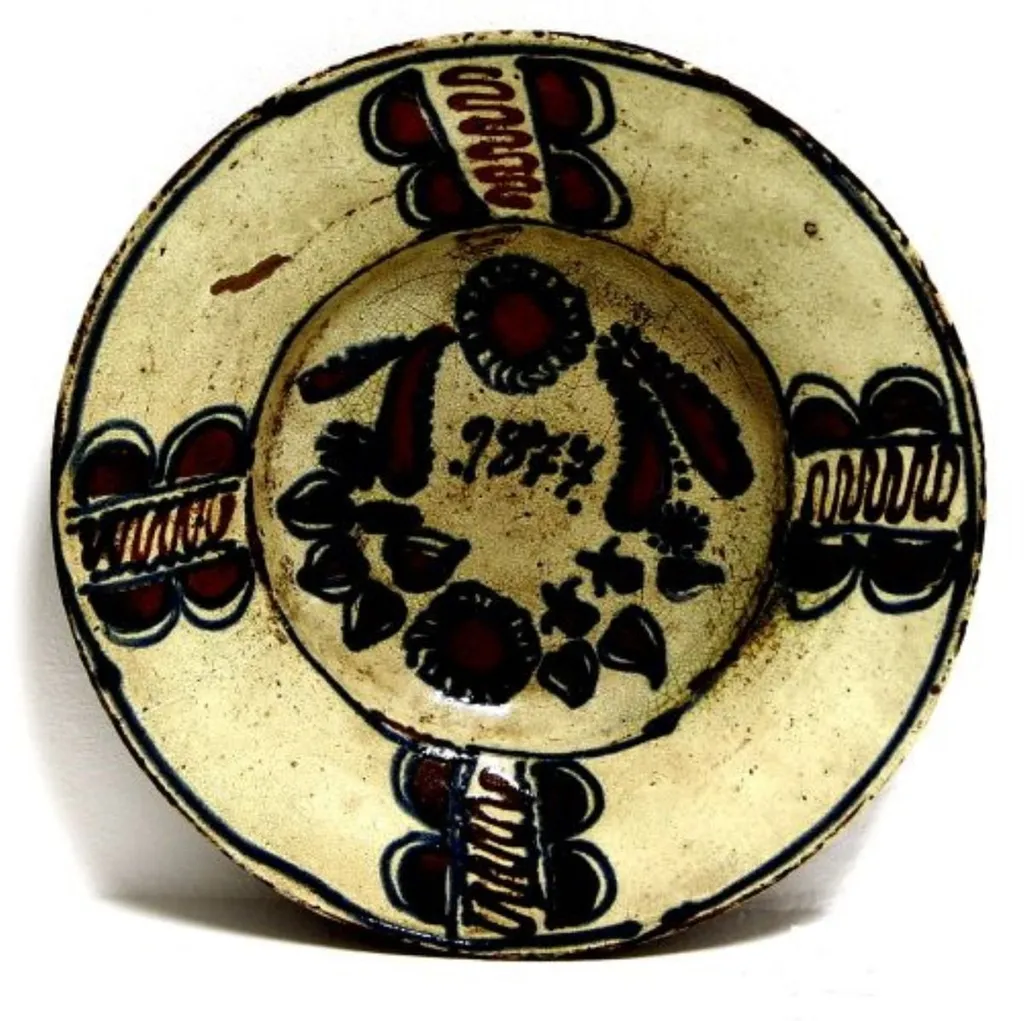
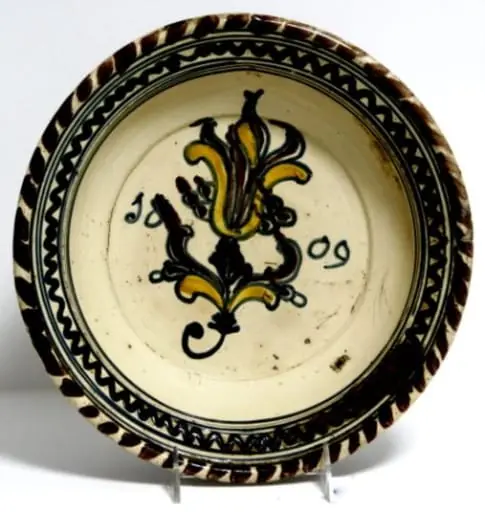
blid is a photography by the Impressionist artist Unknown. It dates from 1877 and is held in the collection of the Romanian Peasant Museum. This hand-painted ceramic plate features a minimalist design composed of bold, flat shapes in cream, black, and red.
About this work
Overview
The overall composition is symmetrical and rhythmic, suggesting intentional decorative intent rather than naturalistic representation.
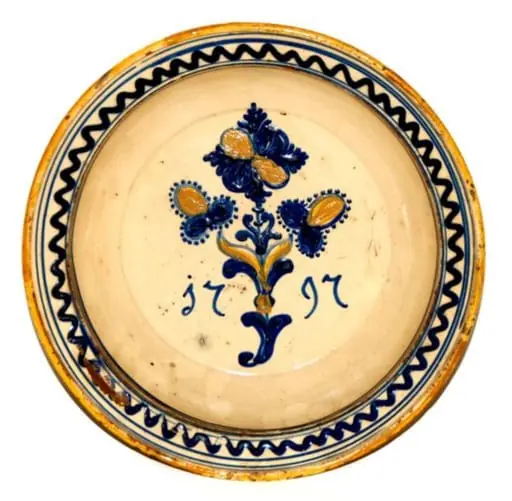
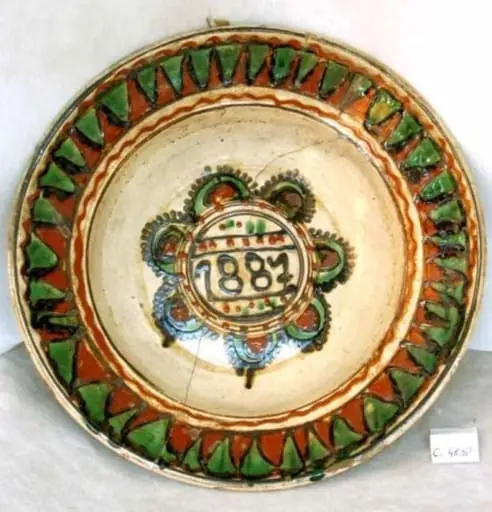
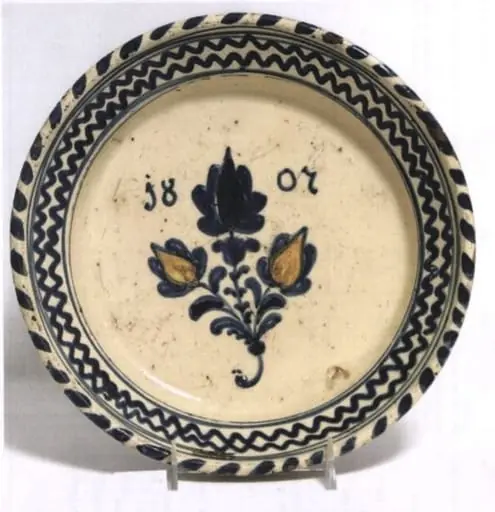
This hand-painted ceramic plate features a minimalist design composed of bold, flat shapes in cream, black, and red. The surface lacks perspective or shading, emphasizing two-dimensional form. Thick paint application creates a tactile texture, particularly along the central motifs. The overall composition is symmetrical and rhythmic, suggesting intentional decorative intent rather than naturalistic representation.
Subject & Meaning
The central cluster resembles stylized leaves and flowers with red centers, surrounded by repeating vegetal and avian forms along the rim. These elements are abstracted, not rendered as specific species, implying symbolic or ornamental purpose. The repetition of forms may reflect cultural motifs tied to nature, fertility, or protection, though no definitive iconographic meaning is recorded.
Technique & Style
The decoration was applied with thick, unblended pigments, resulting in a matte, opaque finish. Outlines in brownish tones define shapes without gradation, reinforcing a flat aesthetic. Brushwork is deliberate and uneven, leaving visible strokes and slight irregularities. The absence of modeling or depth aligns with traditions that prioritize pattern over realism.
History & Provenance
The object’s origin and maker are undocumented. Its visual language resembles decorative ceramics from early 20th-century artisan movements, particularly those influenced by folk or non-Western traditions. No known collection history or inscription accompanies the piece, limiting precise dating or geographic attribution.
Context
This plate’s aesthetic shares affinities with early modern craft revivals that rejected industrial uniformity in favor of handcrafted, pattern-based design. Similar motifs appear in textiles and pottery from regions including the Balkans, the Caucasus, and parts of North Africa, where stylized flora and fauna were commonly adapted into surface decoration.
Legacy
Though not widely recognized in major art historical narratives, this piece exemplifies a broader trend in 20th-century decorative arts: the use of simplified, symbolic forms to evoke cultural identity through craft. Its visual language continues to inform contemporary designers exploring non-Western aesthetics and handmade textures.
Artist & collection

 Domestic Scene
 Giacomo and Cardinal Marco, investing Andrea, Abbot of San Zeno, with his Benefice
 The Nymph of Fontainebleau
 Portrait of a Woman
 Madonna and Child with Saints in the Enclosed Garden
 Venus and Minerva
 Family Group of Four on Sofa
 Wall painting from Room H of the Villa of P. Fannius Synistor at Boscoreale