Artwork
Bodhidharma Meditating Facing a Cliff
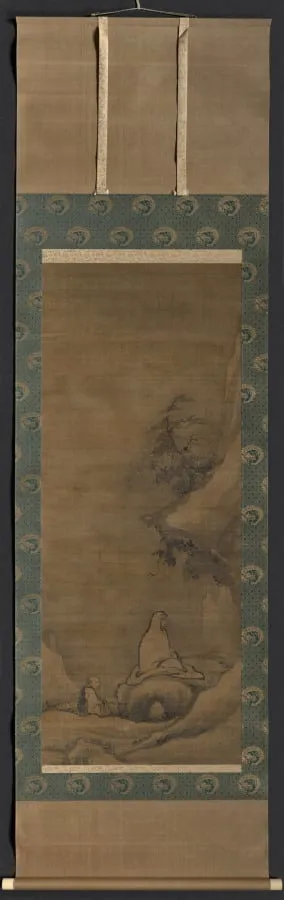
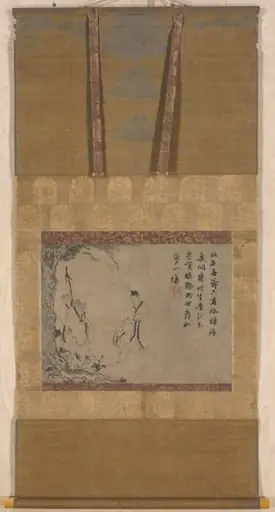
Bodhidharma Meditating Facing a Cliff is an unspecified painting by the Ming dynasty painting artist Unknown. It dates from 1204 and is held in the collection of the Cleveland Museum of Art.
About this work
If you like this quiet moment, look up *china, song dynasty (960-1279)* for more paintings from this time.
A man sits cross-legged on a rocky ledge, eyes half-closed, facing a sheer cliff. His robe is simple, his beard wild. Behind him, a younger man stands with hands folded, watching.
This painting shows Bodhidharma, the monk who brought Zen Buddhism to China. The cliff isn’t just scenery—it’s part of the lesson. In Zen, obstacles like rocks or silence aren’t things to fight. They’re the practice itself.
If you like this quiet moment, look up *china, song dynasty (960-1279)* for more paintings from this time.
Overview
The painting portrays the legendary monk Bodhidharma, credited with introducing Chan (Zen) Buddhism to China, seated in meditation on a rocky outcrop of Mount Song. He is shown in a simple robe, cross‑legged, eyes half‑closed, with a wild beard, while his disciple Huike stands behind him, hands folded, observing the practice.
Subject & Meaning
The composition emphasizes the relationship between master and disciple, illustrating the transmission of Zen insight. The sheer cliff behind Bodhidharma is not merely a backdrop; it symbolizes the obstacles that Zen practitioners confront, suggesting that the very presence of difficulty becomes the object of meditation.
Technique & Style
Executed in the brushwork characteristic of Song‑dynasty painting, the work balances delicate line with broader washes to render the rugged rock and the figures' modest garments. The restrained palette and understated detailing convey a sense of quiet concentration, aligning visual austerity with the spiritual theme.
History & Provenance
Attributed to an unknown hand, the piece belongs to the corpus of Chinese religious art produced between the 10th and 13th centuries. It has been preserved within a collection of Song‑period works, where it continues to serve as a visual reference for the early development of Chan iconography.
Artist & collection

 Domestic Scene
 Giacomo and Cardinal Marco, investing Andrea, Abbot of San Zeno, with his Benefice
 The Nymph of Fontainebleau
 Portrait of a Woman
 Madonna and Child with Saints in the Enclosed Garden
 Venus and Minerva
 Family Group of Four on Sofa
 Wall painting from Room H of the Villa of P. Fannius Synistor at Boscoreale