Artwork
The Second Coming of the Fifth Patriarch
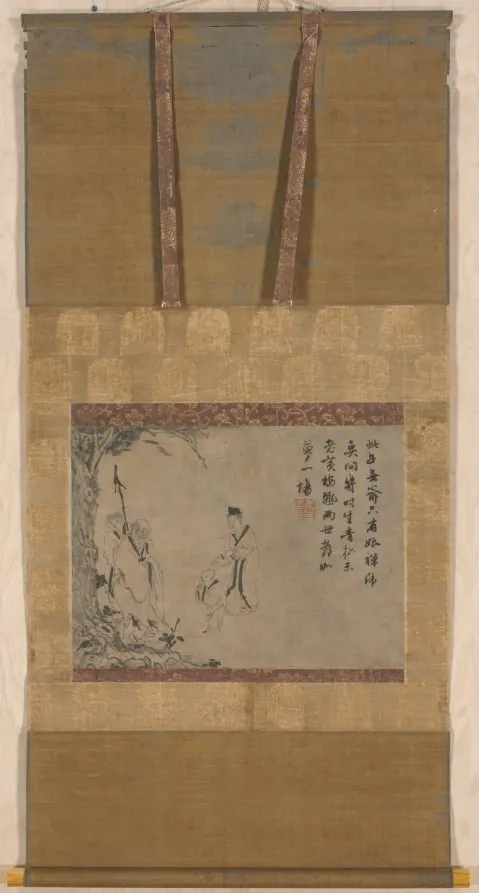
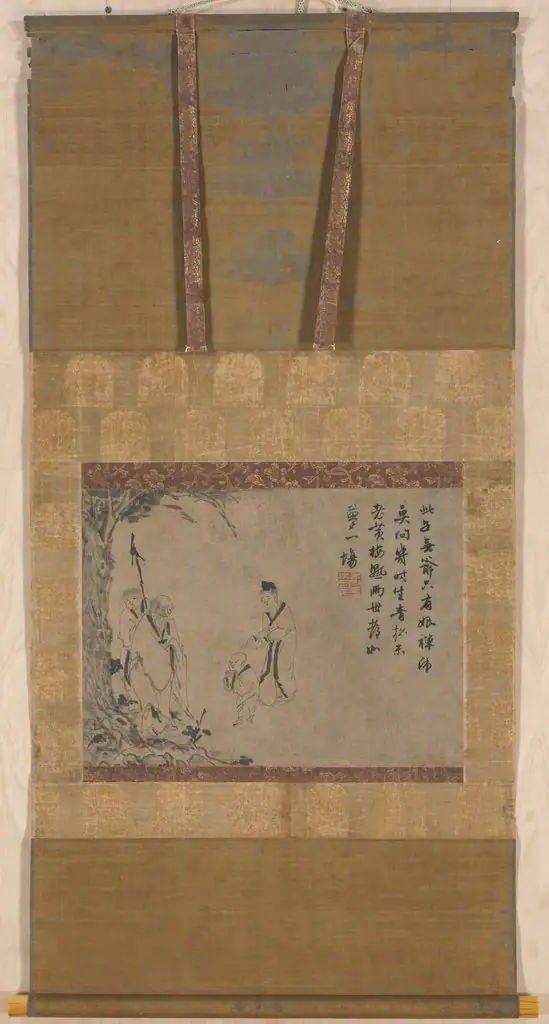
The Second Coming of the Fifth Patriarch is an unspecified painting by the Ming dynasty painting artist Yintuoluo. It dates from 1304 and is held in the collection of the Cleveland Museum of Art. The painting depicts a modest scene in which a young boy and his mother bow toward an elderly monk accompanied by a younger attendant.
About this work
The monk is Daoxin, who once told an old man he’d need to be reborn to reach enlightenment.
A small boy and his mother bow to an old monk and his helper. The monk’s robe is simple, the boy’s hands pressed together in greeting.
This painting shows a moment from a Chan Buddhist story. The monk is Daoxin, who once told an old man he’d need to be reborn to reach enlightenment. The boy is that man, returned as a child. The artist painted it during the Yuan dynasty, when Mongol rulers governed China.
To see more art from this time, look up *china, yuan dynasty (1271-1368)*.
Overview
The painting depicts a modest scene in which a young boy and his mother bow toward an elderly monk accompanied by a younger attendant. The child's hands are pressed together in a gesture of respect, while the monk wears an unadorned robe, reflecting the austere aesthetic favored by the artist.
Subject & Meaning
The composition illustrates a narrative from Chan Buddhism in which the monk Daoxin, a fourth patriarch of the tradition, meets the child who is the reincarnation of a former monk named Zaisong. According to the story, Daoxin had previously told Zaisong that he would need to be reborn to attain enlightenment, and this encounter represents that rebirth.
Technique & Style
Executed by the Yuan‑period painter Yintuoluo, the work is characterized by a restrained palette and simple brushwork. The artist avoids ornamental detail, focusing instead on clear outlines and a calm spatial arrangement that emphasizes the solemnity of the ritual greeting.
History & Provenance
Created during the Yuan dynasty (1271–1368), a time when Mongol rule shaped Chinese cultural production, the painting has been attributed to Yintuoluo based on stylistic analysis. Its provenance traces back to monastic collections that preserved Chan visual narratives.
Context
The image reflects the Chan emphasis on direct transmission of insight across lifetimes, illustrating how spiritual instruction can span multiple incarnations. It also exemplifies the Yuan court’s patronage of Buddhist art, which often favored straightforward, didactic representations over elaborate courtly decoration.
Artist & collection
Artist
Indra (Sanskrit: इन्द्र, Chinese: 因陀羅, pinyin: Yīntuóluó, Wade-Giles: Yin-t'o-lo, Hepburn: Indara), courtesy name Renfan (壬梵), was a painter and Chan Buddhist monk of Indian descent who was active in Kaifeng, China…

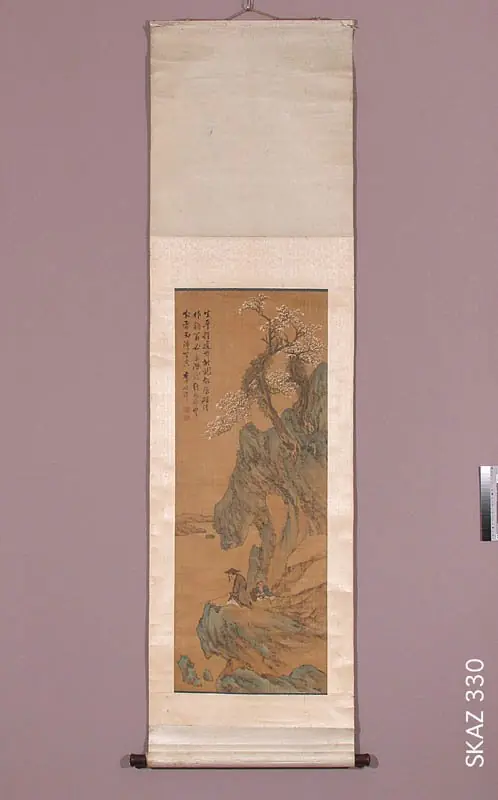 Rybak ze służącym na tle skał i kwitnącego starego drzewa
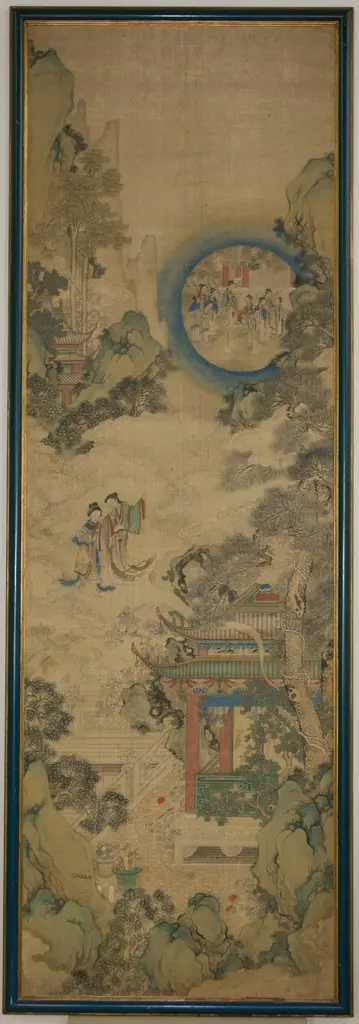 Three scenes from festivals of the twelve months
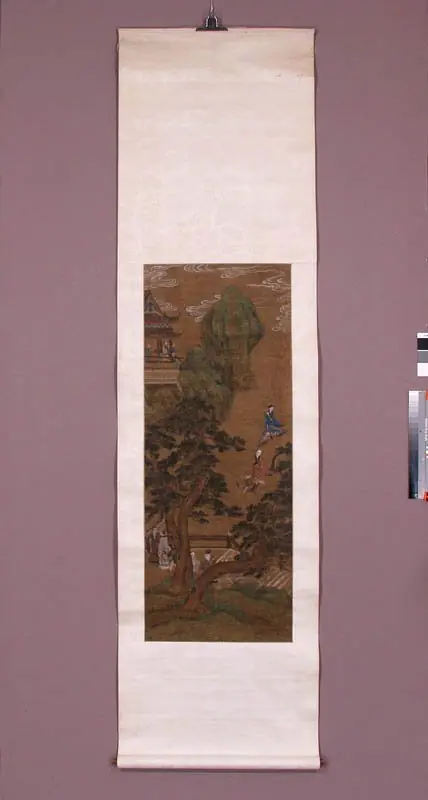 Spotkanie Ośmiu Nieśmiertelnych
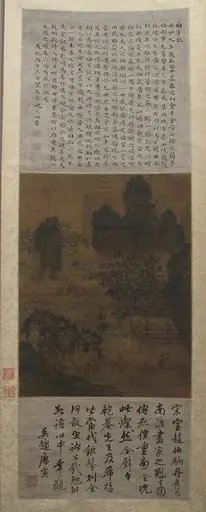 明/清 佚名(舊傳趙伯駒) 蘭亭圖 軸|Orchid Pavilion or Lanting
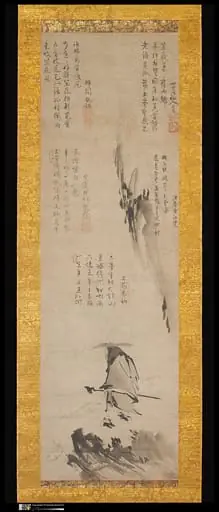 瑞巖龍惺・竹香全悟・九淵龍賝・南江宗沅・ 翺之慧鳳賛 東坡笠屐図|Su Shi (Dongpo) in a Bamboo Hat and Clogs
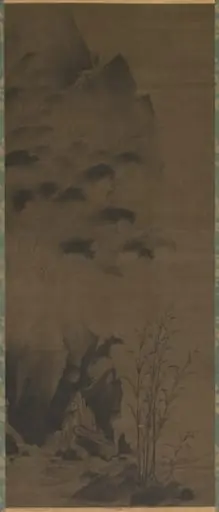 Bamboo in Rain
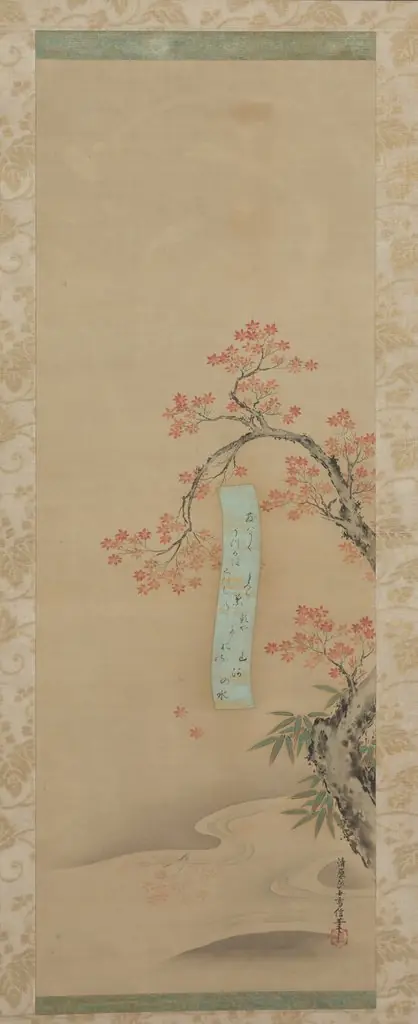 Autumn in Takao
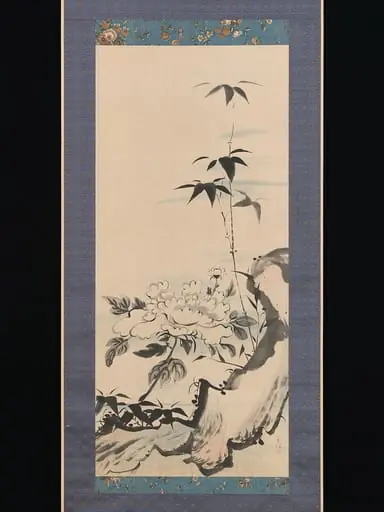 徳山玉瀾筆 牡丹に竹図|Peony and Bamboo
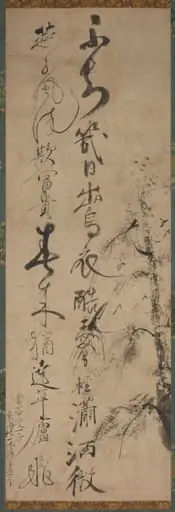 Calligraphy with Willow and Swallows
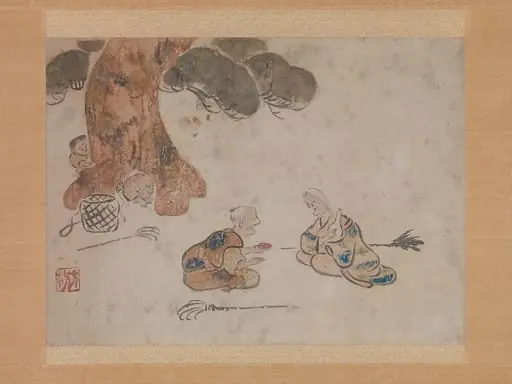 Untitled
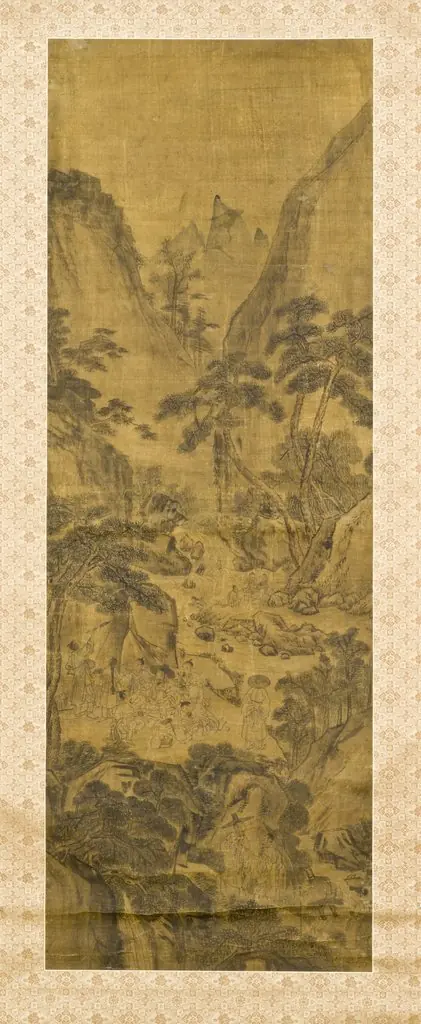 A Scholarly Outing
 The Second Coming of the Fifth Patriarch