Artwork
Bodhisattva Padmapani
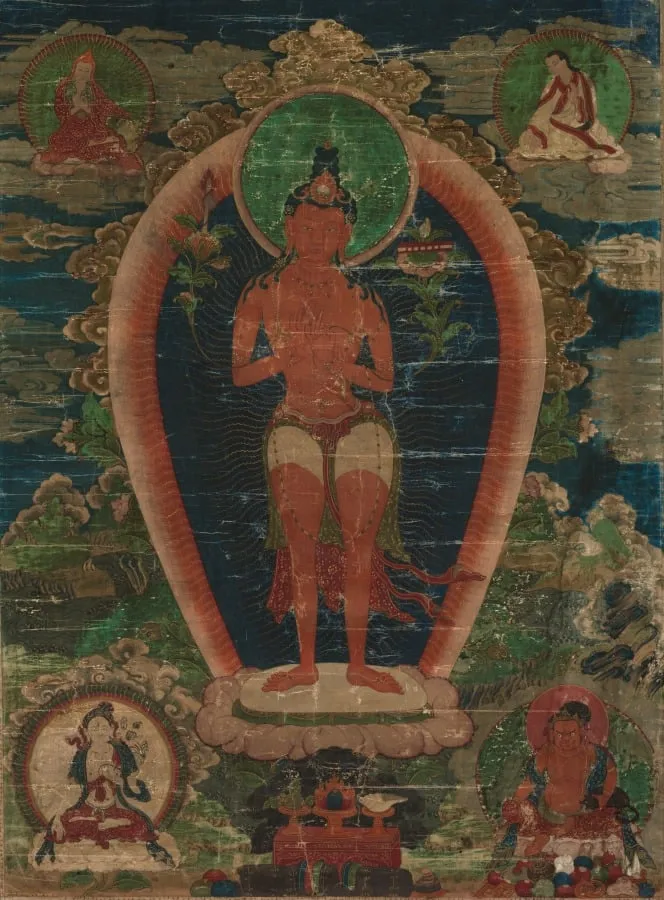
Bodhisattva Padmapani is an unspecified painting by the Baroque artist Unknown. It dates from 1704 and is held in the collection of the Cleveland Museum of Art.
About this work
Overview
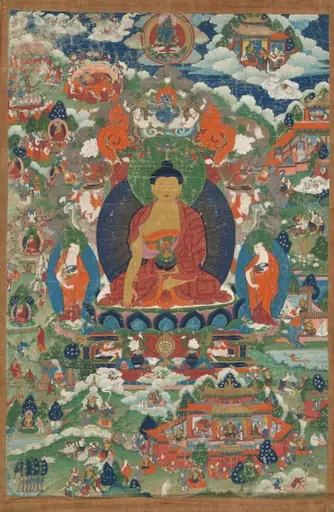
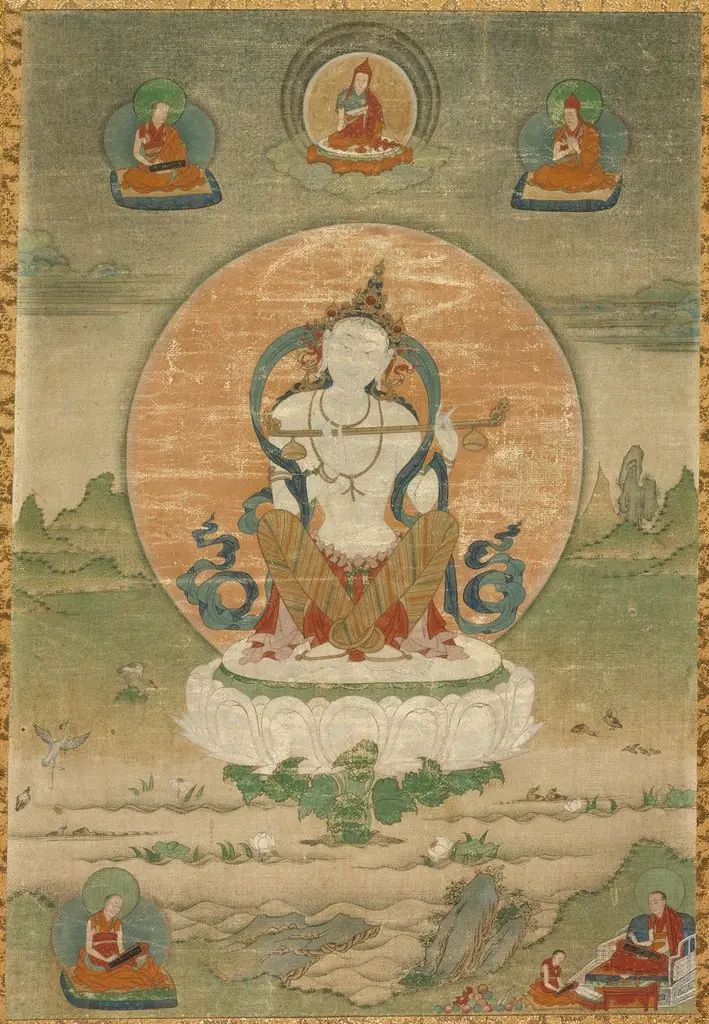
This painting portrays a Bodhisattva named Padmapani, a compassionate figure in Tibetan Buddhist tradition, depicted standing gracefully atop a cloud.
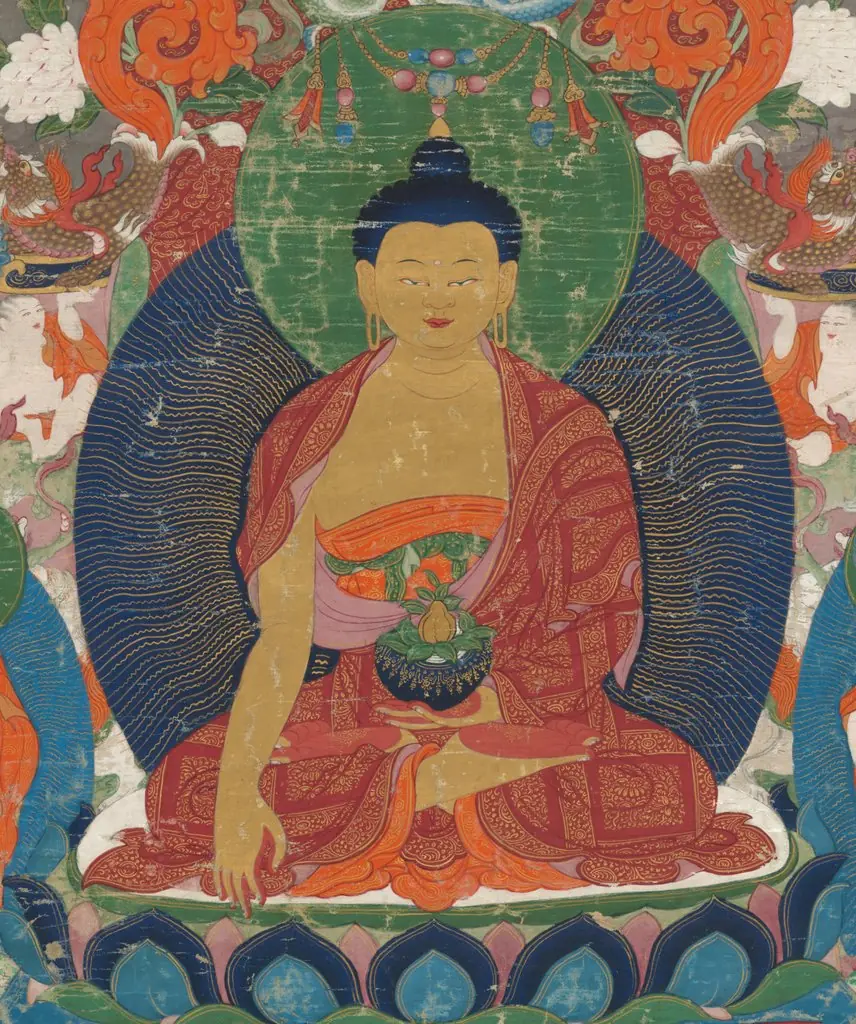
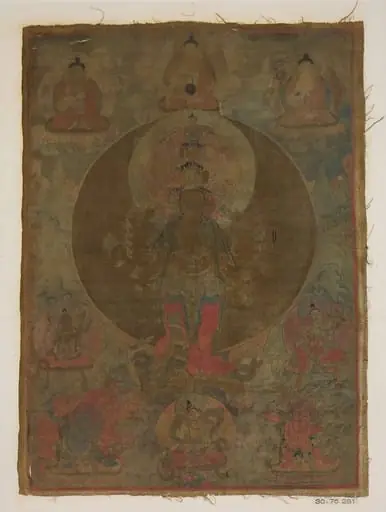
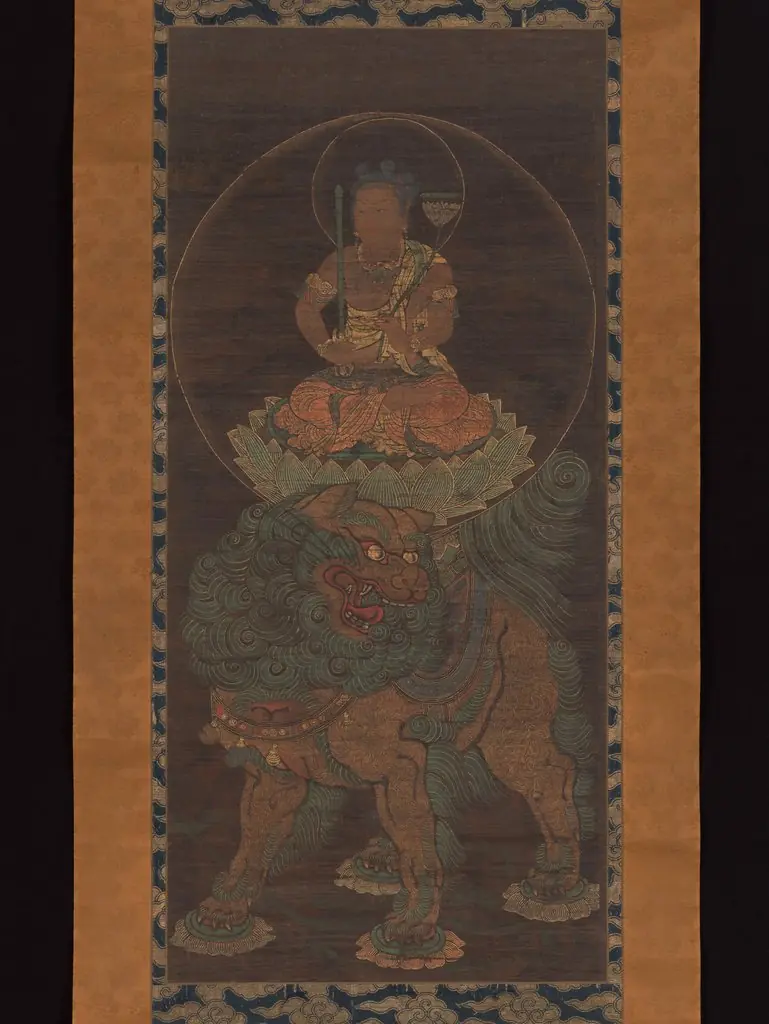
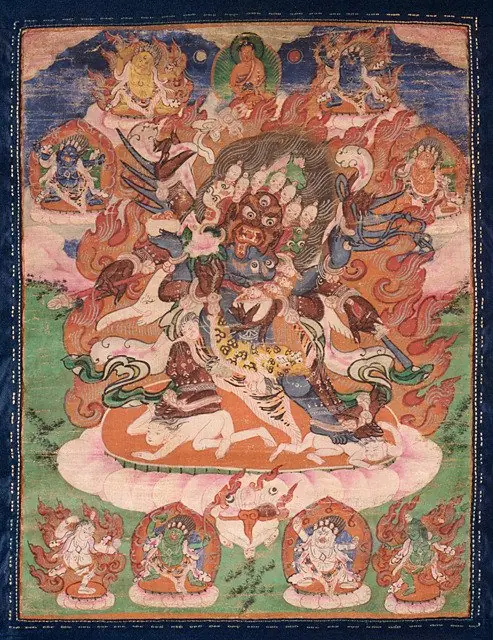
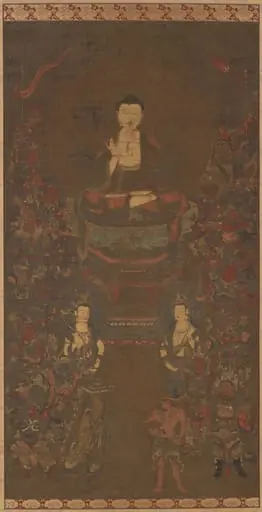
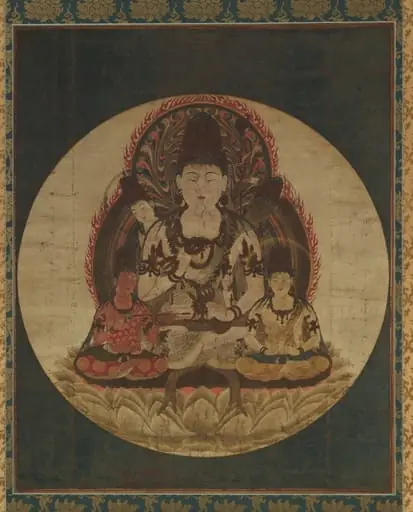
This painting portrays a Bodhisattva named Padmapani, a compassionate figure in Tibetan Buddhist tradition, depicted standing gracefully atop a cloud. Surrounded by a radiant halo and adorned with elaborate jewelry and a crown, the figure holds a lotus flower in the right hand. The background evokes a celestial realm with blue skies and drifting clouds, while smaller figures in the corners suggest attendant deities or disciples, reinforcing the sacred context.
Subject & Meaning
Padmapani, meaning 'Lotus-Bearer,' symbolizes compassion and spiritual purity. The lotus represents enlightenment rising above worldly defilements, while the cloud beneath the figure signifies transcendence of earthly realms. The surrounding smaller figures likely depict devotees or celestial beings, emphasizing the Bodhisattva’s role as a guide for beings on the path to awakening. The composition invites contemplation rather than narrative action.
Technique & Style
The work employs fine brushwork and layered pigments typical of Tibetan thangka painting, with meticulous attention to detail in the crown, robes, and floral motifs. Though the background suggests depth and movement, the style is rooted in Himalayan iconographic conventions, not Baroque traditions. The use of gold leaf and mineral pigments enhances luminosity, aligning with devotional aesthetics rather than European dramatic lighting.
History & Provenance
This painting likely originated in Tibet or a neighboring Himalayan region during the late medieval or early modern period, when thangka production flourished in monastic centers. It was probably created for ritual use in temples or private altars, commissioned by patrons seeking spiritual merit. Its preservation suggests it was carefully maintained within a religious community, though its specific provenance remains undocumented.
Context
Tibetan Buddhist art prioritizes symbolic accuracy over naturalism, with each element—color, posture, attribute—conveying doctrinal meaning. While European Baroque art sought emotional intensity through movement and chiaroscuro, Tibetan thangkas aimed for meditative stillness and sacred geometry. The presence of attendant figures follows established iconographic models, not Western compositional innovations.
Legacy
As a representative of Tibetan thangka tradition, this work continues to inform contemporary Buddhist art and scholarly study of Himalayan visual culture. Its preservation allows for the transmission of iconographic knowledge across generations. Though often misattributed to Western styles due to surface similarities, its true significance lies in its adherence to centuries-old spiritual and artistic protocols.
Artist & collection

 Domestic Scene
 Giacomo and Cardinal Marco, investing Andrea, Abbot of San Zeno, with his Benefice
 The Nymph of Fontainebleau
 Portrait of a Woman
 Madonna and Child with Saints in the Enclosed Garden
 Venus and Minerva
 Family Group of Four on Sofa
 Wall painting from Room H of the Villa of P. Fannius Synistor at Boscoreale