Artwork
The Goddess Sarasvati
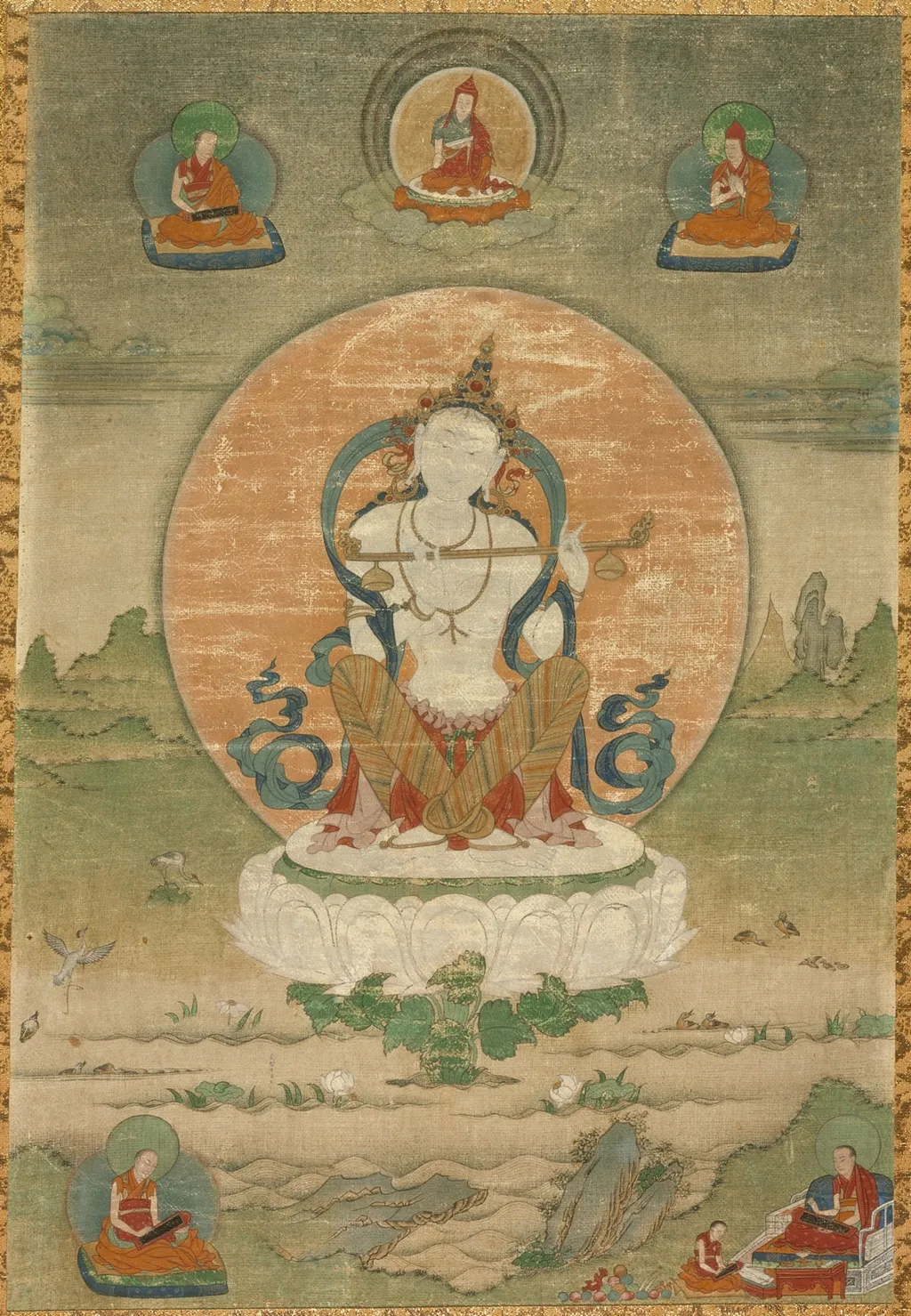
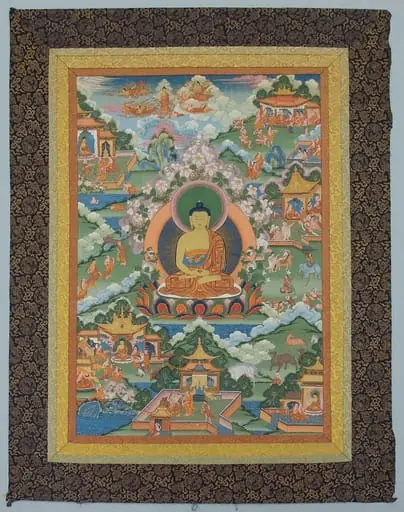
The Goddess Sarasvati is an unspecified painting by the Rococo painting artist Unknown. It dates from 1750 and is held in the collection of the Los Angeles County Museum of Art. This painting portrays Sarasvati, the Hindu goddess of knowledge, music, and the arts, seated centrally on a lotus.
About this work
Overview
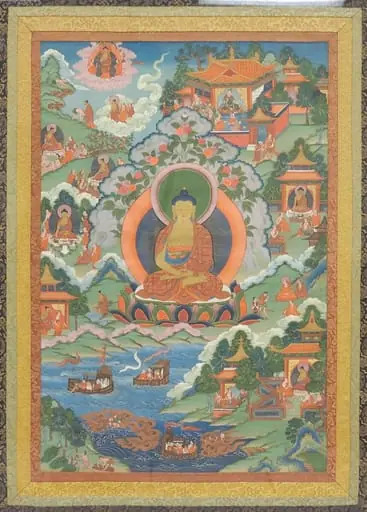
This painting portrays Sarasvati, the Hindu goddess of knowledge, music, and the arts, seated centrally on a lotus. She is encircled by a soft radiant halo, emphasizing her spiritual presence. A tranquil landscape of trees and birds frames the scene, while monks in the foreground engage in scholarly and musical activities, reinforcing themes of learning and devotion.
Subject & Meaning
Sarasvati is depicted as a serene embodiment of wisdom and creative expression. Her musical instrument symbolizes the harmony of thought and art, while the lotus signifies purity and spiritual awakening. The monks surrounding her represent devotees immersed in study and practice, illustrating the integration of intellectual pursuit and sacred tradition in her worship.
Technique & Style
The composition uses delicate lines and muted, natural pigments to create a calm visual rhythm. The goddess is rendered with refined detail in her adornments, contrasting with the softer, more atmospheric treatment of the background. The circular halo and balanced placement of figures reflect traditional iconographic principles, guiding the viewer’s focus toward the central figure.
History & Provenance
The painting resides in the collection of the Los Angeles County Museum of Art, acquired as part of its South Asian art holdings. Its origins are likely from a regional Indian atelier, possibly 18th or 19th century, where devotional imagery was produced for temple or private use. Exact provenance details remain undocumented, but its style aligns with late Mughal or Rajput miniature traditions.
Context
In Hindu devotional practice, Sarasvati is venerated during festivals like Vasant Panchami, when students and artists seek her blessing. This painting reflects a broader tradition of visualizing deities within environments that merge the sacred and the natural. The inclusion of monks suggests a monastic setting, where learning and ritual coexist as expressions of spiritual discipline.
Legacy
As a representation of Sarasvati in a contemplative, non-dramatic mode, the painting contributes to a quieter strand of Indian devotional art that prioritizes stillness over spectacle. It continues to serve as a reference for how spiritual ideals are visually encoded in everyday ritual contexts, preserving aesthetic and philosophical continuity across centuries.
Artist & collection

 Domestic Scene
 Giacomo and Cardinal Marco, investing Andrea, Abbot of San Zeno, with his Benefice
 The Nymph of Fontainebleau
 Portrait of a Woman
 Madonna and Child with Saints in the Enclosed Garden
 Venus and Minerva
 Family Group of Four on Sofa
 Wall painting from Room H of the Villa of P. Fannius Synistor at Boscoreale
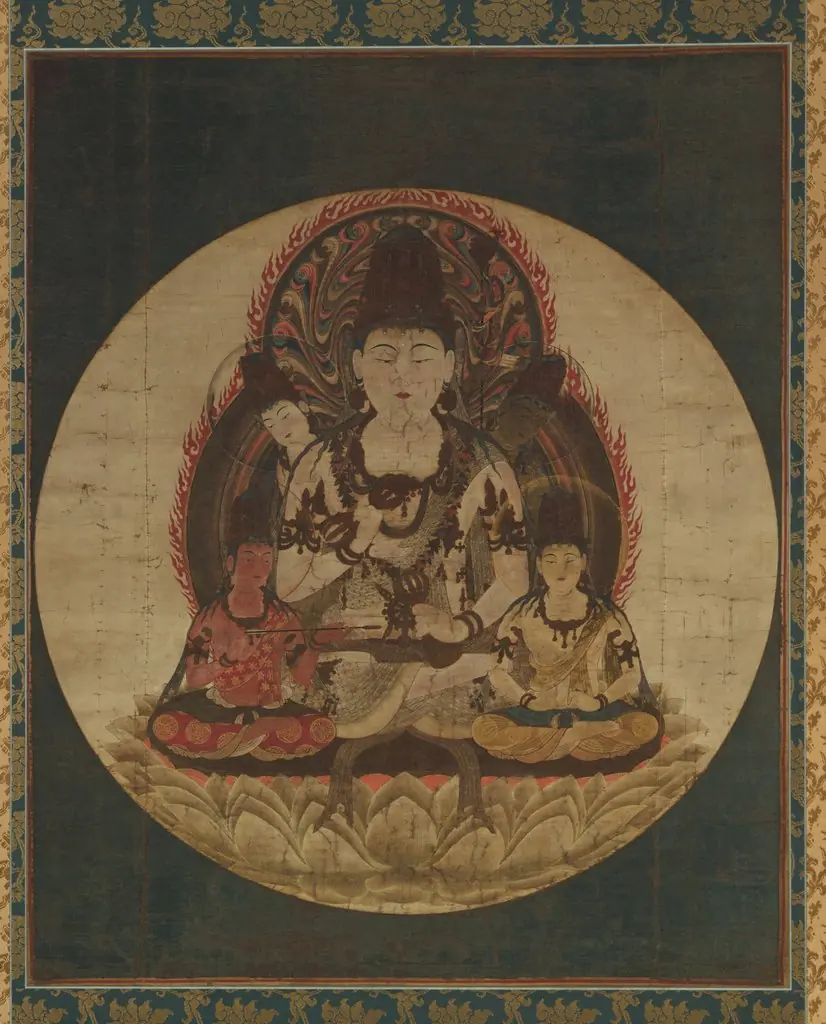 The Secret Five Bodhisattvas (Gohimitsu Bosatsu)
 Untitled
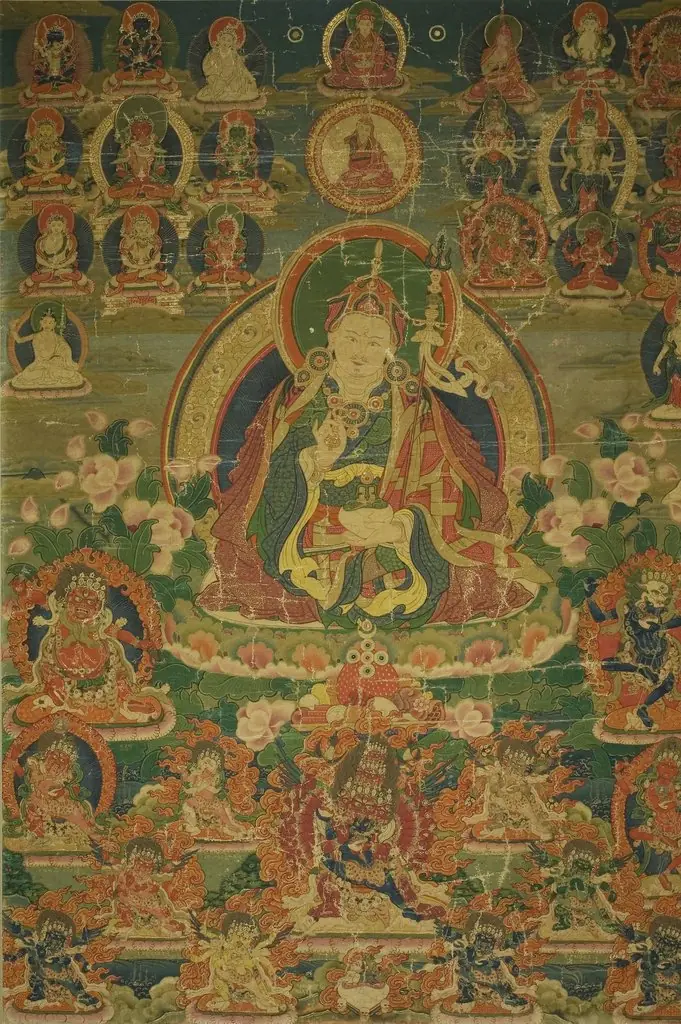 Painted Banner (Thangka) of Sage Guru Padmasambhava Seated Holding a Thunderbolt (Vajra) and Skull Cup (Kapala)
 Untitled
 Bodhisattva Padmapani
 Untitled
 Manjushri
 Untitled
 Untitled
 Untitled
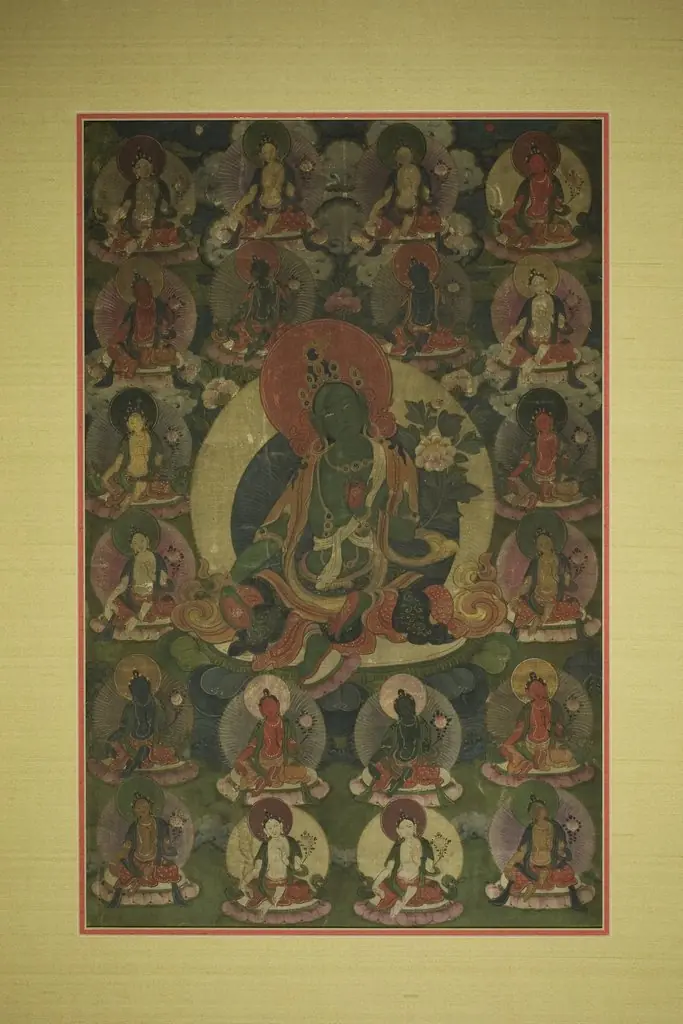 Painted Banner (Thangka) of Green Tara Surrounded by Twenty Manifestations
 Untitled