Artwork
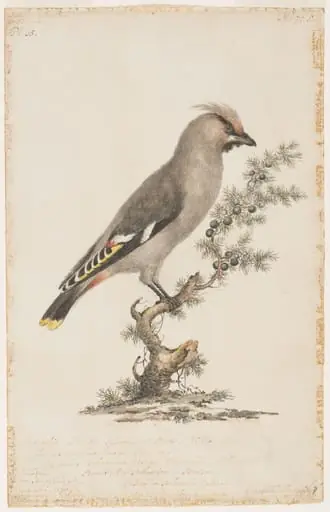
Bohemian Waxwing
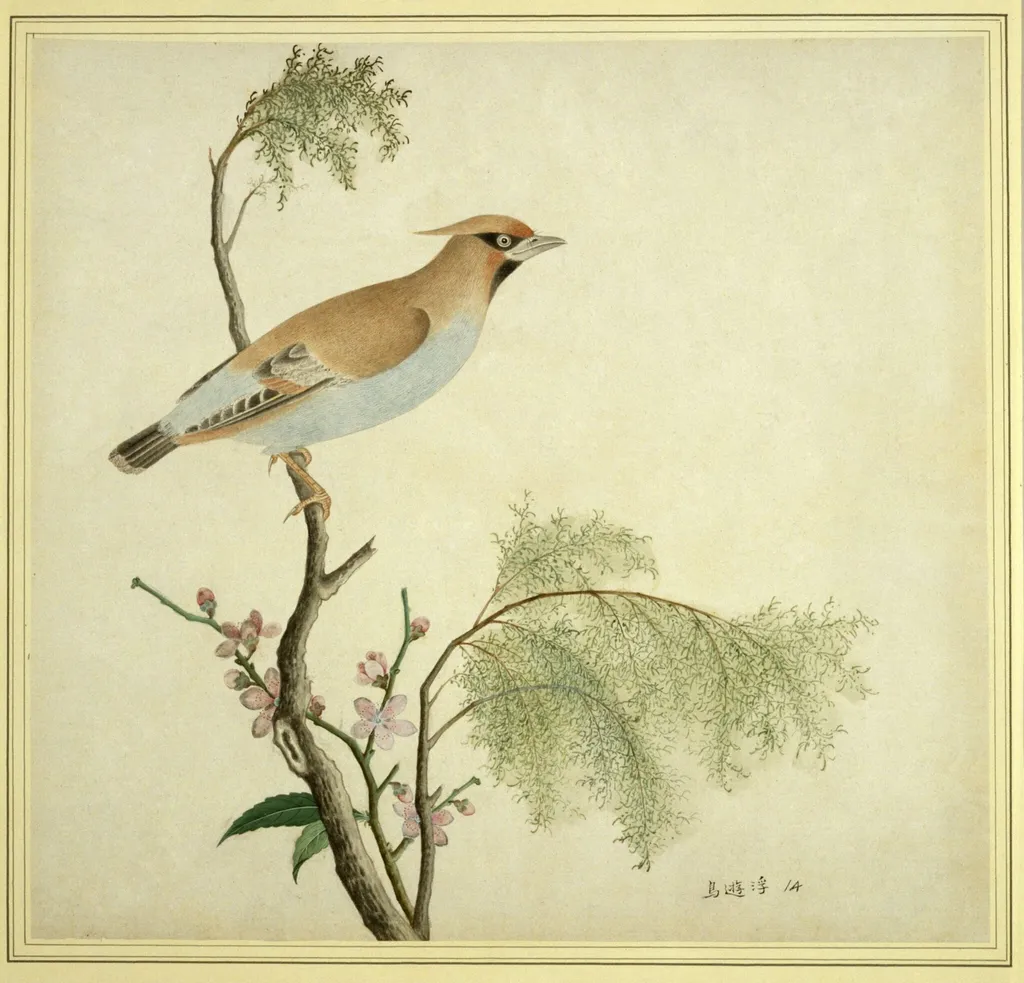
Bohemian Waxwing is a paint painting by the Patna School of Painting artist Unknown. It dates from 1800 and is held in the collection of the Victoria and Albert Museum.
About this work
This painting shows a Bohemian waxwing perched on a branch with berries. The bird’s soft pink and gray feathers stand out against the dark green leaves.
Made in Canton around 1820, it was part of a trend. European traders bought these pictures as souvenirs to take home.
Look up the Victoria and Albert Museum to see more of these Chinese bird paintings.
Overview
The work depicts a Bohemian waxwing perched on a branch laden with berries, its muted pink‑gray plumage contrasting with the deep green foliage. Executed as a small oil painting on paper, the image captures the bird in a naturalistic pose, emphasizing its delicate coloration and the surrounding vegetation.
Subject & Meaning
The painting presents a single European bird species, reflecting the 18th‑ and 19th‑century fascination with exotic wildlife. By rendering the waxwing in a tranquil setting, the image serves both as a decorative souvenir and as a visual record of a species that intrigued naturalists and amateur collectors alike.
Technique & Style
Created in the Canton workshop tradition, the piece combines Chinese brushwork with Western compositional conventions. The artist employed fine, layered strokes to render feather texture, while the background foliage is rendered in broader washes, producing a modest depth that aligns with the commercial aesthetic of the period.
History & Provenance
Produced in Guangzhou around 1820, the painting was part of a larger output of bird images made for the European market. Such works were exported from the sole Chinese port open to foreign trade, where merchants supplied them to travelers who took them back to Britain as personal mementos.
Context
During the late 1700s and early 1800s, British botanists and ornithologists cultivated a keen interest in foreign species, a curiosity that filtered into popular taste. The demand for visual representations of birds like the Bohemian waxwing spurred Chinese workshops to create affordable, reproducible images that satisfied European collectors.
Artist & collection

 Domestic Scene
 Giacomo and Cardinal Marco, investing Andrea, Abbot of San Zeno, with his Benefice
 The Nymph of Fontainebleau
 Portrait of a Woman
 Madonna and Child with Saints in the Enclosed Garden
 Venus and Minerva
 Family Group of Four on Sofa
 Wall painting from Room H of the Villa of P. Fannius Synistor at Boscoreale