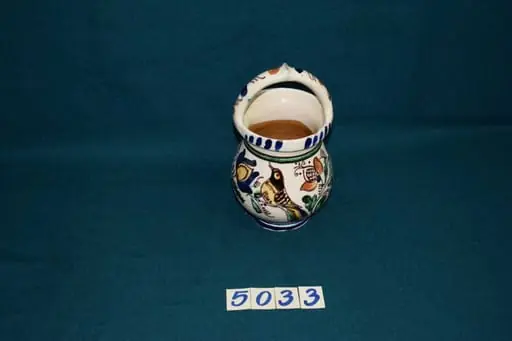
Artwork
Bokaly
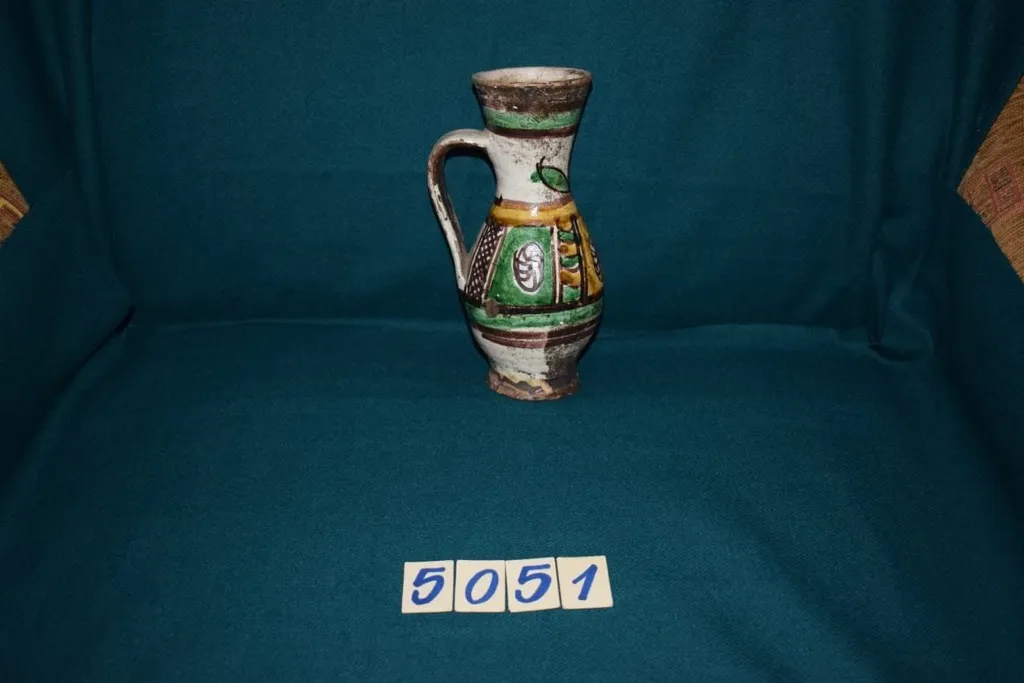
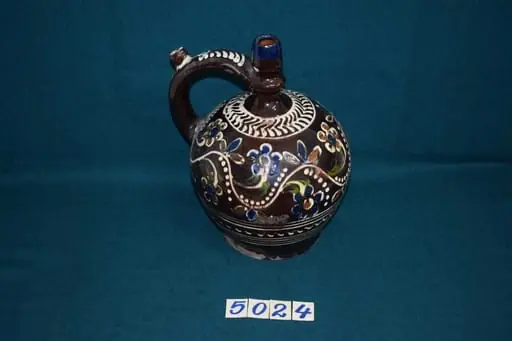
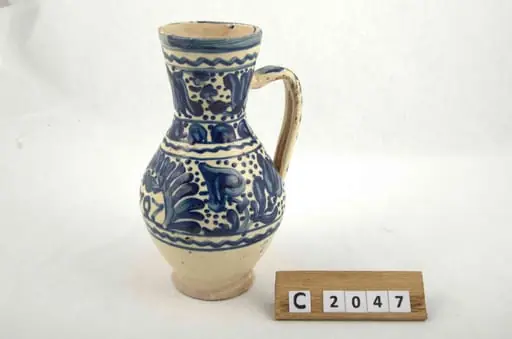
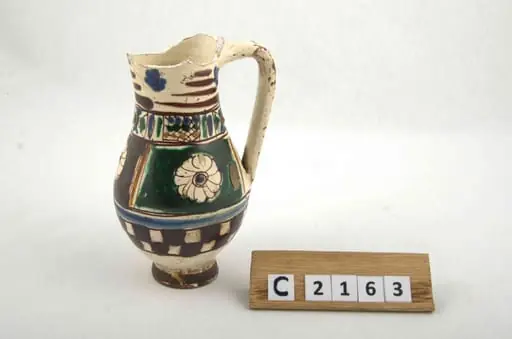
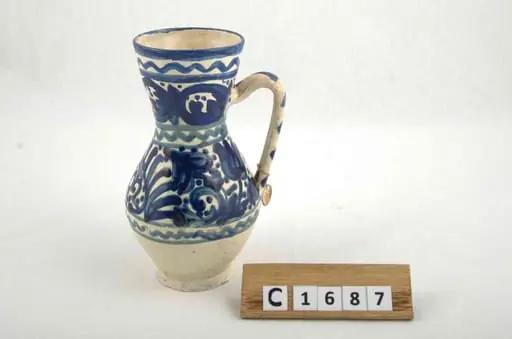
Bokaly is a photography by Unknown. It dates from 1850 and is held in the collection of the Constanța Folk Art Museum. This small ceramic pitcher is a utilitarian object, crafted with straightforward form and vivid surface decoration.
About this work
Overview
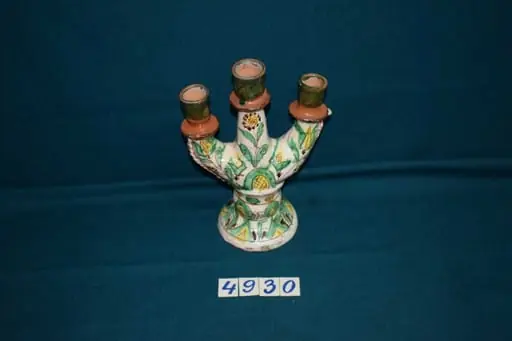
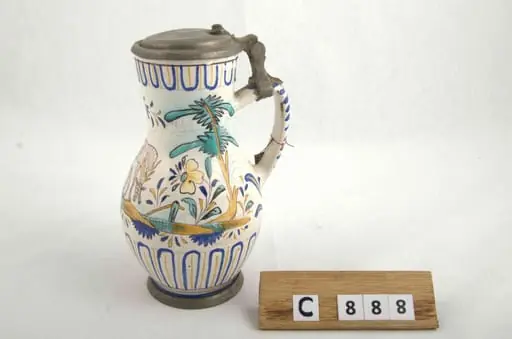
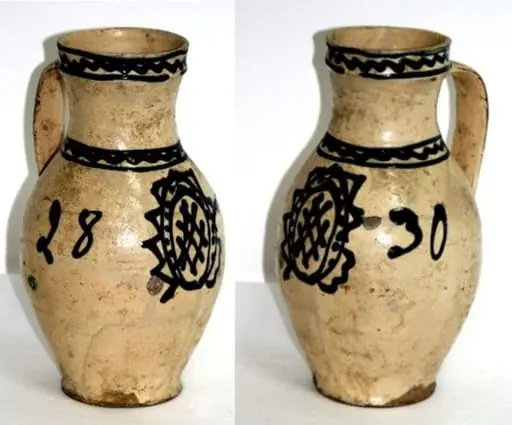
This small ceramic pitcher is a utilitarian object, crafted with straightforward form and vivid surface decoration. Its white glaze serves as a ground for bold applications of green, red, and yellow pigments. The handle and spout are cleanly shaped, emphasizing function over ornamentation. The overall design suggests everyday use in a domestic setting rather than ceremonial or elite contexts.
Subject & Meaning
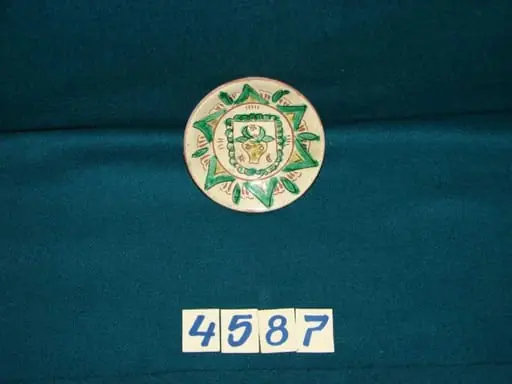
The front features a simplified motif resembling a leaf or flower, flanked by abstract geometric patterns. These elements lack clear symbolic coding, indicating a decorative rather than narrative intent. The imagery may reflect local natural forms or traditional motifs passed through generations, but no specific mythological or religious meaning is evident in the object's appearance.
Technique & Style
The pitcher was hand-painted with opaque, high-contrast colors applied directly onto a fired clay body. Brushwork is loose and unrefined, with no fine detailing or shading. The glaze is uneven in places, suggesting hand-mixed pigments and low-temperature firing. The style prioritizes clarity and durability over precision, aligning with regional folk pottery traditions.
History & Provenance
No documented origin or maker is recorded. Its materials and construction resemble ceramics produced in rural communities across parts of Eastern Europe or the Balkans during the late 19th or early 20th century. The Museum of Ethnography holds similar examples, supporting its likely placement within a broader folk craft tradition rather than a specific named workshop.
Context
This pitcher belongs to a category of household ceramics made for daily use—storing liquids, serving food, or preserving goods. Its durability and bright colors suggest it was valued for both practicality and visual appeal in homes where mass-produced goods were scarce. Similar vessels appear in ethnographic collections from agrarian societies with strong artisanal pottery customs.
Legacy
Though not signed or attributed to a known artisan, the pitcher exemplifies the persistence of regional ceramic practices into the modern era. Its survival in museum collections reflects growing interest in vernacular material culture during the 20th century, preserving objects that once formed part of ordinary life.
Artist & collection
 Domestic Scene
 Giacomo and Cardinal Marco, investing Andrea, Abbot of San Zeno, with his Benefice
 The Nymph of Fontainebleau
 Portrait of a Woman
 Madonna and Child with Saints in the Enclosed Garden
 Venus and Minerva
 Family Group of Four on Sofa
 Wall painting from Room H of the Villa of P. Fannius Synistor at Boscoreale