Artwork
canceu
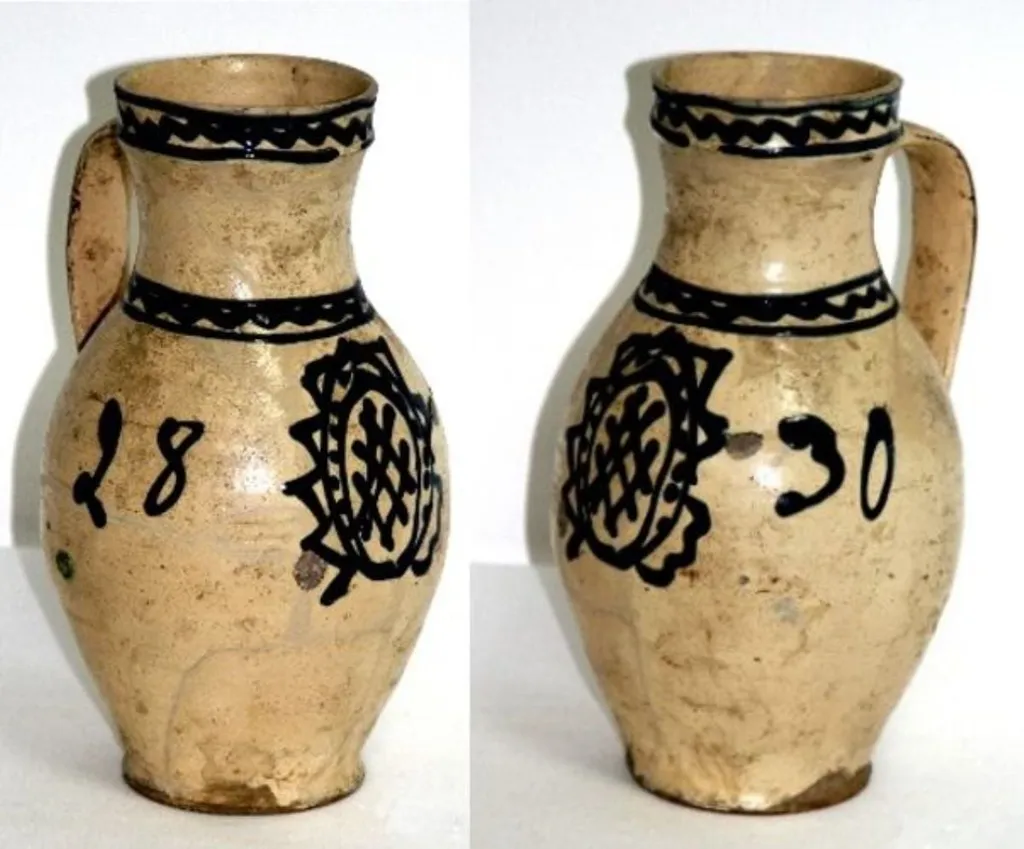
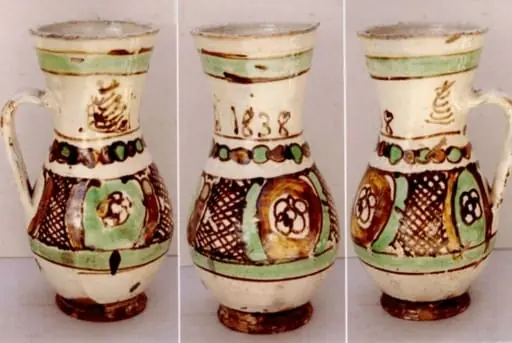
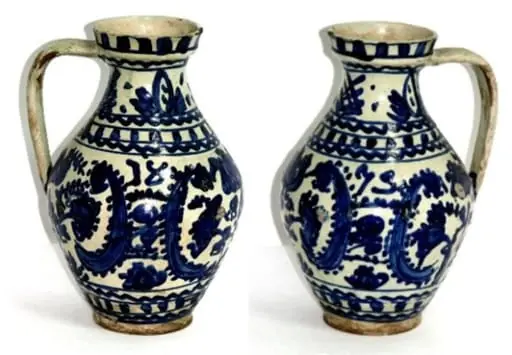
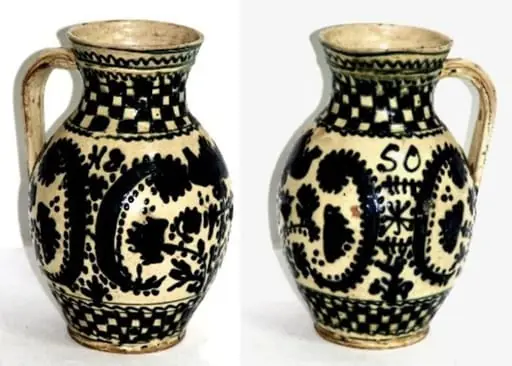
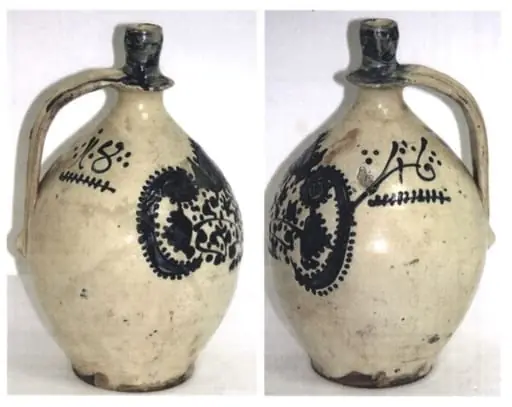
canceu is a photography by the Romanticist artist Unknown. It dates from 1830 and is held in the collection of the Romanian Peasant Museum. This clay pitcher features a simple, functional form with a narrow neck and two side handles.
About this work
The pitcher’s design mixes plain shapes with sharp black lines, almost like a sketch.
This is a simple clay pitcher with a narrow neck and two handles—one on each side. The surface is light beige with black markings. On one side, the numbers "1830" are painted in bold strokes. Below them, a swirling design looks like tangled vines or leaves.
The pitcher’s design mixes plain shapes with sharp black lines, almost like a sketch. The numbers might hint at when it was made, but the rest is just decoration.
Look up *zigzag* to see how this kind of pattern shows up in other art.
Overview
This clay pitcher features a simple, functional form with a narrow neck and two side handles. Its surface is coated in a light beige slip, adorned with bold black painted markings. The decoration is minimal yet deliberate, combining geometric precision with fluid, hand-drawn lines. The presence of the date '1830' suggests a possible chronological marker, though its significance remains unclear without additional context.
Subject & Meaning
No figurative imagery or symbolic motifs are present. The swirling pattern resembles abstracted vegetation, possibly evoking natural growth or organic movement. The painted date may indicate production year, ownership, or ceremonial timing, but no definitive cultural or narrative meaning is evident. The design prioritizes visual rhythm over storytelling, leaving interpretation open.
Technique & Style
The vessel was formed from hand-modeled clay and fired to a pale earthen tone. Black pigment, likely iron oxide-based, was applied with a brush or stylus to create sharp, linear contrasts. The decoration blends controlled zigzags and freeform swirls, suggesting a balance between intentional patterning and spontaneous mark-making. The brushwork appears direct and unrefined, emphasizing process over polish.
History & Provenance
The pitcher’s origin is undocumented beyond its date and material. Its style aligns with 19th-century utilitarian ceramics from regions where hand-painted decoration was common in domestic ware. The inclusion of a year on the surface is unusual for everyday vessels, hinting at possible personal, communal, or workshop-specific significance. No record of ownership or archaeological context is available.
Context
In early 19th-century rural communities, pottery was often made locally for daily use. Decorative elements like this pitcher’s black-line patterns were common in folk traditions, serving both aesthetic and cultural functions. Similar zigzag and vine-like motifs appear across diverse regional ceramics, suggesting shared visual vocabularies among artisans who worked without formal training or written records.
Legacy
This pitcher stands as an example of vernacular ceramic art, preserving the hand of an anonymous maker. Its modest decoration reflects a broader tradition of functional objects enhanced with symbolic or rhythmic patterns. While not part of a known artistic movement, it contributes to the understanding of everyday material culture and the quiet persistence of handmade forms in industrializing societies.
Artist & collection

 Domestic Scene
 Giacomo and Cardinal Marco, investing Andrea, Abbot of San Zeno, with his Benefice
 The Nymph of Fontainebleau
 Portrait of a Woman
 Madonna and Child with Saints in the Enclosed Garden
 Venus and Minerva
 Family Group of Four on Sofa
 Wall painting from Room H of the Villa of P. Fannius Synistor at Boscoreale