Artwork
Brahma, Vishnu and Shiva
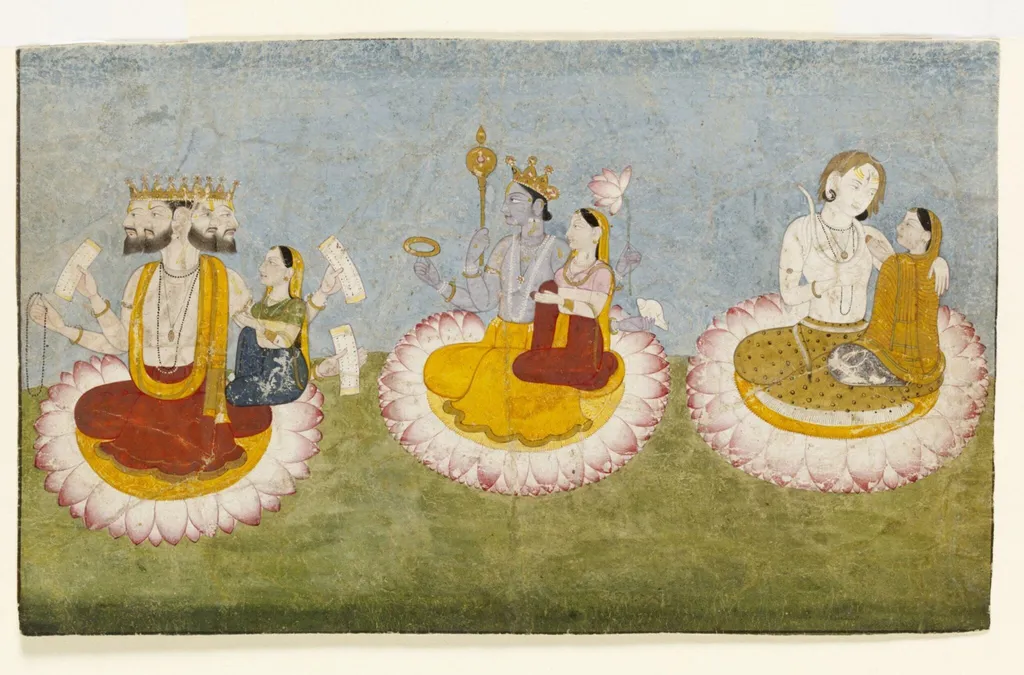
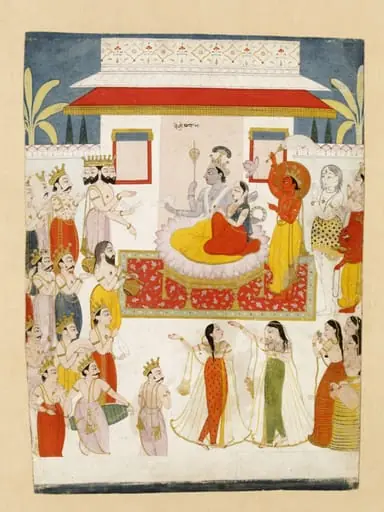
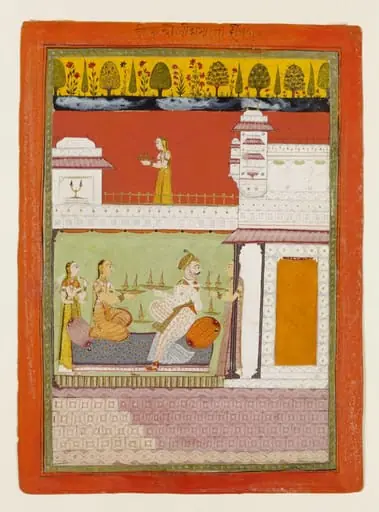
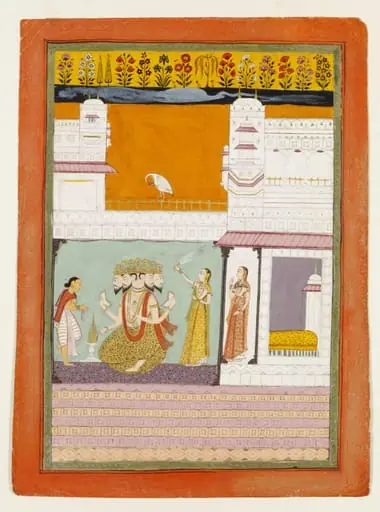
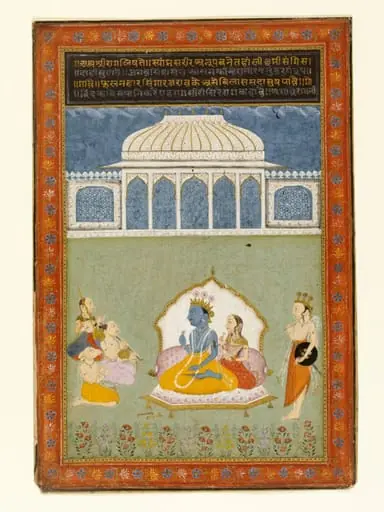
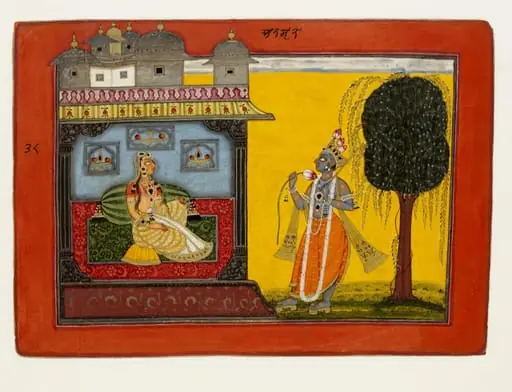
Brahma, Vishnu and Shiva is a paint painting by the Rococo painting artist Unknown. It dates from 1770 and is held in the collection of the Victoria and Albert Museum. This painting depicts the Hindu trinity—Brahma, Vishnu, and Shiva—each accompanied by their respective consorts.
About this work
Overview
The use of symbolic attributes and floral motifs reflects devotional conventions of the period, emphasizing spiritual order through visual balance.
This painting depicts the Hindu trinity—Brahma, Vishnu, and Shiva—each accompanied by their respective consorts. Arranged in a harmonious composition, the figures embody the cyclical forces of creation, preservation, and dissolution. The scene is rendered in a traditional north-west Indian style, likely produced for a regional patron. The use of symbolic attributes and floral motifs reflects devotional conventions of the period, emphasizing spiritual order through visual balance.
Subject & Meaning
Brahma, identified by his four heads and the Vedas, signifies the origin of cosmic order. Vishnu, depicted in blue with Lakshmi, sustains the universe through stability and abundance. Shiva, with Parvati, represents transformation through dissolution, necessary for renewal. Together, the triad and their consorts illustrate a theological framework in which opposing forces are interdependent, maintaining cosmic equilibrium through divine partnership.
Technique & Style
The painting employs fine brushwork and mineral pigments on paper, typical of regional ateliers in north-west India. Figures are rendered with elongated proportions and detailed ornamentation, while the background remains minimal to focus attention on the deities. Lotus pedestals and stylized halos reinforce sacred symbolism. The palette is restrained yet rich, using earth tones and metallic accents to convey divinity without overt naturalism.
History & Provenance
Created likely in the 17th or 18th century, the work originated in a courtly context, possibly commissioned by a local ruler or noble for private devotion or display. Its style aligns with Pahari or Rajput painting traditions, where religious themes were rendered with refined elegance. Though its exact origin is unrecorded, similar works are held in collections such as the Victoria and Albert Museum, suggesting shared artistic networks across northern India.
Context
During this period, Hindu devotional art flourished under regional patronage, even as Mughal influences spread. Paintings like this served both spiritual and political functions, reinforcing the ruler’s alignment with cosmic order. The depiction of the trinity reflects a synthesis of philosophical texts and popular worship, offering a visual theology accessible to literate elites and artisans alike.
Legacy
This painting contributes to a broader tradition of Indian miniature art that codified religious iconography through consistent visual language. Its preservation allows modern viewers to trace how theological concepts were rendered in intimate, portable formats. Though not widely known outside specialist circles, it remains a quiet testament to the enduring power of symbolic representation in South Asian spiritual culture.
Artist & collection

 Domestic Scene
 Giacomo and Cardinal Marco, investing Andrea, Abbot of San Zeno, with his Benefice
 The Nymph of Fontainebleau
 Portrait of a Woman
 Madonna and Child with Saints in the Enclosed Garden
 Venus and Minerva
 Family Group of Four on Sofa
 Wall painting from Room H of the Villa of P. Fannius Synistor at Boscoreale