Artwork
Vishnu
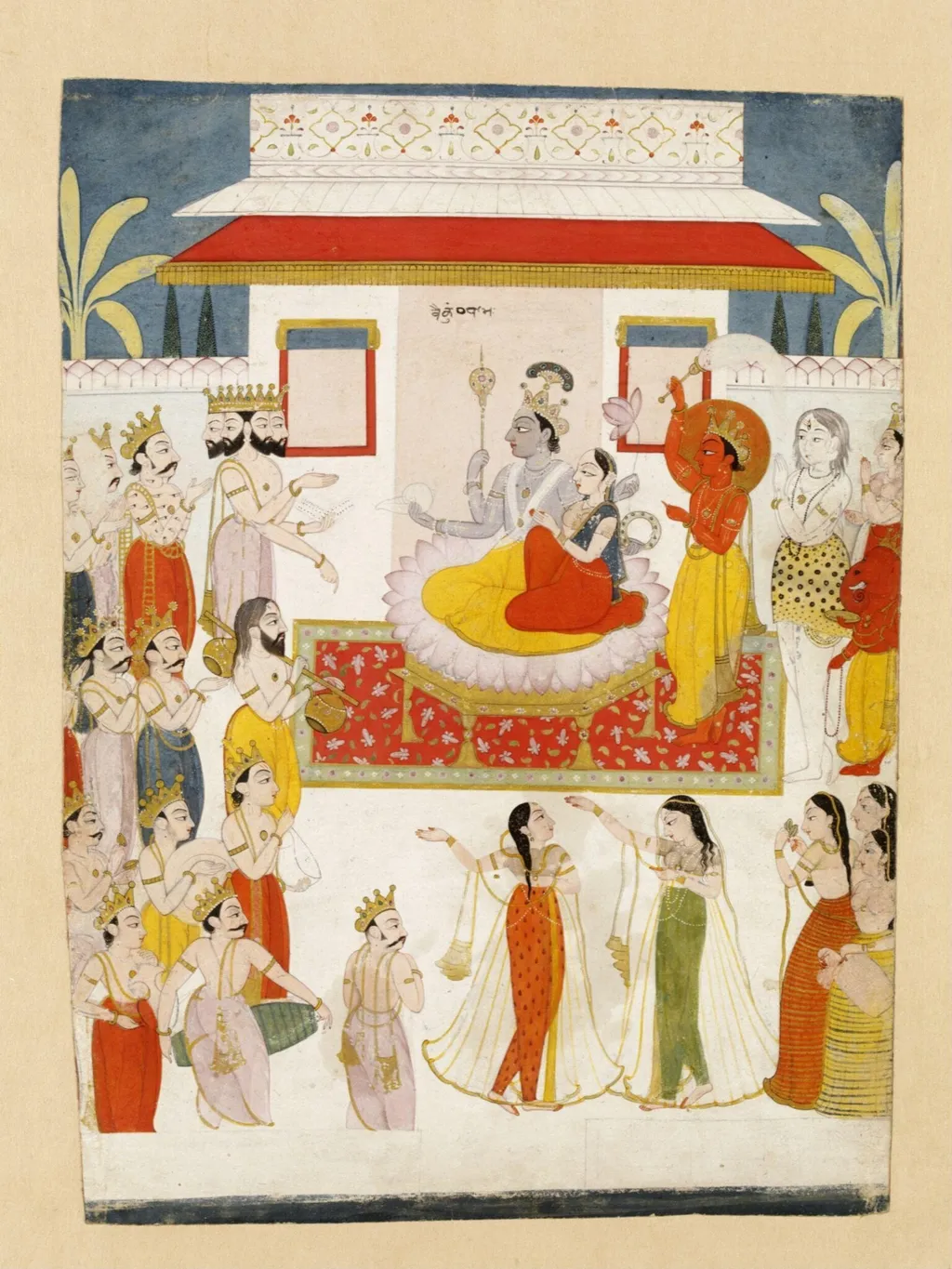
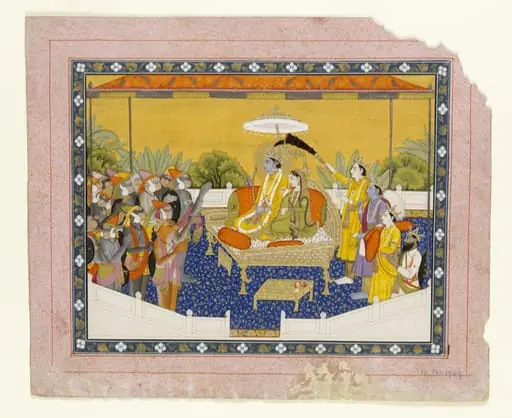
Vishnu is a paint painting by the Romanticist artist Unknown. It dates from 1750 and is held in the collection of the Victoria and Albert Museum.
About this work
Overview
The use of bold pigments and intricate patterning reflects regional courtly aesthetics of the Himalayan foothills during the 18th century.
This opaque watercolor on paper, dated to approximately 1750, presents a devotional scene centered on Vishnu, the Hindu preserver deity. Executed in a vibrant, detailed style typical of Pahari painting, the composition layers multiple figures in a structured hierarchy, with Vishnu seated on a lotus throne as the focal point. The use of bold pigments and intricate patterning reflects regional courtly aesthetics of the Himalayan foothills during the 18th century.
Subject & Meaning
Vishnu is depicted with his consort Lakshmi, symbolizing cosmic order and prosperity. Surrounding figures include Shiva, Ganesha, Brahma, Indra, and the sage Narada, representing the pantheon’s unity under Vishnu’s supremacy. The presence of musicians and dancers suggests a celestial court in celebration, reinforcing the divine realm’s harmony. The arrangement conveys theological hierarchy, with deities and attendants arranged to emphasize Vishnu’s centrality in the Hindu cosmological order.
Technique & Style
The painting employs opaque watercolor with fine brushwork, characteristic of Pahari miniatures. Colors—crimson, cobalt, gold, and emerald—are applied with precision, creating luminous surfaces and sharp outlines. Figures are rendered with elongated proportions and stylized features, while architectural elements like the red-roofed pavilion provide spatial context without perspective. The composition balances vertical and horizontal elements, guiding the eye toward the central throne through rhythmic groupings of figures.
History & Provenance
Created in a royal atelier of the Pahari hills, likely in the Kangra or Guler region, the work reflects patronage by local rulers devoted to Vaishnavism. Though its exact origin and early ownership are undocumented, similar works from this period were collected by British officials and later entered institutional collections. Its survival in good condition suggests careful preservation, possibly within temple or royal archives before entering public hands.
Context
This painting emerged during a flourishing period of Hindu devotional art in northern India, when regional courts commissioned illustrated manuscripts and standalone devotional images. The depiction of multiple deities together aligns with Bhakti movement ideals, emphasizing accessible divine presence. The inclusion of musicians and dancers mirrors courtly performances, blending spiritual symbolism with the cultural life of the time, where art served both ritual and aesthetic functions.
Legacy
Works like this contributed to the enduring visual language of Hindu iconography in South Asian art. They influenced later collectors and scholars, shaping Western perceptions of Indian miniature painting. Today, such pieces are studied for their theological nuance and technical refinement, preserved in museums as key examples of 18th-century North Indian artistic expression rather than mere decorative objects.
Artist & collection

 Domestic Scene
 Giacomo and Cardinal Marco, investing Andrea, Abbot of San Zeno, with his Benefice
 The Nymph of Fontainebleau
 Portrait of a Woman
 Madonna and Child with Saints in the Enclosed Garden
 Venus and Minerva
 Family Group of Four on Sofa
 Wall painting from Room H of the Villa of P. Fannius Synistor at Boscoreale
 Dipak ragini
 Krishna Watches A Juggler, from a copy of Bihari's Sat Sai
 Brahma
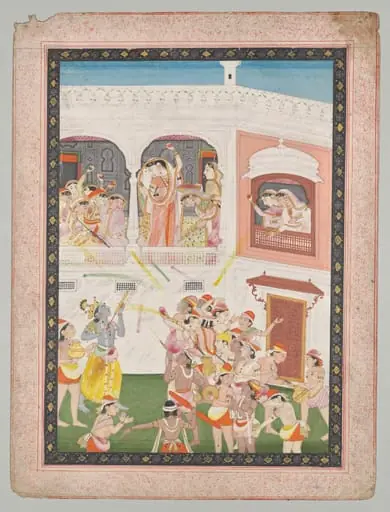 Radha and Hindu God Krishna celebrating the festival Holi
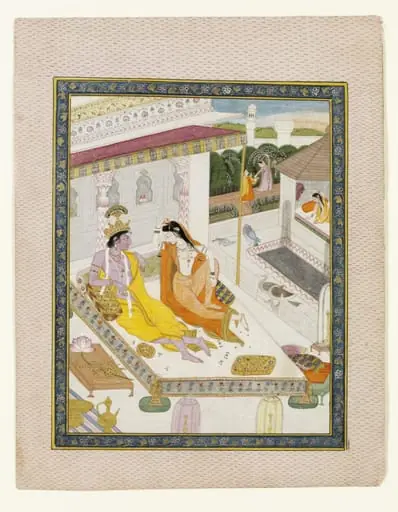 Radha and Krishna
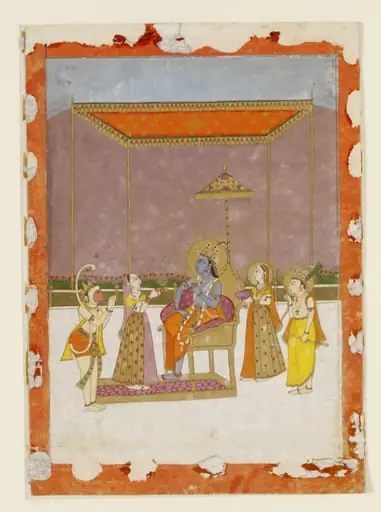 Rama, Sita, Lakshman and Hanuman
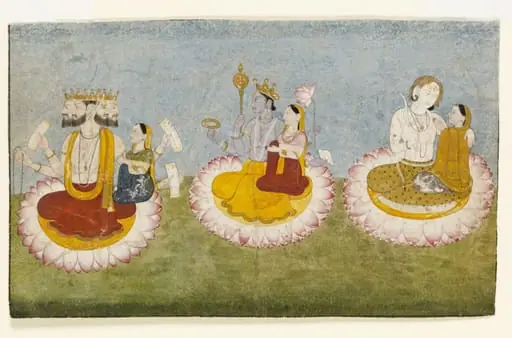 Brahma, Vishnu and Shiva
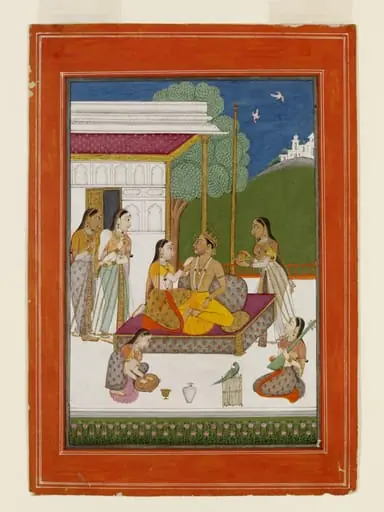 Bhairava Raga
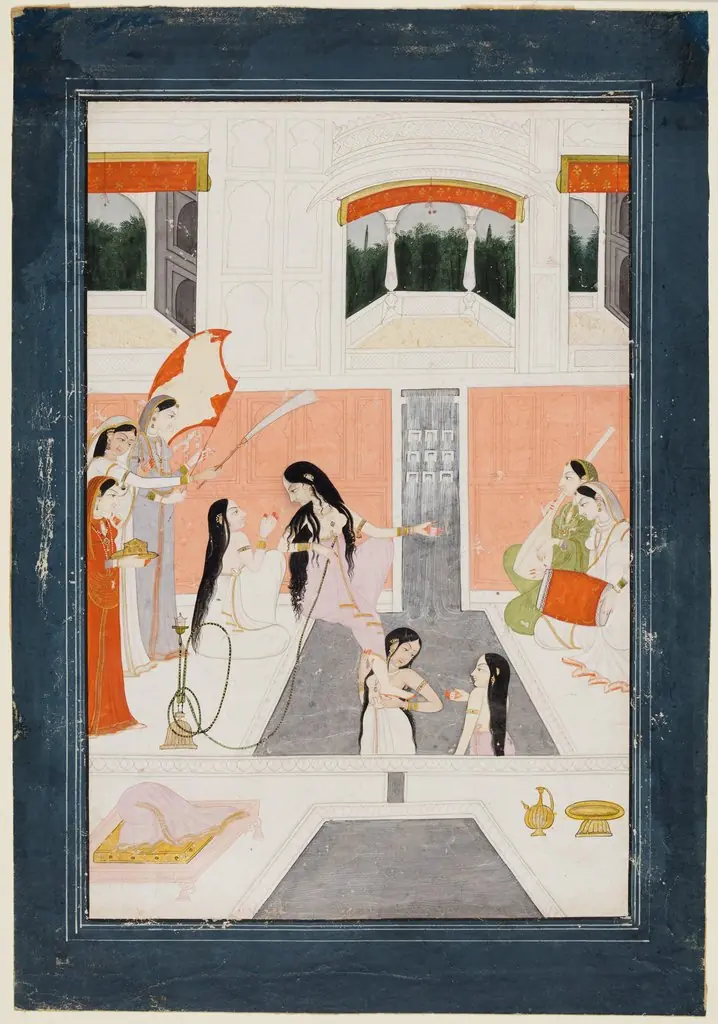 Palace Women Enjoy Music by the Side of a Water Cascade
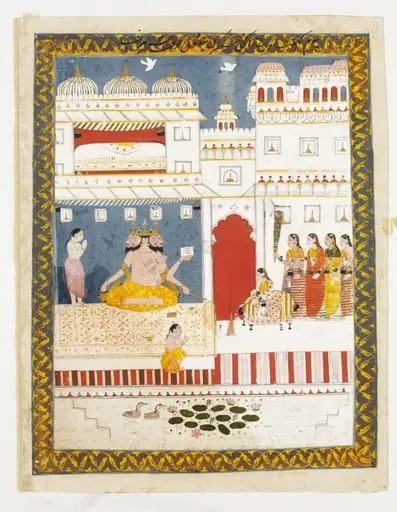 Khambavati Ragini
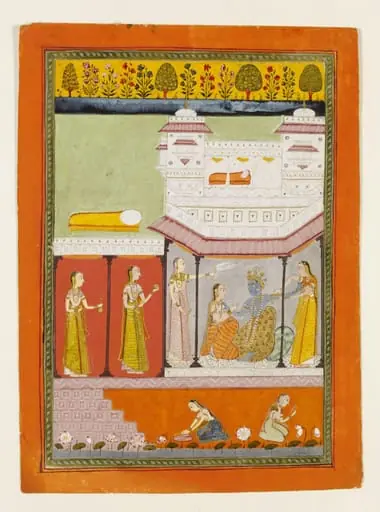 Bhairava Raga
 Rama and Sita