Artwork
Bridgenorth, Shropshire
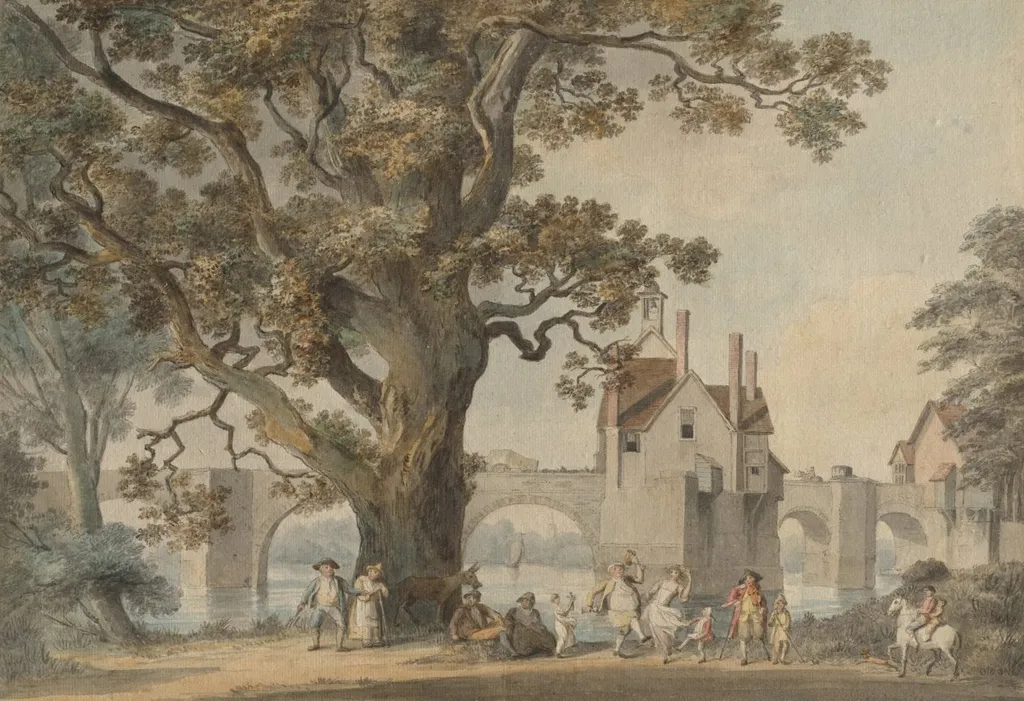
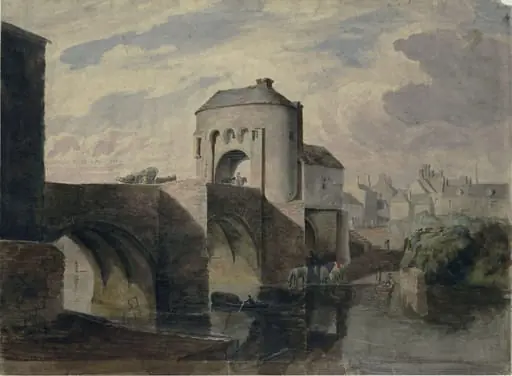
Bridgenorth, Shropshire is a drawing by the Romanticist artist Unknown. It dates from 1790 and is held in the collection of the Cleveland Museum of Art. This watercolor depicts Bridgnorth, a market town in Shropshire, situated along the River Severn near the Welsh border.
About this work
You see a quiet English town by a river, painted in soft washes of color—hills, a bridge, and a few buildings under a pale sky.
You see a quiet English town by a river, painted in soft washes of color—hills, a bridge, and a few buildings under a pale sky.
This painting is one of many made by unknown artists in 18th-century England. Back then, watercolor became popular for landscapes, letting artists show places with quick, light strokes. The work feels like a snapshot, not a grand scene.
If you like this, look up *england, 18th century* for more paintings of everyday places.
Overview
This watercolor depicts Bridgnorth, a market town in Shropshire, situated along the River Severn near the Welsh border. Executed in the late 18th century, it reflects the growing English interest in landscape as a subject worthy of careful observation. The work belongs to a tradition in which watercolor, once used for maps and surveys, evolved into a medium for recording the natural and built environment with both precision and atmosphere.
Subject & Meaning
The scene centers on a medieval stone bridge, its arches spanning the river beneath a muted sky. Figures gathered near the bridge—dancers, a fiddler, and onlookers—introduce a quiet social rhythm to the landscape. These elements do not idealize the setting but instead anchor it in everyday life, suggesting a moment of local celebration amid the enduring architecture of the town.
Technique & Style
The artist employs soft, translucent washes to suggest the texture of stone, foliage, and sky, with minimal detail and no heavy outlines. The composition balances topographical clarity with a lyrical looseness, characteristic of watercolor’s capacity for rapid, observational recording. Figures are rendered with economical strokes, contributing to the scene’s immediacy without dominating the spatial harmony.
History & Provenance
Though the artist’s identity is unknown, the work aligns with a broader practice among English amateurs and professionals who documented regional sites during the 1700s. Watercolor drawings like this were often produced for private collections or as records of place, rather than for public exhibition. Similar views of Bridgnorth appear in the oeuvres of known artists such as Paul Sandby, indicating a shared visual interest in the town’s topography.
Context
In 18th-century England, watercolor gained traction as a medium for landscape study, supported by the rise of tourism and antiquarian interest in regional architecture. Bridgnorth, with its historic bridge and riverside setting, was a frequent subject. These works were not grand declarations but quiet records, reflecting a cultural shift toward valuing the ordinary and the local over the monumental.
Legacy
This drawing contributes to a body of work that helped establish watercolor as a legitimate artistic medium in Britain. Its unassuming nature—free of theatricality or overt sentiment—exemplifies how landscape observation evolved from surveying into a form of visual documentation that valued authenticity over idealization, influencing later generations of topographical artists.
Artist & collection

 Domestic Scene
 Giacomo and Cardinal Marco, investing Andrea, Abbot of San Zeno, with his Benefice
 The Nymph of Fontainebleau
 Portrait of a Woman
 Madonna and Child with Saints in the Enclosed Garden
 Venus and Minerva
 Family Group of Four on Sofa
 Wall painting from Room H of the Villa of P. Fannius Synistor at Boscoreale
 Eltham bridge, Kent
 Millpond near Shrewsbury
 Abbot's Bridge, Bury St. Edmunds
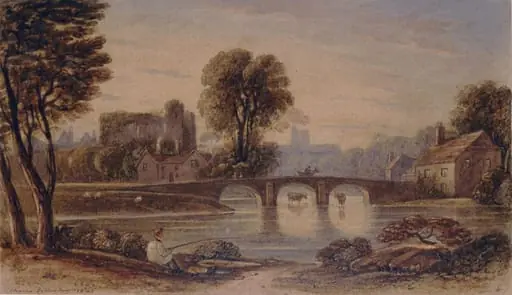 Landscape with bridge
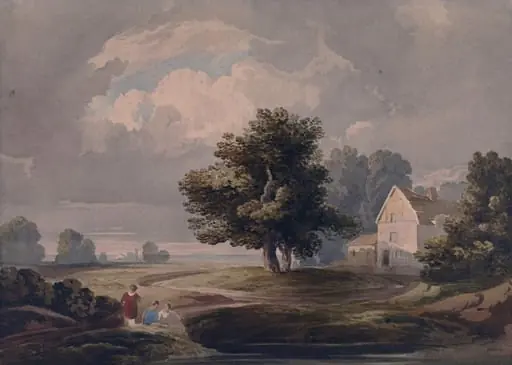 Landscape with cottage
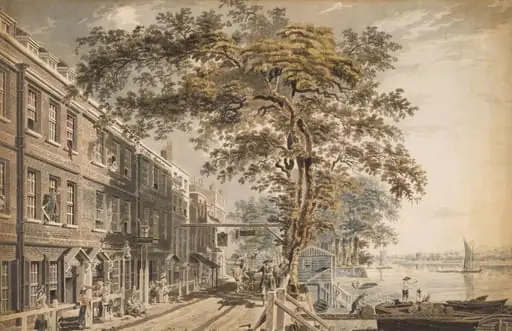 Cheyne Walk, Chelsea
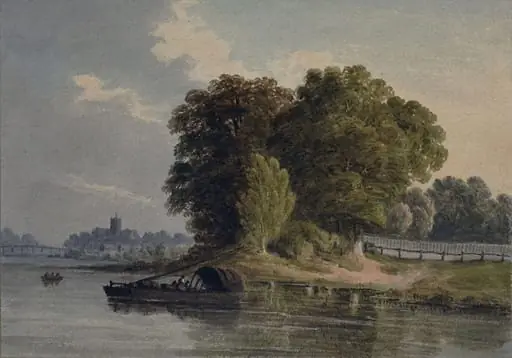 View on the Thames near Battersea Bridge
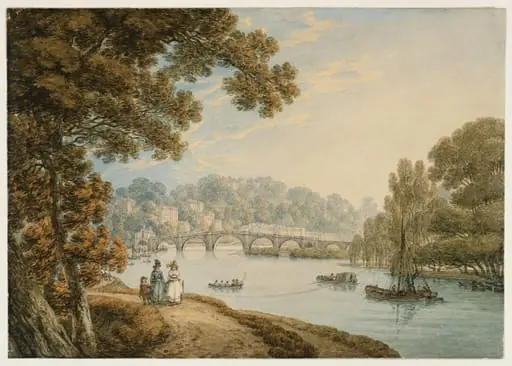 Richmond, Surrey
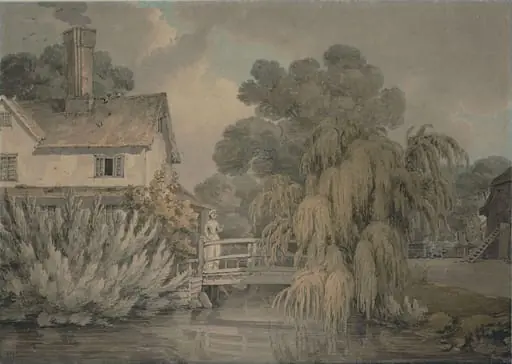 Ranger's Cottage, Hyde Park
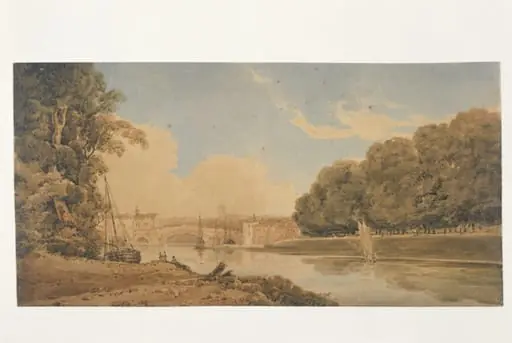 The Mayor's Walk on the Banks of the Ouse, Yorkshire
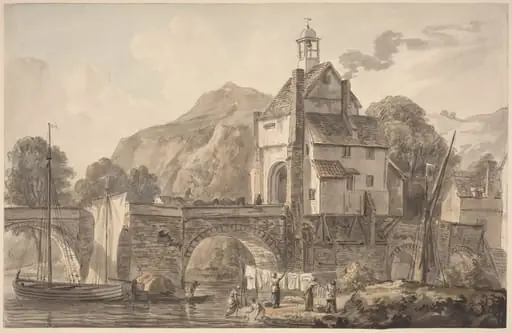 The Bridge at Bridgnorth in Shropshire
 Bridge over the River Monmow, Monmouth