Artwork
Abbot's Bridge, Bury St. Edmunds
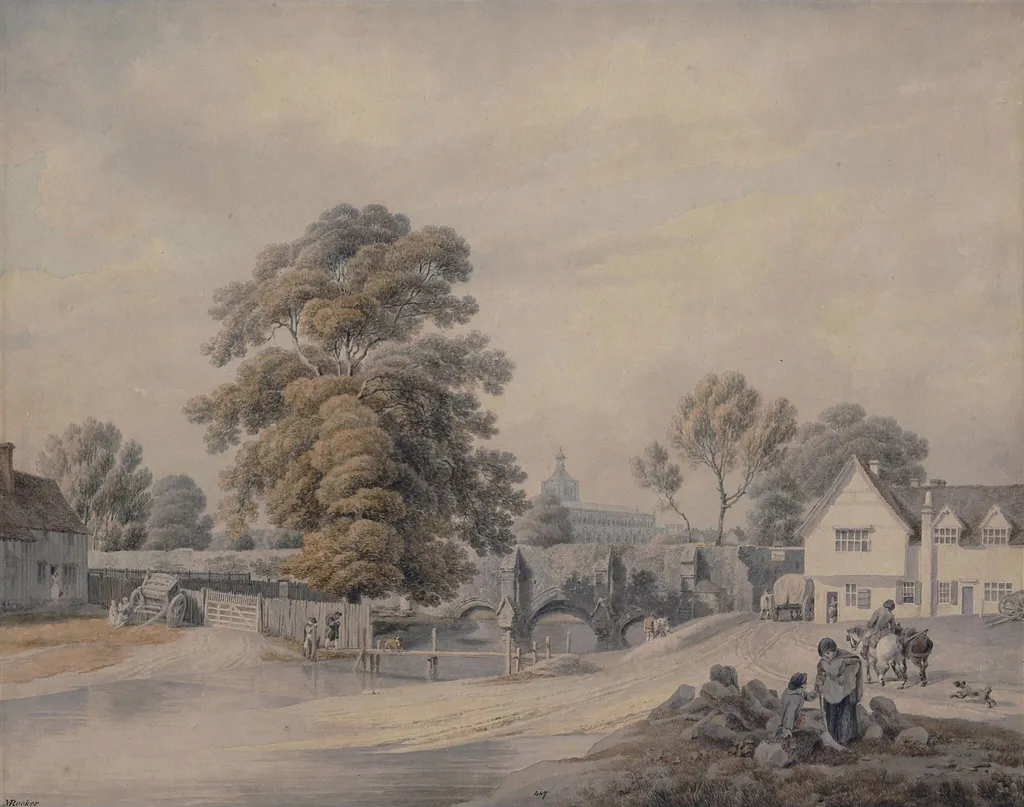
Abbot's Bridge, Bury St. Edmunds is a watercolor work on paper by the British Romanticist artist Rooker. It dates from 1795 and is held in the collection of the Victoria and Albert Museum.
About this work
Overview
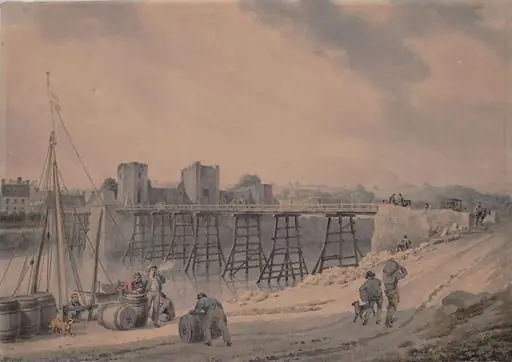
The work is a watercolour executed in 1795 by the English painter George Rooker. It portrays Abbot's Bridge in the town of Bury St. Edmunds, with the artist’s signature and date noted on the reverse side of the paper. The composition centers on the stone bridge, framed by surrounding architecture and foliage.
Subject & Meaning
The scene captures a quiet riverside moment: pedestrians gather near the water’s edge, while a horse‑drawn cart passes on the right. Buildings and trees flank the bridge, suggesting a modest urban setting. The arrangement conveys everyday activity within a peaceful environment, emphasizing the ordinary charm of the locale.
Technique & Style
Rooker employs a limited palette of muted tones, applying the pigment with light, fluid brushstrokes that soften edges and blend forms. The handling of colour and tone creates a gentle atmospheric effect, while subtle contrasts of light and shadow model the structures and figures without dramatic chiaroscuro.
History & Provenance
The watercolour bears the artist’s signature and the date 1795 on its reverse, confirming its authorship and chronology. It has remained documented as a representation of Bury St. Edmunds in the late eighteenth century, serving as a visual record of the town’s architecture and riverine landscape at that time.
Artist & collection

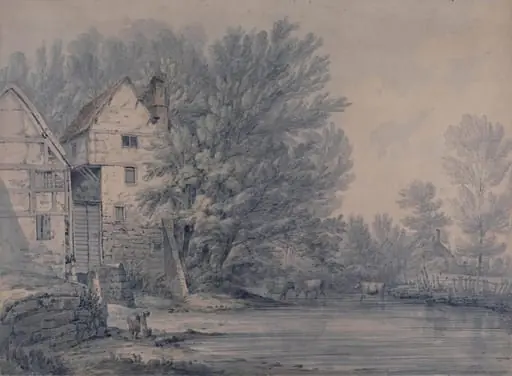 Millpond near Shrewsbury
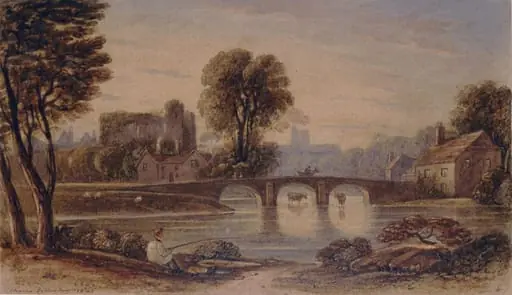 Landscape with bridge
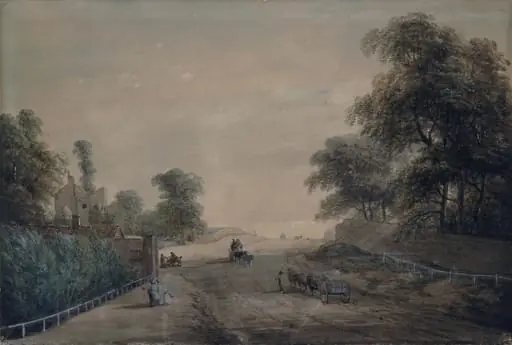 Bayswater Hill
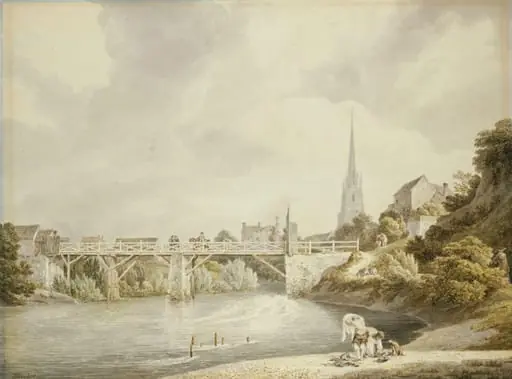 Bridge at Monmouth, with St. Mary's Church in the background
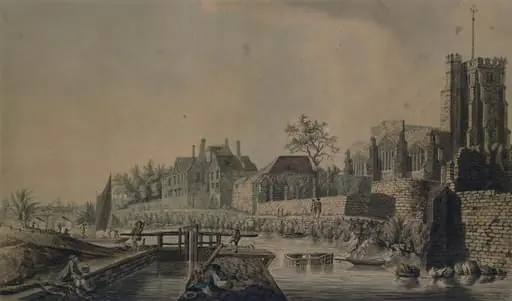 All Saints' Church and the Archbishop's Palace, Maidstone
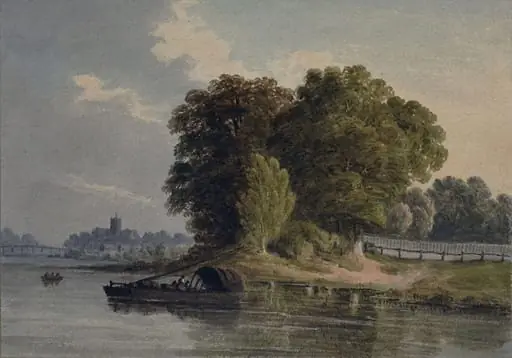 View on the Thames near Battersea Bridge
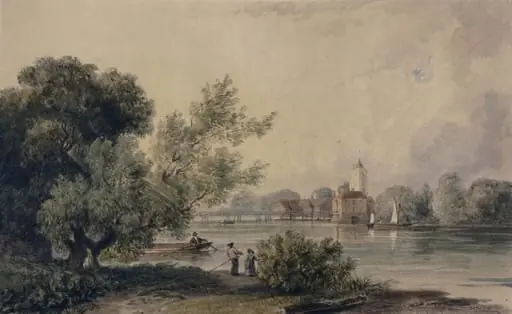 Fulham Church and Putney Old Bridge
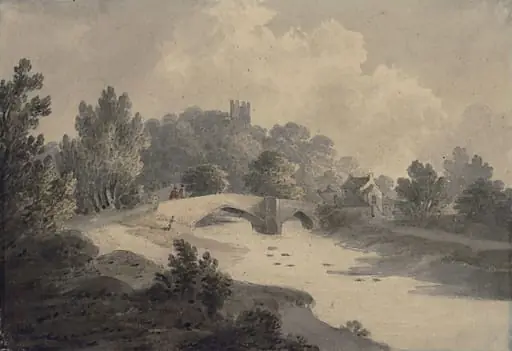 Bridge over the river at Helmsley, in Yorkshire,
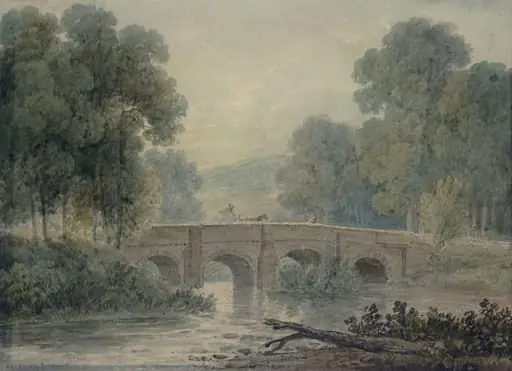 Woody landscape
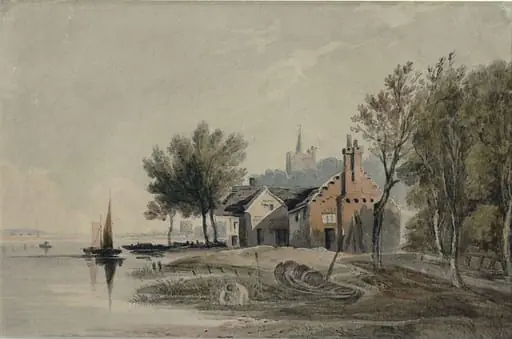 Chiswick
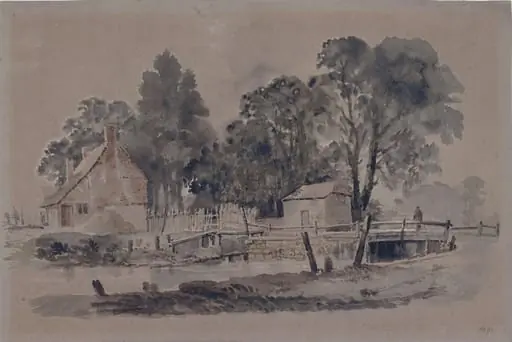 Stream with bridge and cottages