Artwork
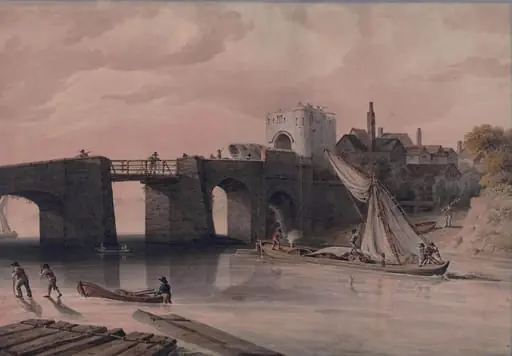
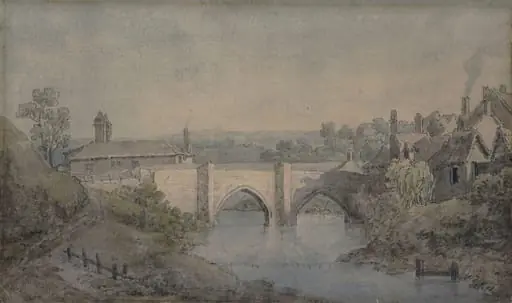
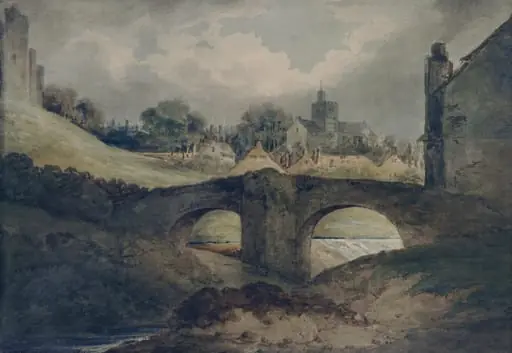
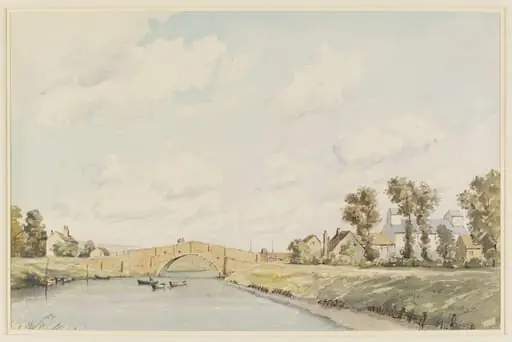
Bridge over the River Monmow, Monmouth
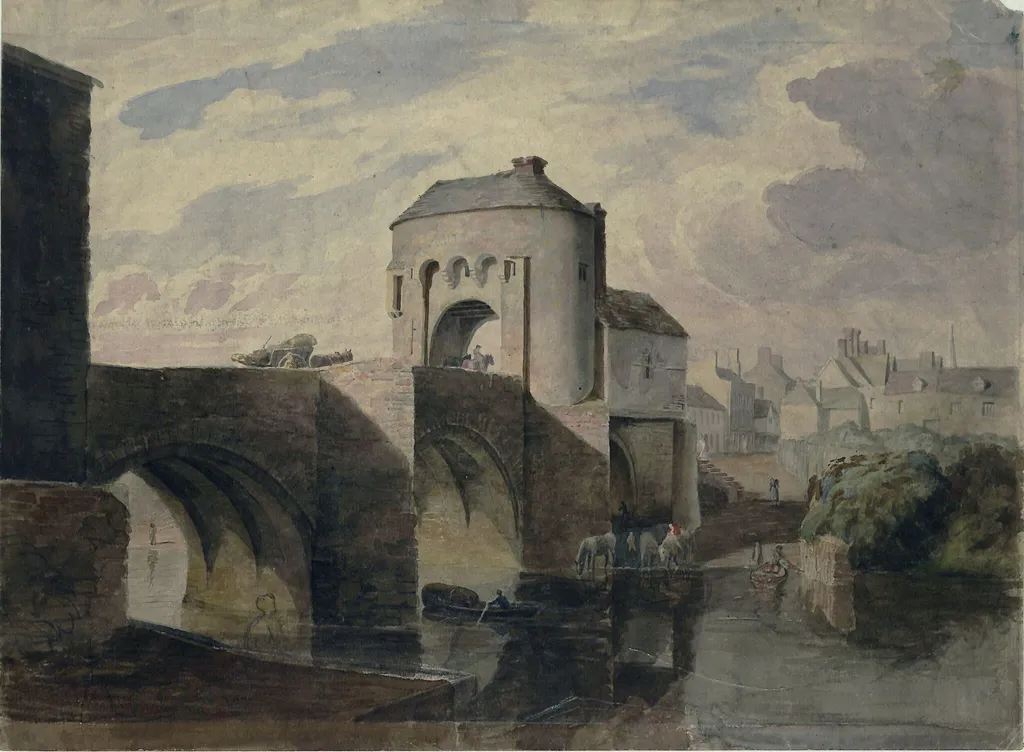
Bridge over the River Monmow, Monmouth is a watercolor work on paper by the Romanticist artist Cornelius Varley. It dates from 1802 and is held in the collection of the Victoria and Albert Museum.
About this work
Overview
Bridge over the River Monmow, Monmouth is a 1802 watercolour by Cornelius Varley, capturing a serene riverside scene in Monmouth.
Subject & Meaning
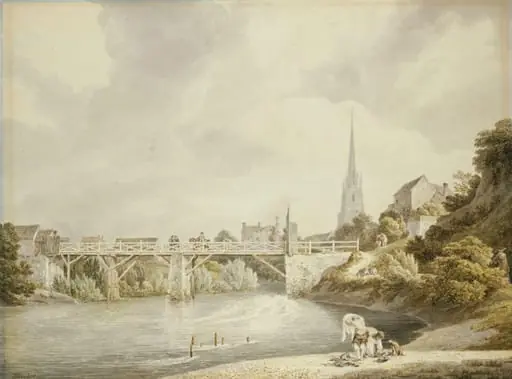
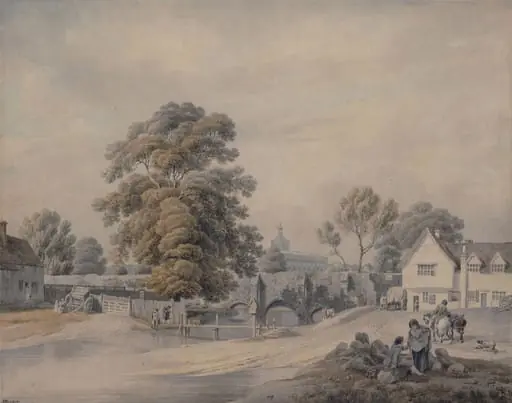
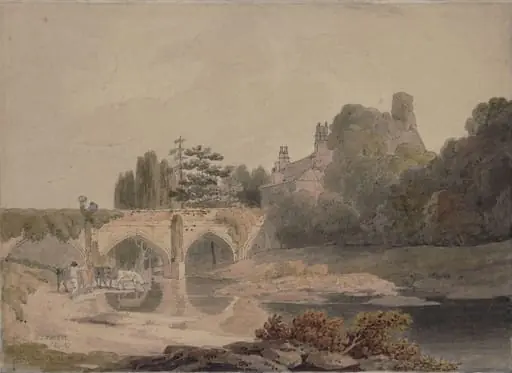
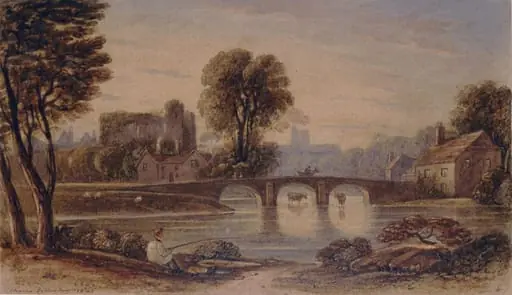
The artwork depicts the River Monnow's stone bridge with a distinctive round tower, set amidst everyday activity: a boat on the water, a horse-drawn cart, and pedestrians. The tower suggests a historical or functional purpose, possibly as a guard post, adding a layer of depth to the otherwise tranquil, quotidian scene.
Technique & Style
Varley employed watercolour to achieve a loose, sketchy quality, prioritizing the capture of light and movement over meticulous detail. This approach imbues the scene with a sense of spontaneity and softness, particularly evident in the light-filled sky and the gentle river.
History & Provenance
Created in 1802, the work is authenticated by Varley's inscription. While specific ownership histories are not detailed here, the piece is notable for its documentation of Monmouth's architecture at the turn of the 19th century.
Context
This watercolour reflects the early 19th-century interest in depicting everyday life and landscapes. It aligns with the broader artistic trends of the time, which valued the beauty in ordinary scenes and the emotional potential of light and colour.
Legacy
Bridge over the River Monmow, Monmouth contributes to our understanding of British watercolour practices in the early 19th century. Its emphasis on light and everyday life prefigures later developments in landscape painting, though its direct influence on subsequent artists is not prominently documented.
Artist & collection

Artist
Cornelius Varley, FRSA (21 November 1781 – 2 October 1873) was a British painter, mostly in watercolour, printmaker and optical instrument-maker. He invented the graphic telescope and the graphic microscope.