Artwork
Bust portrait of Ahmad Baksh Khan
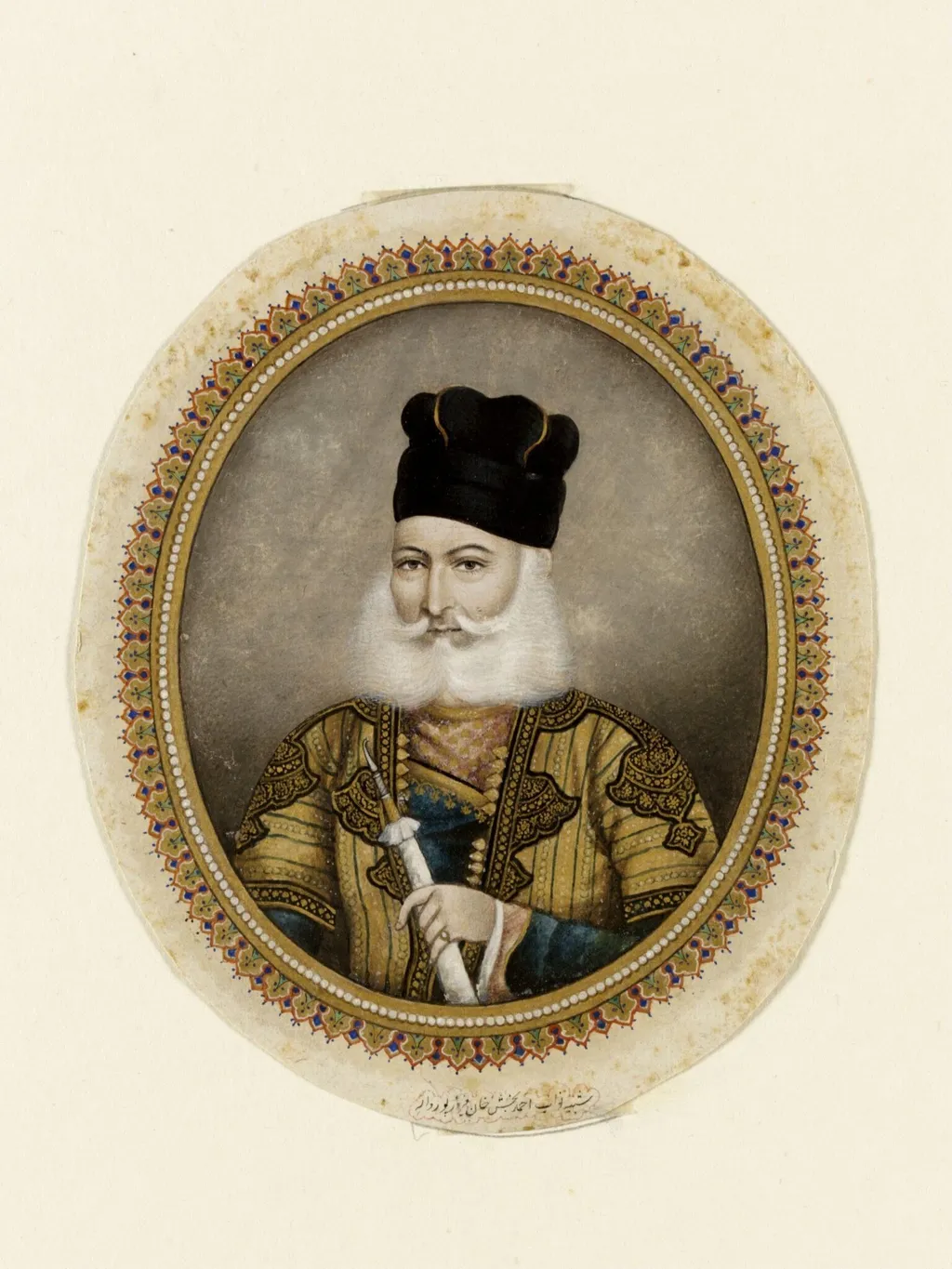
Bust portrait of Ahmad Baksh Khan is a paint painting by the Patna School of Painting artist Unknown. It dates from 1810 and is held in the collection of the Victoria and Albert Museum. The work is a portrait of Ahmad Baksh Khan, a regional ruler from the Punjab, rendered in oil on canvas around 1810.
About this work
The painting is a window into the past, showing us what a important person looked like back then.
This painting shows a man with a serious face, wearing traditional clothing.
He's Ahmad Baksh Khan, a chief from the Panjab region.
The artist likely painted this in Delhi around 1810, and it's interesting that Ahmad Baksh Khan helped the British during a war, which led to him getting some land and power.
The painting is a window into the past, showing us what a important person looked like back then.
To learn more about this style of painting, look up the technique: chiaroscuro.
Overview
The work is a portrait of Ahmad Baksh Khan, a regional ruler from the Punjab, rendered in oil on canvas around 1810. Executed by an unidentified artist working in Delhi, the piece belongs to the body of Indian paintings produced for European patrons during the early nineteenth century, often termed Company paintings.
Subject & Meaning
Ahmad Baksh Khan is shown with a solemn expression, dressed in the traditional attire of a Punjabi noble. The portrait emphasizes his status and authority, reflecting his role as a cooperative ally of the British during the Second Maratha War, a relationship that secured him hereditary control over the districts of Loharu and Firozpur.
Technique & Style
The painting combines Indian compositional conventions with European influences such as chiaroscuro, creating a subtle modelling of light and shadow on the figure’s face and garments. Brushwork is precise yet retains the decorative detail characteristic of Indian court portraiture, illustrating the hybrid aesthetic typical of Company-era artworks.
History & Provenance
Created in Delhi circa 1810, the portrait likely entered the collection of British officials linked to the East India Company, who commissioned or purchased such images to document local allies. Over time it passed through private hands before being acquired by the museum, where it now serves as a visual record of early colonial patronage.
Context
The portrait emerges from a period when the East India Company encouraged Indian artists to adopt Western techniques to satisfy European tastes. These works were often produced in workshops that supplied a market for both commissioned pieces and more standardized portraits sold in local bazaars, reflecting a commercial art economy under colonial rule.
Artist & collection

 Domestic Scene
 Giacomo and Cardinal Marco, investing Andrea, Abbot of San Zeno, with his Benefice
 The Nymph of Fontainebleau
 Portrait of a Woman
 Madonna and Child with Saints in the Enclosed Garden
 Venus and Minerva
 Family Group of Four on Sofa
 Wall painting from Room H of the Villa of P. Fannius Synistor at Boscoreale
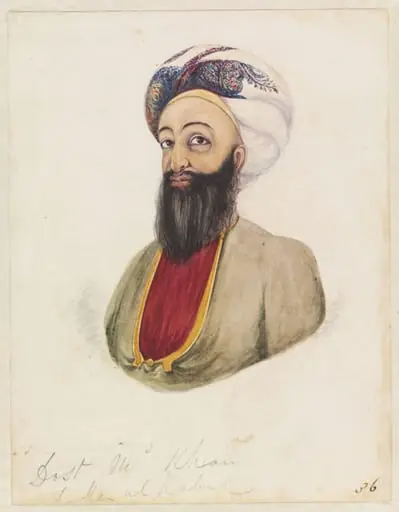 Dost Md Khan taken at Kabul
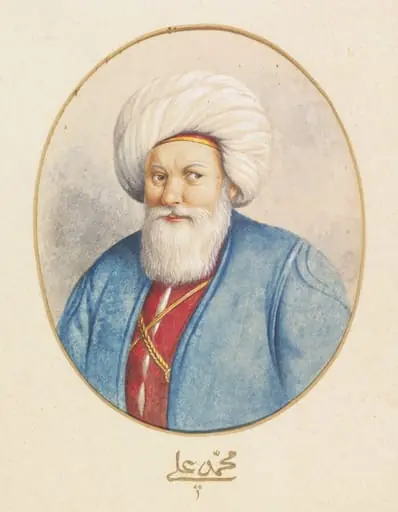 Portrait of Muhammad Ali
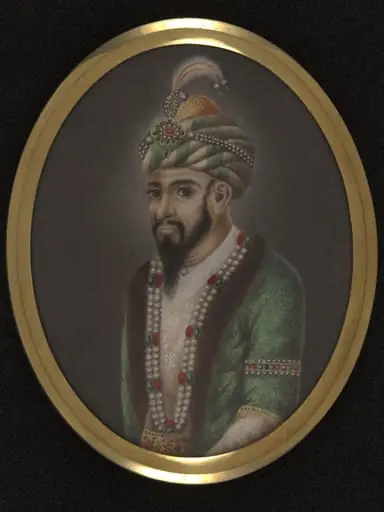 One of twelve miniatures depicting Mughal rulers of India; head and shoulders in profile.
 Colonel of Artillery
 Portetul lui Alecu Ghica
 An Indian gentleman
 Portrait of a sultan
 Marele Ban Năsturel Herescu
 Emperor Akbar Shah II
 Ali Pasha (born about 1741, died 1822)