Artwork
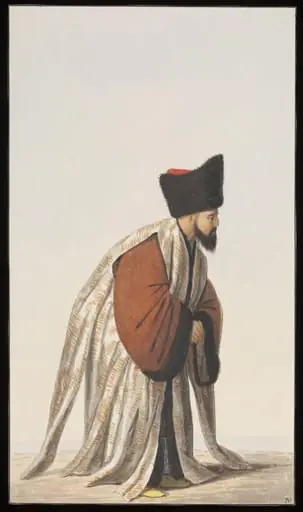
Colonel of Artillery
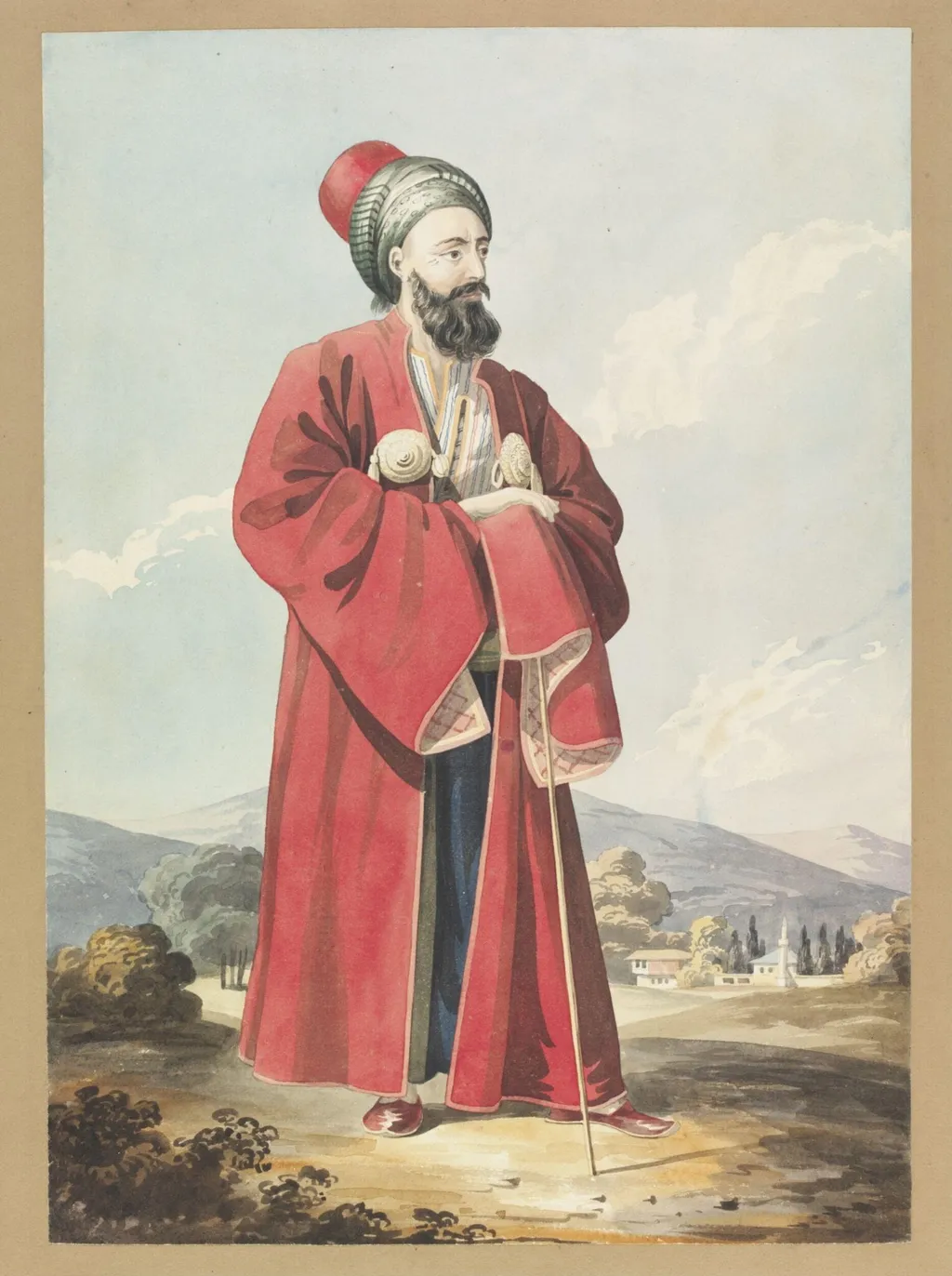
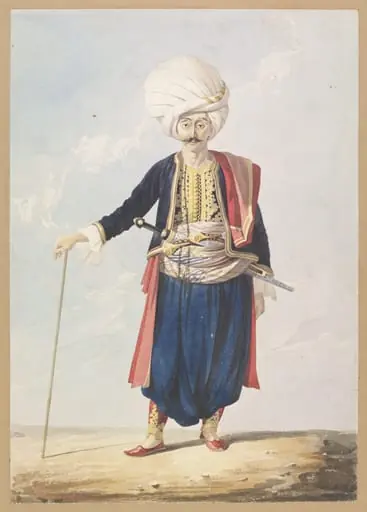
Colonel of Artillery is a watercolor work on paper by the American Folk Art artist William Page. It dates from 1818 and is held in the collection of the Victoria and Albert Museum.
About this work
Overview
The work belongs to a series of costume studies Page produced during the early 1820s, focusing on figures from diverse cultural backgrounds.
Created in 1818 by William Page, this watercolour depicts a military officer in distinctive Eastern attire. The work belongs to a series of costume studies Page produced during the early 1820s, focusing on figures from diverse cultural backgrounds. Executed in delicate washes, it reflects his interest in ethnographic detail before he shifted toward landscape painting. The piece was later acquired by the dealer Maggs in 1967.
Subject & Meaning
The figure is likely intended as a colonel of artillery, possibly of Jewish or Armenian origin, dressed in a richly colored robe and tall striped hat. His posture—standing calmly with a walking stick and folded document—suggests authority tempered by composure. The setting, a quiet village with a distant mosque, implies a non-European context, though the identity remains ambiguous. The image prioritizes costume and presence over narrative, inviting contemplation rather than storytelling.
Technique & Style
Page employed transparent watercolour washes to build subtle tonal gradations, particularly in the figure’s robes and the hazy background. Fine brushwork defines the hat’s stripes and the texture of the paper he holds, while the landscape is rendered with soft, blurred edges. The palette is restrained yet vivid, emphasizing reds and earth tones. This method aligns with early 19th-century British watercolour practices, balancing precision with atmospheric suggestion.
History & Provenance
The watercolour was part of a private collection before being acquired by the London-based dealers Maggs Bros. in June 1967. Its earlier ownership is undocumented, but its inclusion in Page’s costume series suggests it was likely made for private study or circulation among collectors interested in ethnographic imagery. No exhibition or publication history is recorded prior to the 20th century.
Context
During the 1810s, British artists increasingly turned to foreign dress and customs as subjects, influenced by travel literature and imperial expansion. Page’s series responded to this trend, though his approach was more observational than romanticized. Unlike contemporaries who idealized the Orient, he focused on quiet, unembellished portrayals, reflecting a growing interest in cultural specificity over exoticism.
Legacy
This work stands as a quiet example of early 19th-century British watercolour’s engagement with cultural diversity. While Page is better known for his later landscapes, these costume studies reveal his early sensitivity to detail and composition. The piece contributes to a broader archive of visual ethnography from the period, offering insight into how foreign identities were visually recorded outside of official documentation.
Artist & collection

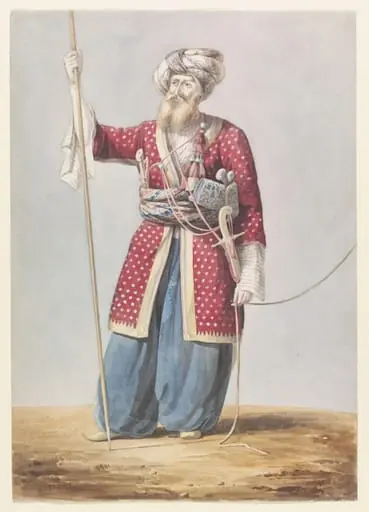 A Mamluk from Aleppo
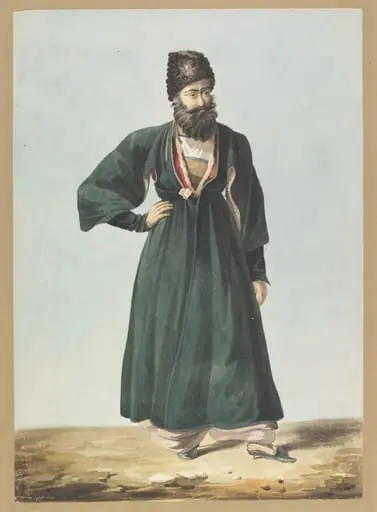 Persian
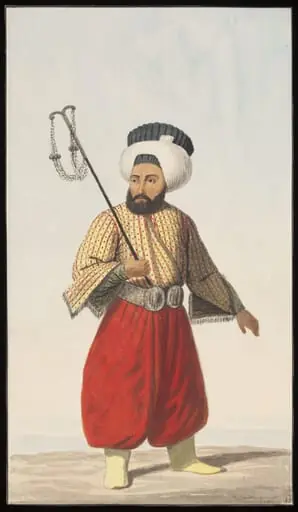 Çavusbasi or Chief Usher
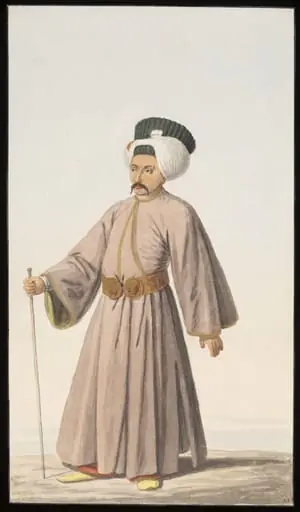 Çavus, or Palace Doorkeeper
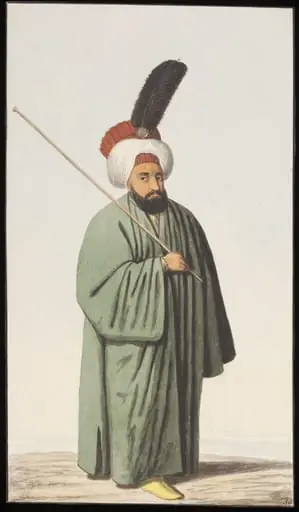 Basçavus, or Palace Usher
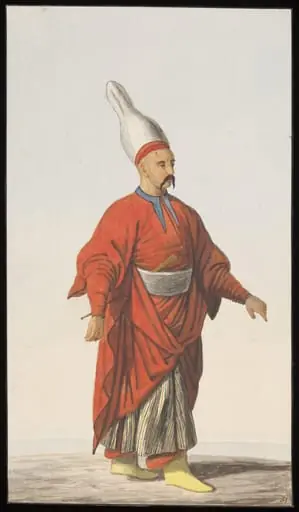 Kozbekçisi, or Steward of the Sultan's Wardrobe
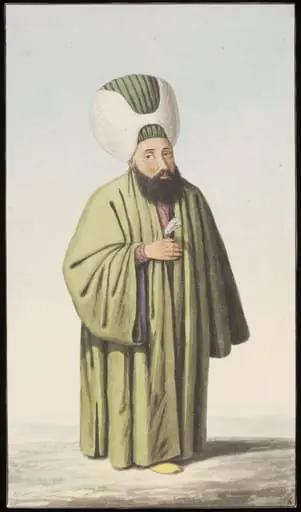 An Ottoman Military officer, possibly the Yeniçeriagasi, or Commander-in-chief of the Janissaries
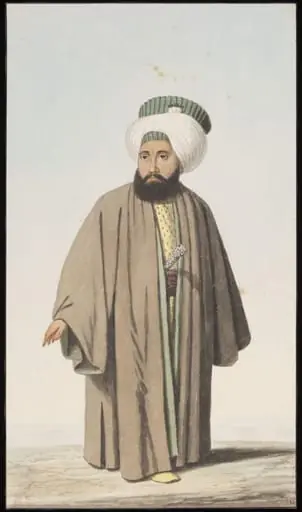 Defterdar, or Minister of Finance
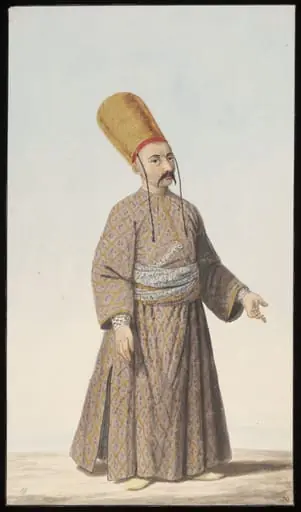 Zülüflü Baltaci, or Page of the first rank to the Sultan
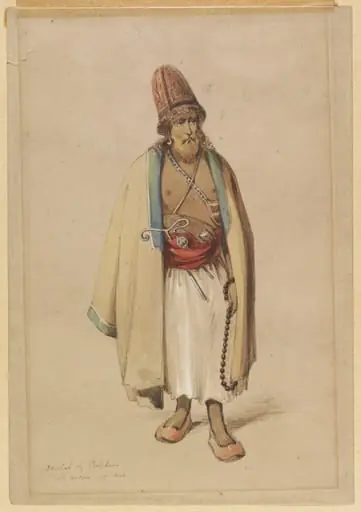 Dervish of Bokhara with Inkhorn and Diak
 Tercüman, or Dragoman