Artwork
Calvary
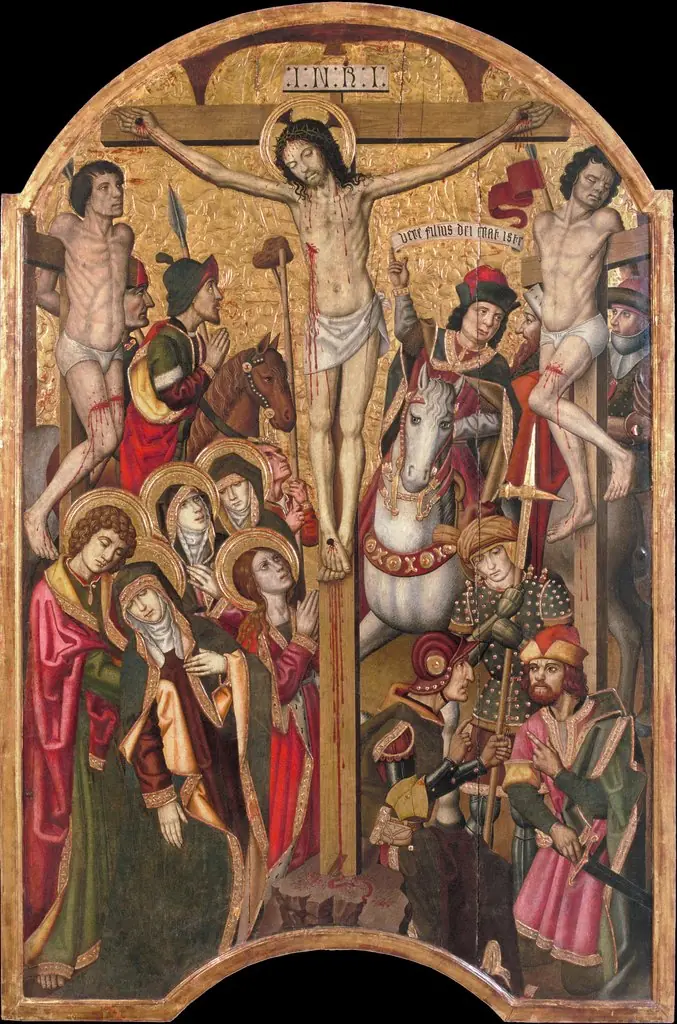
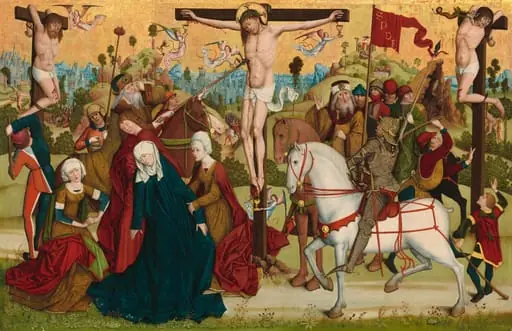
Calvary is an unspecified painting by the Northern Renaissance artist Unknown. It dates from 1487 and is held in the collection of the Rijksmuseum. This painting depicts the Crucifixion as a single panel from a former altarpiece.
About this work
Overview
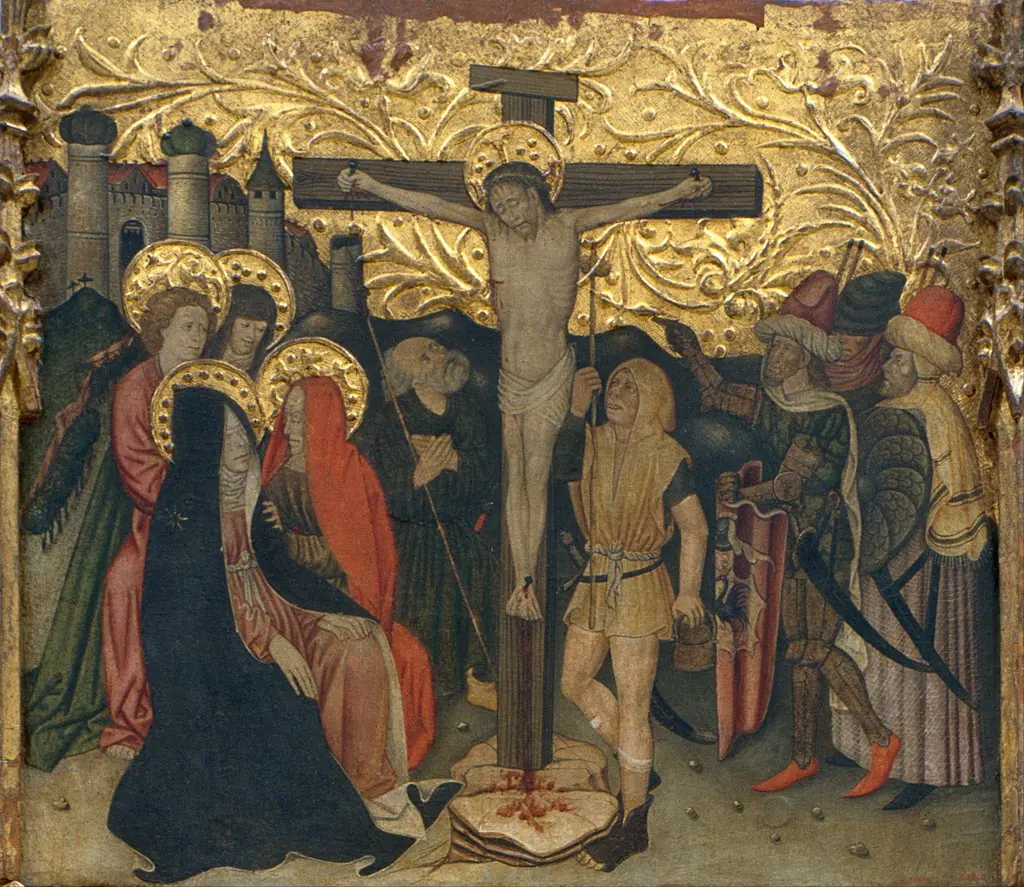
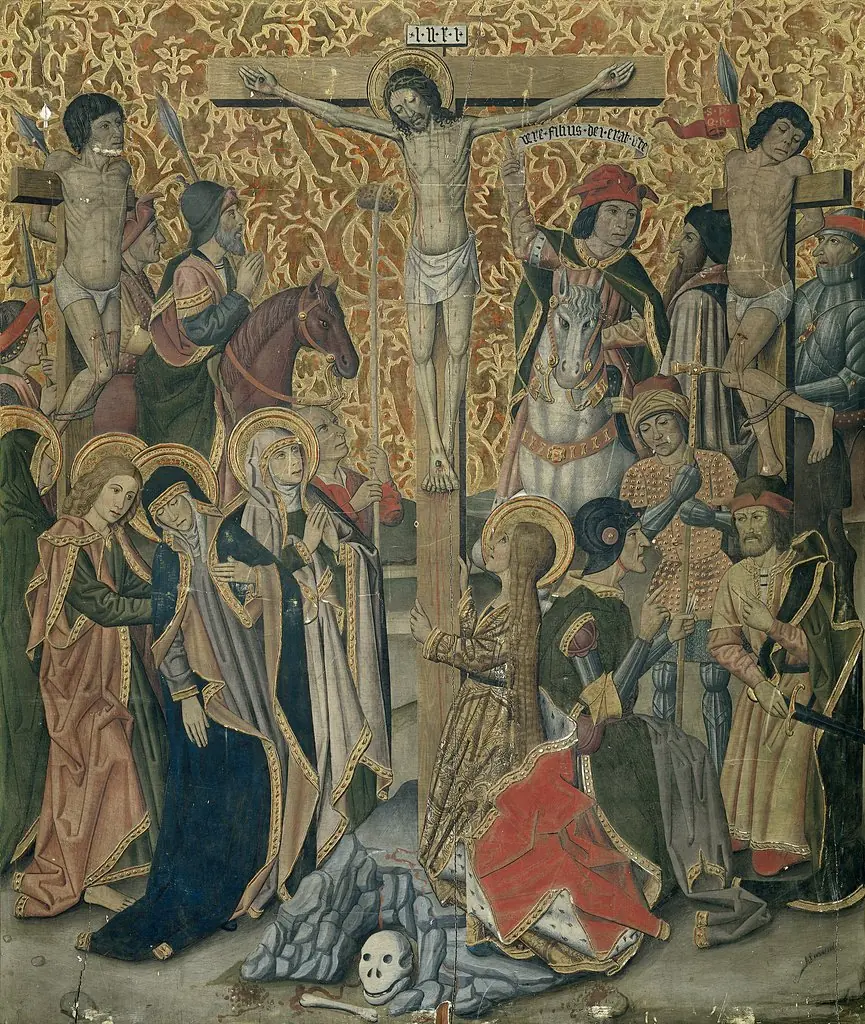
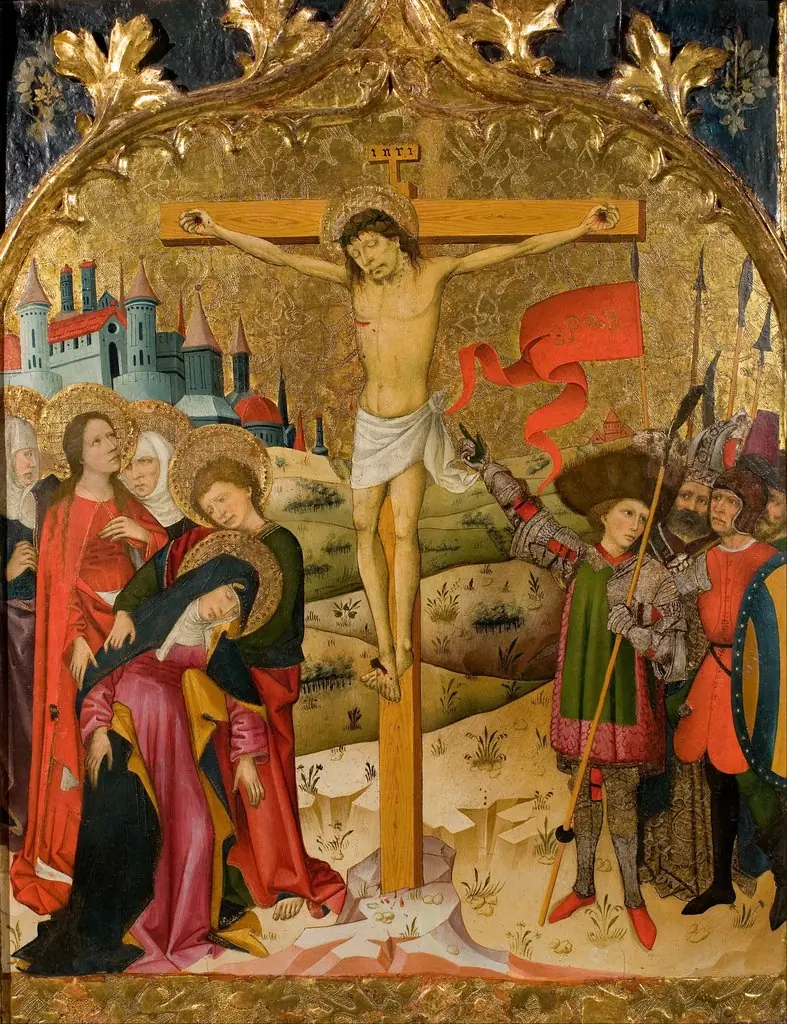
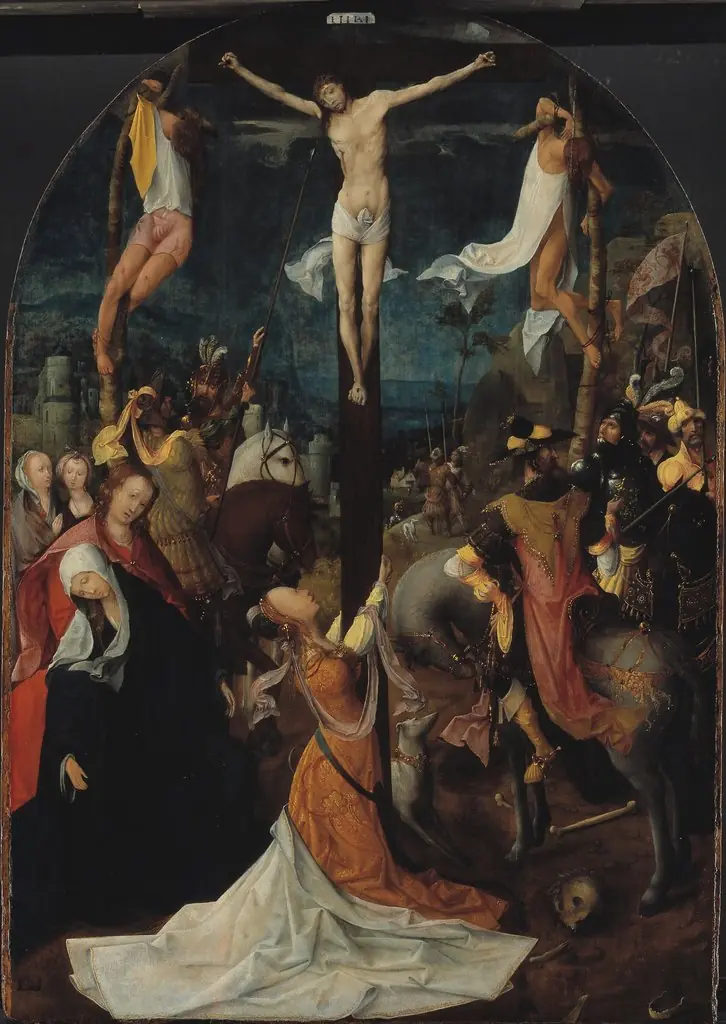
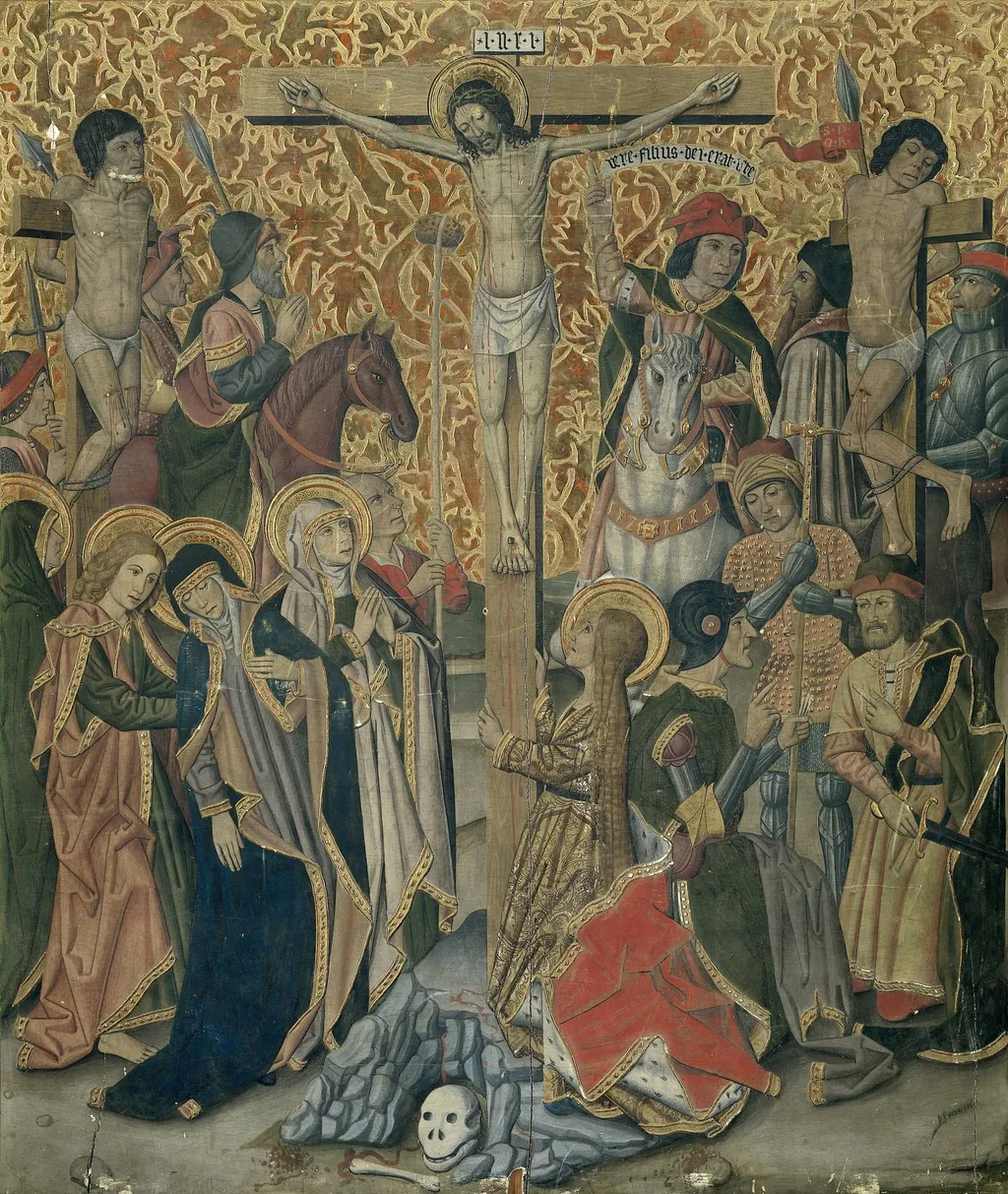
It shows Christ on the central cross, flanked by two thieves, with figures gathered at the base and mounted soldiers observing from the sides.
This painting depicts the Crucifixion as a single panel from a former altarpiece. It shows Christ on the central cross, flanked by two thieves, with figures gathered at the base and mounted soldiers observing from the sides. Though originally part of a larger devotional ensemble, it now exists independently. The composition is restrained, emphasizing solemnity over drama, with figures arranged in a balanced, hierarchical manner.
Subject & Meaning
The scene centers on Christ’s sacrifice, framed by the presence of his mother, the apostle John, and Mary Magdalena at the foot of the cross. The offering of the sponge and the stillness of the mourners convey contemplative grief rather than theatrical anguish. Longinus and the centurion on horseback symbolize Roman authority witnessing the event, hinting at the theological significance of Christ’s death as a moment of divine revelation.
Technique & Style
The figures are rendered with quiet precision, their expressions subdued and gestures controlled. Soft modeling and muted tones unify the scene, avoiding sharp contrasts or violent motion. The landscape recedes gently behind the crosses, reinforcing the focus on human figures. The brushwork is deliberate, favoring clarity and emotional restraint over expressive intensity, characteristic of late medieval devotional painting.
History & Provenance
Originally one component of a multi-panel altarpiece, this work was later separated from its original context. Its survival as an independent piece reflects changing religious practices and collecting habits in the early modern period. While its exact origin and patron remain uncertain, its style aligns with Northern European traditions of the late 15th or early 16th century.
Context
In its time, such images served as aids for private or communal prayer, inviting viewers to meditate on Christ’s suffering. The calm demeanor of the figures reflects a devotional ideal emphasizing inner reflection over emotional display. Comparable scenes by contemporaries in the region often shared this restrained approach, prioritizing spiritual gravity over theatricality.
Legacy
As a surviving fragment of a lost altarpiece, it offers insight into how religious narratives were visually structured before the Reformation. Its preservation allows study of compositional choices in pre-modern devotional art. Today, it stands as a quiet testament to the enduring power of the Crucifixion as a subject for contemplation, not spectacle.
Artist & collection

 Domestic Scene
 Giacomo and Cardinal Marco, investing Andrea, Abbot of San Zeno, with his Benefice
 The Nymph of Fontainebleau
 Portrait of a Woman
 Madonna and Child with Saints in the Enclosed Garden
 Venus and Minerva
 Family Group of Four on Sofa
 Wall painting from Room H of the Villa of P. Fannius Synistor at Boscoreale