Artwork
cană cu cioc
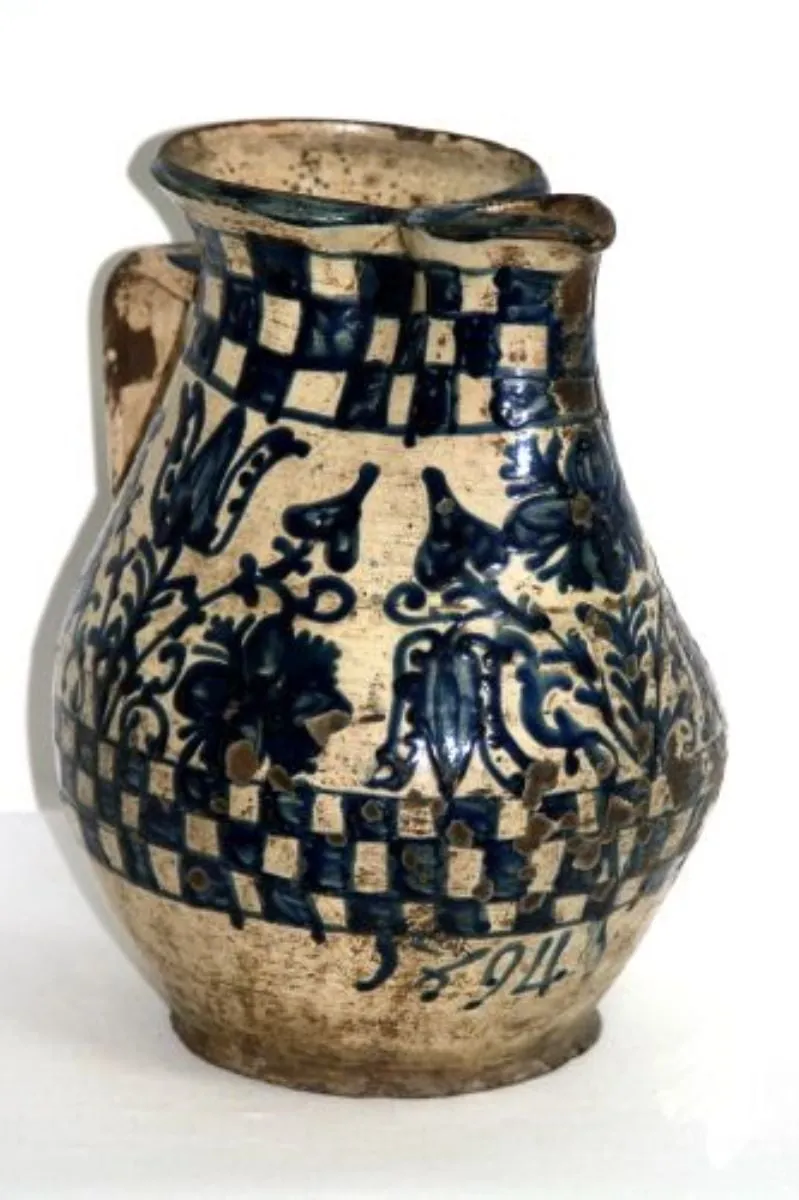
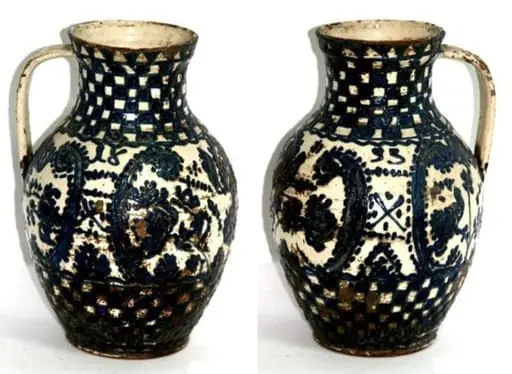
cană cu cioc is a photography by the Impressionist artist Unknown. It dates from 1894 and is held in the collection of the Romanian Peasant Museum. The object is a ceramic pitcher, its form modest and utilitarian, with a patinated surface that suggests extensive use.
About this work
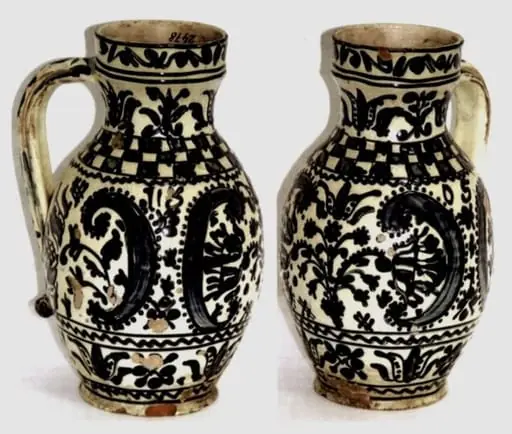
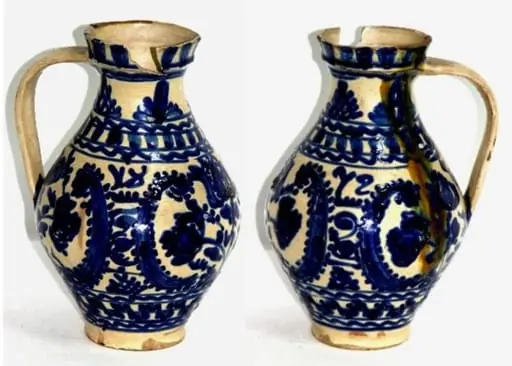
The surface is covered in blue and white patterns—swirling vines, leaf shapes, and a checkered band near the rim.
This is a ceramic pitcher with a worn, earthy look. The surface is covered in blue and white patterns—swirling vines, leaf shapes, and a checkered band near the rim. Some areas show cracks and fading, like the pitcher has been used for a long time.
The design mixes bold black outlines with softer, faded blues, giving it a slightly uneven but intentional feel. The word *"1894"* is scrawled on the bottom, hinting at its age.
If you like this style, check out Realism—it focuses on everyday objects just like this pitcher.
Overview
The object is a ceramic pitcher, its form modest and utilitarian, with a patinated surface that suggests extensive use. The vessel bears a decorative scheme of blue and white motifs, including winding vines, leaf forms, and a checkered band encircling the upper rim. A faint inscription of the year 1894 appears near the base, providing a chronological reference.
Subject & Meaning
The pitcher’s ornamentation emphasizes everyday domesticity, turning a commonplace container into a visual study of ordinary life. The vegetal motifs and geometric band echo traditional folk designs, while the weathered finish underscores the passage of time and the object's functional history.
Technique & Style
The glaze combines bold, black line work with softer, partially faded blues, creating a contrast between defined outlines and muted washes. Cracks and areas of discoloration are visible, characteristic of long‑term ceramic use and the natural aging of glaze layers. The overall aesthetic aligns with realist tendencies that foreground ordinary objects.
History & Provenance
A date inscribed on the bottom—1894—places the pitcher in the late nineteenth century, a period when such utilitarian ceramics were commonly produced for household use. No further provenance details are provided, but the wear patterns suggest prolonged service in a domestic setting.
Context
During the 1890s, ceramic production in many regions blended traditional decorative vocabularies with emerging industrial techniques. The pitcher’s blend of folk motifs and pragmatic form reflects this transitional moment, where everyday objects were both functional and visually articulated.
Legacy
While not a celebrated artwork, the pitcher exemplifies how ordinary material culture can inform studies of daily life, craftsmanship, and aesthetic preferences in the late nineteenth century, offering scholars a tangible link to the period’s domestic environments.
Artist & collection

 Domestic Scene
 Giacomo and Cardinal Marco, investing Andrea, Abbot of San Zeno, with his Benefice
 The Nymph of Fontainebleau
 Portrait of a Woman
 Madonna and Child with Saints in the Enclosed Garden
 Venus and Minerva
 Family Group of Four on Sofa
 Wall painting from Room H of the Villa of P. Fannius Synistor at Boscoreale
 cană de vin
 cană de vin
 cană de vin
 cană de vin
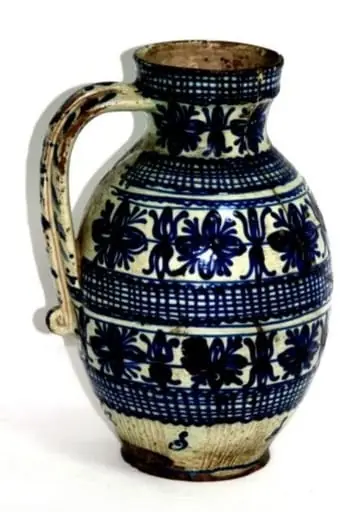
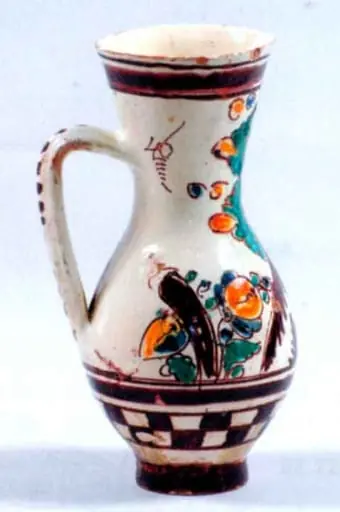
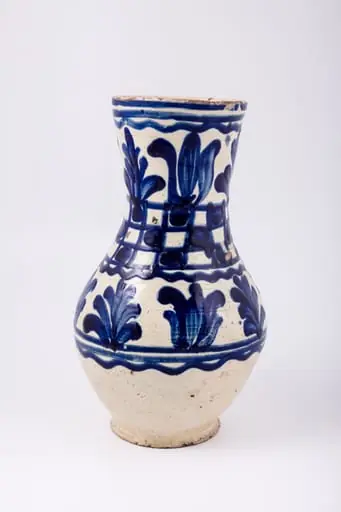 Cănceu piriform prevăzut cu o toartă, gât zvelt și ușor evazat, corpul pântecos, toarta de la gât la diametrul maxim al vasului. Decorul este împărțit în trei registre verticale încadrate în partea superioară și inferioară de linii subțiri și vălurite. Primul și al treilea registru sunt decorate cu motive florale și fitomorfe, câte o lalea înflorită intercalată de brăduți stilizați. Al doilea registru este decorat cu tabla de șah. Cromatica: alb și albastru cobalt.
 canceu
 cană de vin
 cană de vin
 cană de vin
 canceu